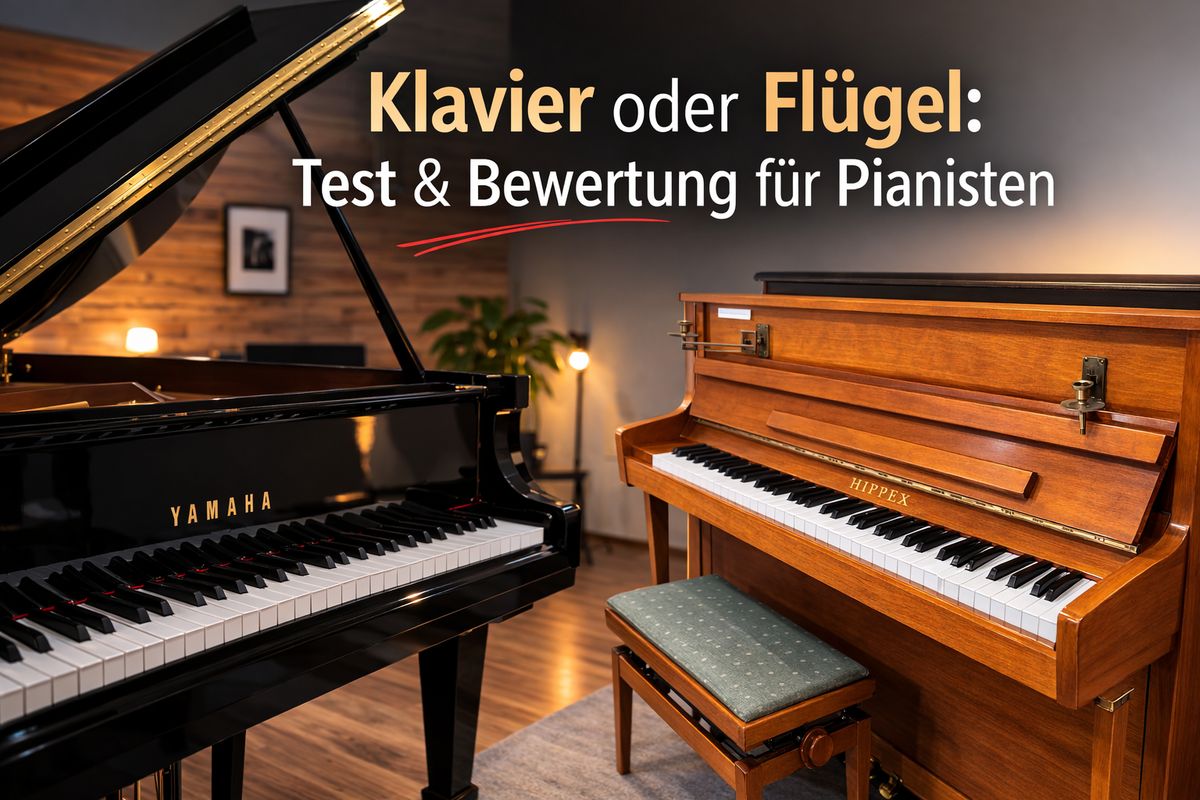
Investing in a grand piano is one of the most profound commitments a musician or institution can make. It is not merely a purchase of furniture or an appliance, but an invitation to a lifelong partnership with an instrument of immense artistic potential. The question of which grand piano is « best » has no single answer; it is a deeply personal equation balancing tonal desire, physical space, technical requirements, and budget. This guide serves as your objective framework, cutting through marketing to focus on the specifications and characteristics that truly matter for the UK pianist, from the dedicated amateur to the concert hall.
Understanding the Grand Piano Market – A Hierarchy of Craftsmanship

The grand piano world is stratified by heritage, construction philosophy, and intended purpose. Understanding this landscape is the first step to narrowing your search.
- Legendary Concert Instruments: These are the reference standards, built for the world’s greatest stages and most demanding artists. They represent the pinnacle of tonal complexity, dynamic range, and durability.
* Steinway & Sons (Hamburg/New York): The ubiquitous benchmark. Hamburg Steinways are often noted for a clearer, more European tone, while New York models traditionally offer a warmer, more robust sound. The Model D (274 cm) is the concert hall icon.
* Bösendorfer (Vienna): Renowned for a uniquely singing, warm, and resonant character, with a distinctive bell-like treble. The Imperial 290 features nine extra bass keys. Its sound is often described as the most « orchestral. »
* Fazioli (Sacile, Italy): The modern masterpiece, famous for breathtaking clarity, immense power, and a fast, responsive action. Favoured for contemporary repertoire and pristine recording environments.
- German Heritage Houses: Centuries of tradition inform these instruments, prized for their depth, colour, and nuanced craftsmanship.
* C. Bechstein (Berlin): Offers both the exquisite, handcrafted Concert Series and the more accessible Academy Series. Known for a rich, colourful palette and exceptionally precise action.
* Blüthner (Leipzig): Distinct for its « Aliquot » stringing in the treble, which adds sympathetic resonance for a uniquely shimmering, ethereal sound.
* Grotrian-Steinweg, Sauter, August Förster: Each possesses a fiercely loyal following for their individual, often more intimate, musical voices and impeccable build quality.
- Asian Precision Engineering: These brands mastered consistency, reliability, and cutting-edge manufacturing.
* Yamaha (CFX, S Series): The CFX concert grand is a modern powerhouse with brilliant clarity and staggering projection. The S Series (Shigeru Kawai’s direct rival) offers hand-finished excellence from Yamaha’s finest craftsmen.
* Shigeru Kawai (Japan): The pinnacle of the Kawai family, each piano personally overseen by Master Piano Artisans. Celebrated for a mellower, more rounded tone than Yamaha and an incredibly nuanced action, often using carbon fibre components.
- The Pre-Owned Market: This can offer extraordinary value. A well-maintained 30-year-old German piano may outperform a new instrument in a lower tier. Key programmes like Steinway’s Certified Pre-Owned provide reassurance. Always, always budget for an independent assessment by a qualified piano technician before purchase.
Core Selection Criteria – Beyond the Brand Name
The brand provides a lineage, but the instrument’s physical and musical specifications determine its suitability for you.
Size & Space: The Critical Practical Factor
The length of a grand piano is the primary driver of its bass response, power, and physical presence.
- Baby Grand (160-180 cm): A compromise for tight spaces. The shorter strings and smaller soundboard limit tonal depth and dynamic range, but modern designs have improved significantly.
- Living Room Grand (180-210 cm): The sweet spot for most homes. Models like the Steinway Model B (211 cm) or Yamaha C3X (186 cm) offer a fully developed scale with a powerful, balanced tone suitable for serious practice and intimate performance.
- Semi-Concert Grand (210-230 cm): For large homes, teaching studios, and small halls. Provides near-concert power with a more manageable footprint than a full concert grand.
- Concert Grand (230 cm+): The ultimate expression. Requires a significant space (and budget) to match its capabilities. Designed to fill a large hall without amplification.
Tonal Character & Signature
A piano’s « voice » is its soul. This is shaped by scale design, soundboard timber, and hammer felt.
- American (Steinway NY): Warm, robust, with a foundational bass. A versatile, singing tone.
- European (Hamburg Steinway, Bechstein, Bösendorfer): Ranges from clear and precise to profoundly warm and resonant. Often greater tonal colour and complexity.
- Japanese (Yamaha, Kawai): Clean, clear, and brilliant. Excellent note-to-note consistency. Shigeru Kawai leans toward a warmer, more European aesthetic.
- The Soundboard: The heart of the piano. Premium instruments use solid, quarter-sawn spruce from specific regions (e.g., Val di Fiemme for Fazioli, Alpine spruce for others). It must be crowned and seasoned to act as a perfect amplifier.
Action & Touch: The Connection to Your Fingers
The action translates your physical intent into sound. A Renner action (or equivalent, like Kawai’s Millennium III) is the gold standard.
- Double Escapement: Allows for rapid repetition of notes—essential for advanced repertoire.
- Regulation: The precise adjustment of thousands of action parts. A well-regulated action feels responsive, even, and controllable across all dynamics. This is not a factory setting but an ongoing art performed by a technician.
Budget & Lifetime Costs
The purchase price is just the beginning.
- New vs. Pre-Owned: A new piano offers a warranty and modern materials. A pre-owned piano from a premium brand can offer superior musical value but requires expert vetting.
- Annual Maintenance: In the UK, budget £150-£300 for two tunings per year. Voicing (adjusting hammer felt to change tone) and regulation are additional, crucial services every few years.
- Transport: Specialist piano movers are essential, costing from £300 to over £1,000 for a concert grand.
Grand Pianos for Every Profile – Matching Instrument to Purpose
The Discerning Amateur / Home Enthusiast
- Priority: Tonal beauty for daily enjoyment, reliability, and a size that complements a domestic setting (180-210 cm).
- Key Considerations: A warm, inviting tone that isn’t overpowering. A smooth, manageable action. Consider a silent system if noise is a concern.
- Typical Brands/Models: Yamaha C Series (C2X, C3X), Kawai GX Series (GX-2, GX-3), Schimmel Konzert series, or a carefully selected pre-owned German instrument.
The Conservatoire Student or Professor
- Priority: A robust, precise, and consistent tool for technical development and teaching. Often a semi-concert grand (210-220 cm).
- Key Considerations: An action that can withstand 6-8 hours of daily practice and remains perfectly even. A clear, articulate tone that reveals every detail of playing.
- Typical Brands/Models: Steinway Model B (the studio staple), Yamaha S Series (S3X, S5X), C. Bechstein Academy A 192, or a Shigeru Kawai SK-3.
The Concert Pianist or Recording Studio
- Priority: Ultimate projection, vast dynamic range (from a whisper to a roar), and a rich palette of tonal colours.
- Key Considerations: The instrument must be capable of filling a 1000-seat hall acoustically and behave impeccably under sensitive microphones. Tuning stability during intense playing is critical.
- Typical Brands/Models: Steinway Model D, Bösendorfer 280VC or Imperial 290, Fazioli F228 or F278, Yamaha CFX.
The Prestigious Institution or Collector
- Priority: Heritage, investment value, and a specific, legendary sound. Often involves aesthetic customisation.
- Key Considerations: Provenance, historical significance, and uniqueness. Condition and restoration quality are paramount.
- Typical Brands/Models: Historic Steinways, rare Bösendorfer models, art-case pianos, or bespoke commissions from top-tier makers.
Recommendation Grid by Budget
| Budget Bracket | Typical New Options | Typical Pre-Owned/Value Options | Best For |
| :— | :— | :— | :— |
| £10,000 – £30,000 | Yamaha GB1K, Kawai GL-10 | Vetted German pianos (e.g., Schimmel, Vogel) from the 1980s/90s; older Yamaha C3. | First-time grand buyers, smaller homes, schools on a strict budget. |
| £30,000 – £70,000 | Yamaha C3X/C5X, Kawai GX-2/GX-3, Schimmel K 195 | Excellent condition Steinway Model M or A (1970s+), Bösendorfer 170. | The core market: serious amateurs, advanced students, professional teaching studios. |
| £70,000 – £150,000 | Steinway Model B (Hamburg), Bösendorfer 200, C. Bechstein B 192, Shigeru Kawai SK-3 | Low-mileage Steinway Model B, like-new Fazioli F183. | Professional musicians, university departments, collectors seeking a lifetime instrument. |
| £150,000+ | Steinway Model D, Fazioli F228/F278, Bösendorfer 280VC, C. Bechstein D 282 | Recently refurbished concert grands from major brands. | Concert halls, top-tier recording studios, national conservatoires, serious collectors. |
The Purchasing Process & Thomann’s Offering
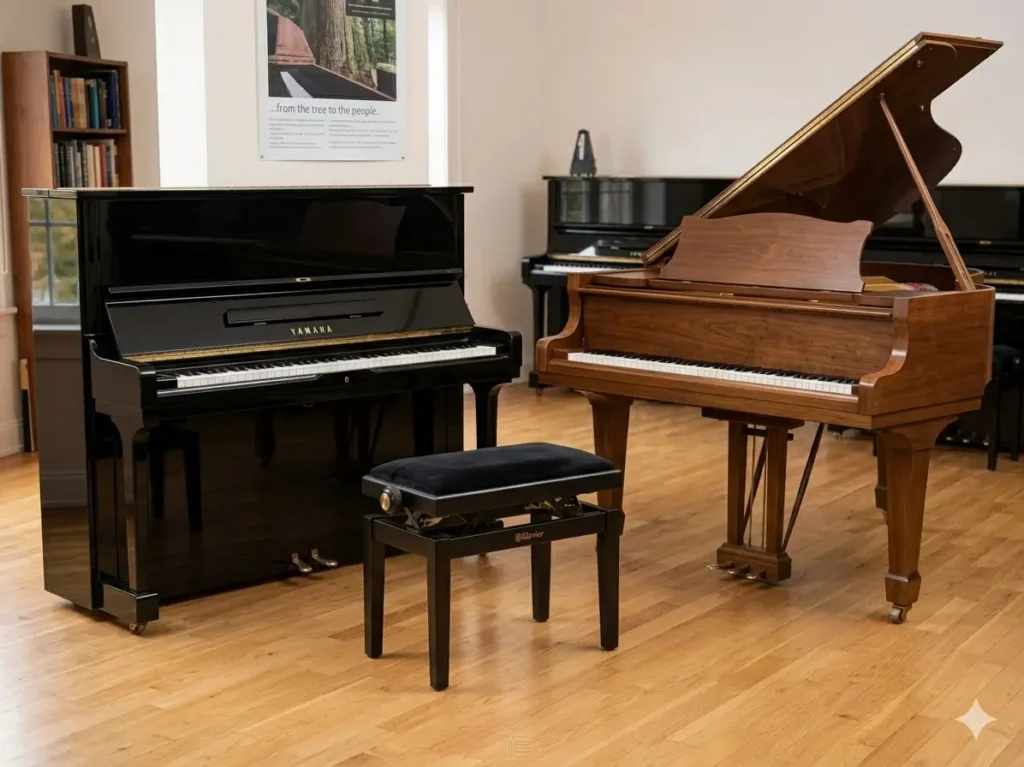
You must play the exact instrument you intend to buy. Two models from the same factory can have subtly different characters. Engage a trusted piano technician for a pre-purchase inspection, especially for pre-owned instruments.
For buyers seeking convenience, selection, and security, a major retailer like Thomann presents a compelling option. As Europe’s largest music retailer, they stock an extensive range of new grands from brands like Yamaha, Kawai, and Schimmel. Their key advantages for the UK buyer include transparent pricing, free delivery to the UK, a comprehensive 3-year warranty, and various financing options. While nothing replaces playing the piano yourself, their scale allows for a degree of comparison shopping that is difficult elsewhere.
FAQ: 5 Essential Grand Piano Questions
What is the minimum room size for a baby grand piano?
A room of at least 40-50 square metres with soft furnishings (rugs, curtains, sofas) is ideal for a baby grand (around 170 cm). This allows the sound to develop without becoming overwhelming or boomy. Ensure there is space for the piano itself (roughly 1.5m x 2m), the lid to open, and a stool, with room to walk around it.
Is a used Steinway better than a new Yamaha?
Not inherently. A worn-out, poorly maintained Steinway can be a terrible instrument. A new Yamaha C3X is a superb, consistent, and reliable piano. The choice hinges on condition and preference. A pristine pre-owned Steinway offers a specific, complex tonal character that some prefer. A new Yamaha offers modern performance, a warranty, and predictable quality. You must play both.
How much does it cost to maintain a grand piano annually in the UK?
Budget approximately £200-£400 per year. This typically covers two tunings (£80-£150 each). Voicing (adjusting the tone) and regulation (adjusting the touch) are additional, vital services usually needed every 3-5 years, costing £300-£600+ per service depending on the instrument’s size and needs.
What does ‘Renner action’ mean, and why is it important?
Renner is a German company that manufactures piano actions—the complex mechanical assembly of keys, hammers, and levers that strikes the strings. It is considered the industry benchmark for precision, responsiveness, and durability. Many top European brands use Renner actions. Its importance lies in providing a consistent, controllable, and expressive touch that allows for advanced technique.
Can I buy a grand piano online without trying it first?
It is not advisable, but mitigations exist. For a specific, mass-produced model where consistency is high (e.g., a Yamaha C3X), and with a robust returns policy, it is a calculated risk. Retailers like Thomann offer such protections, including their 3-year warranty. However, for handcrafted, premium instruments (Steinway, Bösendorfer, etc.), where each piano has individual character, playing it first is non-negotiable.
Real-world scenarios: practical use cases
In a city flat
- Tone & Volume: Opt for a warmer, more mellow tone (Bösendorfer, certain Bechsteins) over a very bright one, as it will be less fatiguing in a 40-60 m² space. Consider a thick rug under the piano.
- Neighbours: A silent system (acoustic play with headphones) is almost essential in flats with shared walls. Ensure it’s a quality optical system (e.g., Yamaha Silent Piano, KAWAI AnyTime) that doesn’t compromise the acoustic action.
- Transport & Access: Measure doorways, stairwells, and lifts meticulously. Baby grands (under 180cm) are often the only feasible option in period buildings.
- Model Suggestion: A Yamaha C1X Silent or a pre-owned Bösendorfer 170 with a retrofit silent system.
In a concert hall
- Projection & Power: The instrument must have effortless projection to reach the back of the hall without sounding forced. A long string length (Concert Grand, 230cm+) is critical for foundational bass power.
- Tonal Clarity: Complex textures in orchestral concertos must remain clear. The piano needs a brilliant, cutting treble that doesn’t become harsh.
- Endurance: The action and tuning must remain stable under the physical demands of a full recital programme, from delicate Debussy to thunderous Prokofiev.
- Model Suggestion: Steinway Model D, Fazioli F278, or Yamaha CFX.
In a recording studio
- Behaviour Under Microphones: The tone must be even across all registers, with no « wolf tones » or uneven harmonics. A very clear, detailed sound (Fazioli, Yamaha CFX/S Series) is often preferred as it gives the engineer more control.
- Sustain & Control: Long, clean sustain allows for beautiful legato lines. The action must permit extreme dynamic control for close-miked recording.
- Tuning Stability: The piano must hold perfect tuning and regulation over long sessions, often under bright studio lights which can affect the wooden structure.
- Model Suggestion: Fazioli F228, Steinway Model B (Hamburg), or Bösendorfer 214VC.
In a conservatoire
- Intensive Daily Use: The action must be built to withstand 12+ hours of daily playing from different pianists. Extreme durability and ease of maintenance are key.
- Consistency: Students need to develop technique on an instrument with predictable, even response. Note-to-note consistency is more critical than unique character.
- Versatility: The piano must perform well across all musical periods, from Baroque to contemporary.
- Model Suggestion: Steinway Model B (the global standard), Yamaha S6X, or Kawai GX-6.
Technical specifications: A Comparative Snapshot
| Specification | Yamaha C3X (Living Room) | Steinway Model B (Professional) | Bösendorfer 214VC (Recording/Studio) |
| :— | :— | :— | :— |
| Length | 186 cm | 211 cm | 214 cm |
| Width | 149 cm | 148 cm | 157 cm |
| Weight | 330 kg | 345 kg | 385 kg |
| Action Type | Yamaha NWX (Natural Wood X) | Steinway Accelerated Action (Renner parts) | Bösendorfer/Pratt-Reed Action |
| Soundboard | Solid Sitka Spruce | Solid, quarter-sawn Sitka Spruce | Solid, quarter-sawn Alpine Spruce |
| Number of Keys | 88 | 88 | 92 (8 extra bass keys) |
| Finishes Available | Polished Ebony, Polished White, Satin Walnut | Polished Ebony, Polished White, various veneers | Polished Ebony, High Polished Mahogany, various premium veneers |
Purchase guide
- New Price / Certified Pre-Owned Price:
* New: Prices start from around £18,000 for an entry-level baby grand (e.g., Yamaha GB1K) and rise to over £150,000 for concert grands.
* Certified Pre-Owned: A Steinway Certified Pre-Owned Model B might range from £70,000 to £100,000 depending on age and condition, offering significant savings versus new.
- Where to Buy:
* Authorised Dealers: For new instruments, offering brand warranty and aftercare.
* Specialist Piano Auctions: For rare, antique, or collector instruments.
* Major Retailers: For convenience and broad selection. Thomann, for example, provides access to multiple brands with the benefit of free European delivery, a 3-year warranty, and customer financing, making them a viable option for well-researched buyers.
- Annual Maintenance Cost: As noted in the FAQ, budget £200-£400 for routine tuning, with additional costs for regulation and voicing every few years.
- What to Check Before Buying:
1. Soundboard: Look for cracks (small, hairline cracks in very old pianos can be stable, but large cracks are a major issue). Check the crown (the slight dome) is present.
2. Action Regulation: Play every key at multiple dynamics. Check for evenness, repetition speed, and that no keys stick or are sluggish.
3. Pin Block & Tuning Stability: A technician will check the torque of the tuning pins. Loose pins mean the piano will not hold tune.
4. Strings & Hammers: Look for rust on strings and deep grooves in the hammer felt. While hammers can be reshaped, deeply grooved ones may need replacement.
5. Case & Finish: Check for structural integrity and cosmetic condition, which affects value but not necessarily tone.
Laisser un commentaire