Introduction: The Art of the Choice
Selecting a grand piano is not merely a purchase; it is the beginning of a profound artistic partnership. It is an investment that balances the tangible—budget, room dimensions, and technical specifications—with the deeply personal and subjective: the emotional response to its tone, the intimate connection with its touch, and the way it inspires your playing. For the UK buyer, navigating this landscape, from the storied salons of Mayfair to the digital showrooms of Europe’s largest retailers, requires both knowledge and intuition. This guide serves as your expert, impartial companion, demystifying the process to help you find the instrument that resonates with your aspirations, whether you are a discerning amateur furnishing a music room in a country house, a conservatoire equipping a rehearsal studio, or a professional seeking a lifelong artistic voice.
The Grand Piano Landscape: A Brief Overview of Legendary Houses
The world of grand pianos is defined by houses with centuries of heritage, each cultivating a distinct philosophical and technical approach to sound. Understanding these lineages is the first step in refining your search.
- The American Icon: Steinway & Sons. Synonymous with the concert grand, Steinway’s philosophy centres on power, projection, and versatility. The subtle differences between Hamburg (often described as slightly more refined and crystalline) and New York (noted for a robust, direct power) models are a favourite topic of connoisseurs. Their patented Diaphragmatic Soundboard and Double Escapement Action are benchmarks.
- The German Tradition: Precision and Depth. German engineering meets artistic soul. C. Bechstein (Berlin) is revered for its clarity, dynamic range, and a touch described as « velvet. » Bösendorfer (Vienna) offers a uniquely singing, lyrical voice with a warm, rounded bass, famously extended in their Imperial model. Blüthner (Leipzig) employs a patented Aliquot stringing system in the treble for added colour and shimmer.
- The Japanese Precision: Yamaha and Kawai. Masters of consistency, innovation, and impeccable craftsmanship. Yamaha’s CFX concert grand and S Series are world-stage standards, known for brilliant, clear, and reliable tonality. Kawai, particularly its handcrafted Shigeru Kawai line and its innovative Millennium III Carbon Fibre Action, offers exceptional responsiveness and a warm, singing tone.
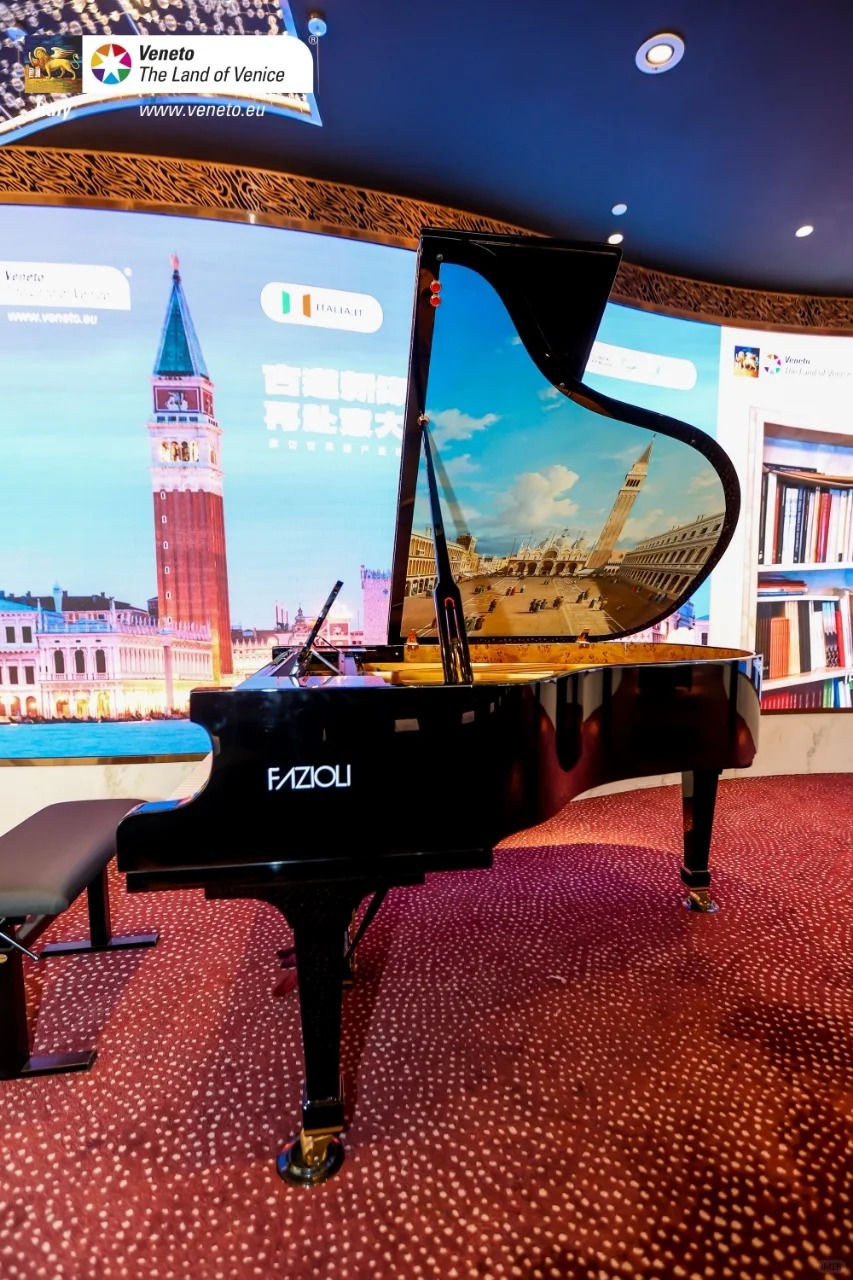
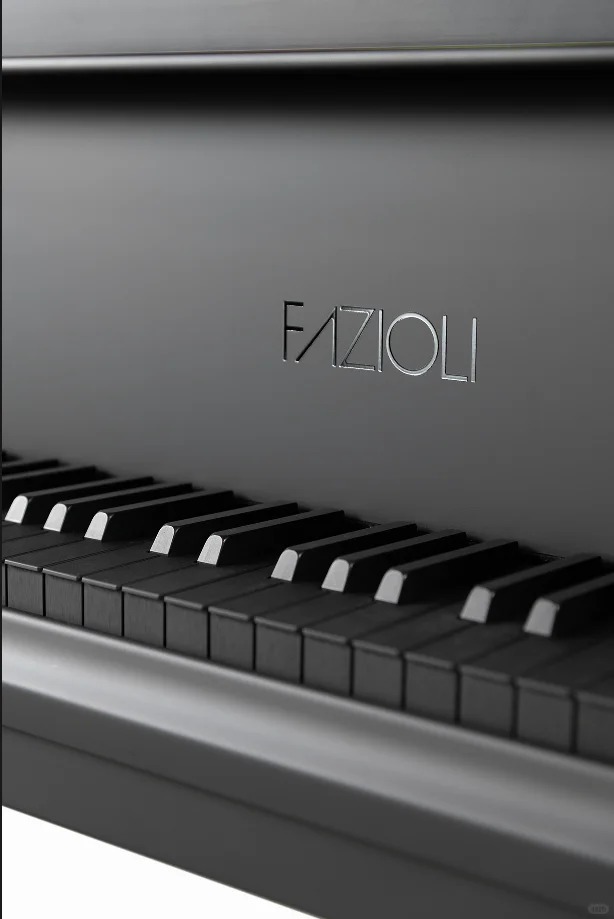
- The Italian Master: Fazioli. The relative newcomer from Sacile has swiftly ascended to the pinnacle. Fazioli pianos are instruments of extreme clarity, breathtaking dynamic range, and a powerful, resonant bass, favoured in top-tier recording studios and by pianists seeking ultimate transparency.
Today, buyers have unprecedented access to these instruments. Major retailers like Thomann, Europe’s largest music retailer, provide a crucial service, offering a wide curated selection, manufacturer warranties, and the logistical assurance of insured, professional delivery across Europe to your UK address.
Your Objective Selection Criteria: The Four Pillars
1. Size & Space: The Primary Constraint
The length of a grand piano is the single greatest determinant of its sound and its suitability for your space. Longer strings and a larger soundboard produce a richer, more powerful bass and greater tonal complexity.
- Baby Grands (under 170cm / 5’7”): Ideal for smaller rooms where space and aesthetics are paramount. While perfect for intimate settings, their shorter bass strings can limit ultimate resonance.
- Medium Grands (170cm – 210cm / 5’7” – 6’11”): The sweet spot for most serious homes and institutions. Instruments like the Steinway Model B (211cm) or Yamaha C3X (186cm) offer a full, balanced scale and sufficient power for larger living rooms or small auditoriums.
- Concert Grands (over 210cm / 6’11”): Instruments like the Fazioli F278 or Steinway Model D require significant space—both physically and acoustically. They are designed to project with clarity and authority in large halls.
A rule of thumb: The room should be at least 10-15 times the volume of the piano itself. For a 180cm (5’11”) grand, a room of 30-40 square metres with good acoustics is ideal.
2. Tonal Character & Signature: The Instrument’s Voice
This is the most personal criterion. Play the same piece on different pianos to hear their souls.
- American (Steinway): Projective, clear, with a fundamental tone that cuts through an orchestra. Incredibly versatile across genres.
- German (Bechstein, Grotrian): Complex, colourful, with great depth and a nuanced palette. The touch is often described as having more resistance, allowing for exquisite control.
- Viennese (Bösendorfer): A singing, lyrical quality, particularly in the treble. The bass is warm and fundamental rather than aggressively percussive. Ideal for the Classical and Romantic repertoire.
- Japanese (Yamaha, Kawai): Brilliant, precise, and exceptionally consistent. The tone is clear and immediate, offering excellent definition for contrapuntal music.
- Italian (Fazioli): Crystalline purity, extreme dynamic range, and a powerful, sustained bass. The sound is laser-focused and transparent.
3. Action & Touch: The Interface for the Pianist
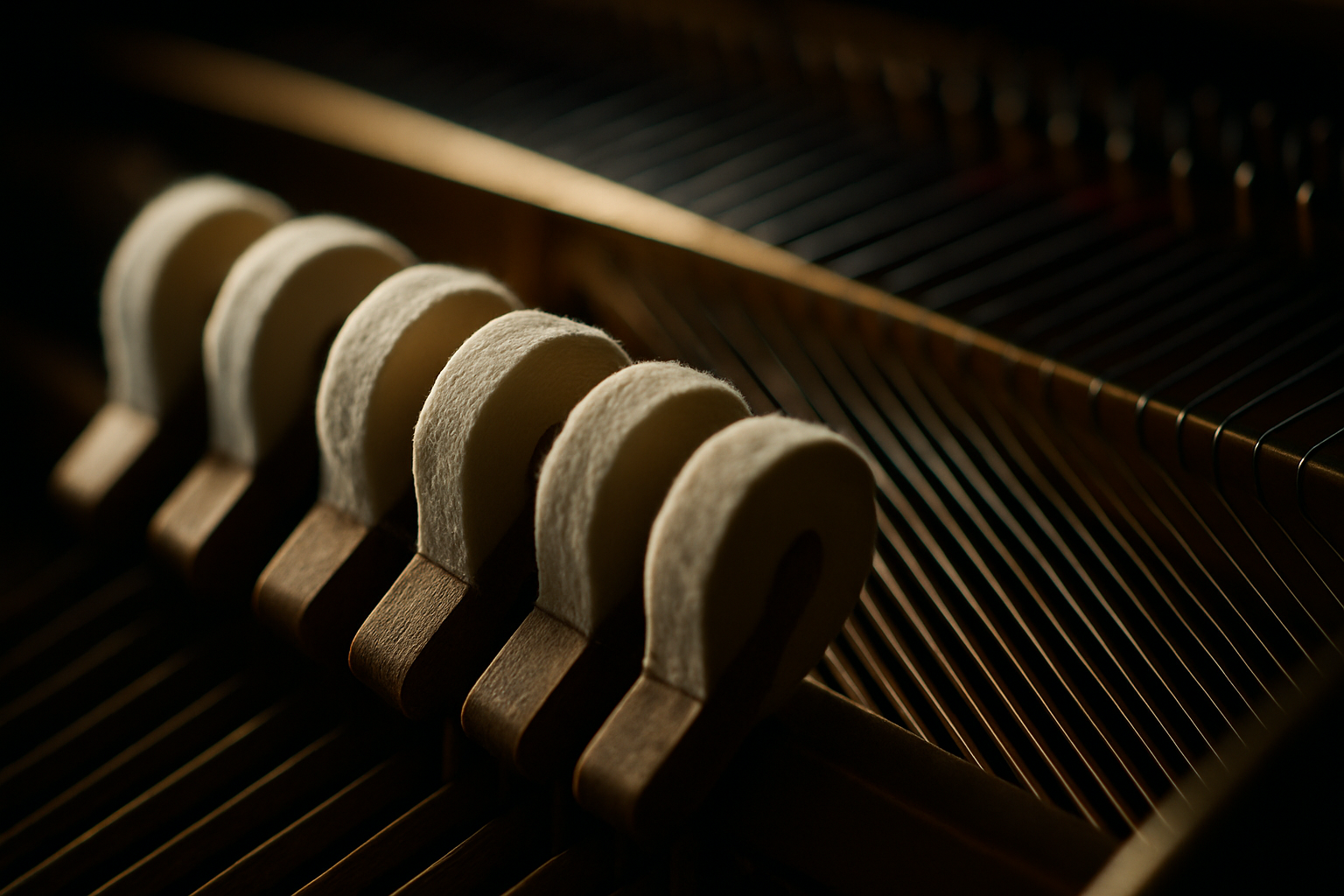
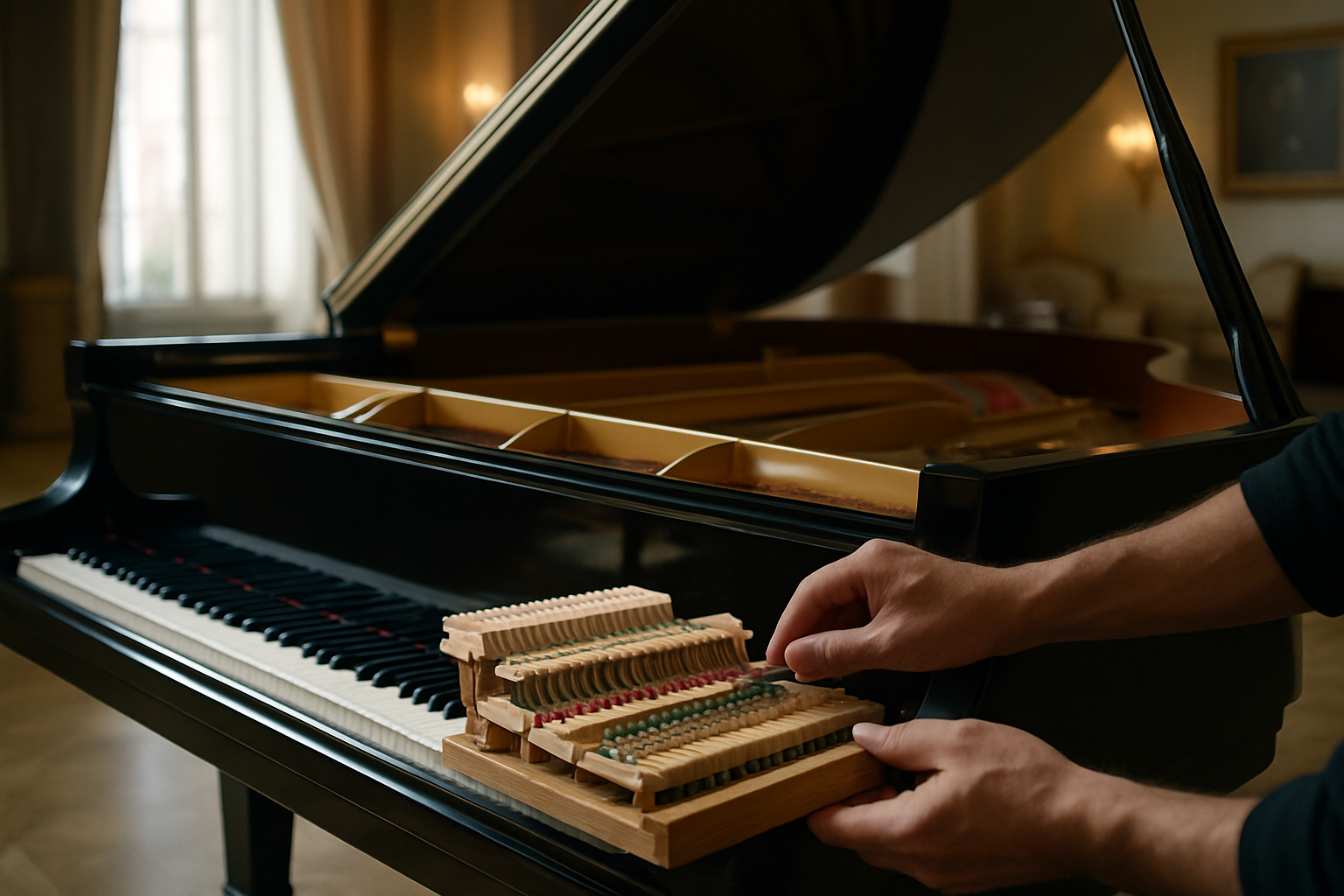
The action is the mechanical heart, translating finger motion into hammer strike. Key terms include double escapement (allowing rapid repetition) and Renner actions (the gold standard for many European brands). Kawai’s Millennium III action uses carbon fibre for stability and responsiveness. Regardless of brand, a well-regulated action—adjusted for evenness, depth, and resistance—is essential. A voicing session (softening or hardening the hammer felts) tailors the instrument’s brightness to your room and taste.
4. Budget & Value: The Full Financial Picture
- New vs. Certified Pre-Owned: A new piano offers the latest specifications and a full warranty. A certified pre-owned instrument, such as those from Steinway’s Certified Pre-Owned programme or reputable dealers, can provide exceptional value, often having been professionally maintained and regulated.
- Realistic Price Brackets: Be prepared for the full cost, which includes specialist piano transport (often £500-£1500 within the UK), initial tuning and regulation, and a suitable piano stool or bench.
- Ongoing Costs: Budget for at least two tunings per year (£150-£300 each), with periodic regulation and voicing every few years (£300-£600+ each).
Recommendations by Pianist Profile & Scenario
- The Discerning Amateur / City Flat Dweller: Prioritise grands under 180cm (5’11”) with a tone that projects beautifully without overwhelming. A Kawai GL-10 or Yamaha GB1K offers excellent quality in a compact form. Consider a silent system for late-night practice. Aesthetics and finish are also important considerations.
- The Music Student or Conservatoire: Durability and consistent action are paramount for technical development. The tone should be clear and balanced to train the ear. The Yamaha C3X or Kawai GX-2 are workhorses of music departments worldwide. The Boston GP-178 (designed by Steinway) is another strong contender.
- The Concert Pianist or Professional: This choice is about finding your unique voice. It demands ultimate dynamic range, projection, and an action that feels like an extension of your musical thought. This is the realm of the Steinway Model B or D, Bösendorfer 214, Fazioli F212, or Yamaha CFX.
- The Collector or Prestigious Institution: Investment-grade instruments, unique veneers (e.g., macassar ebony, burr walnut), historical re-editions, or bespoke commissions from the great houses are the focus. Authenticity, provenance, and unparalleled craftsmanship are key.
Grand Piano Recommendation Grid by Budget
| Model | Approx. Size | Price Range (GBP) | Tonal Character | Ideal For |
| :— | :— | :— | :— | :— |
| Yamaha GB1K | 151cm (4’11 ») | £10,000 – £15,000 | Bright, clear, reliable | First grand, smaller rooms, teaching studios |
| Kawai GL-10 | 153cm (5′) | £15,000 – £20,000 | Warm, responsive, Millennium III action | Advancing students, discerning amateurs |
| C. Bechstein Academy A190 | 190cm (6’3″) | £60,000 – £85,000 | German depth, crystalline treble, nuanced | Serious amateurs, professors, small concert venues |
| Steinway Model A (Hamburg) | 188cm (6’2″) | £90,000+ (new) | Singing, projective, quintessential Steinway tone | Professionals, lifetime investment, institutions |
| Bösendorfer 214VC | 214cm (7′) | £150,000+ | Uniquely Viennese, warm bass, lyrical treble | Concert artists, collectors seeking distinctive voice |
| Fazioli F278 | 278cm (9’2″) | £200,000+ | Extreme clarity, powerful bass, breathtaking dynamic range | Premier concert halls, top-tier recording studios |
Frequently Asked Questions (FAQ)
What is the minimum room size for a grand piano?
For a baby grand (around 150cm), a room of at least 20-25 square metres can work if well-furnished to dampen excess reverberation. For a medium grand (180cm+), aim for 30-40 square metres. The key is not just floor space, but volume—high ceilings are beneficial. Always consider the piano’s voice in your room’s acoustics.
Should I buy a new or a pre-owned grand piano?
A certified pre-owned instrument from an authorised dealer or a manufacturer-backed programme (like Steinway’s) is an excellent path. It offers the character of a played-in instrument, often at a significant saving. The critical step is an independent inspection by a qualified piano technician (PTA or IAPBT registered) to assess the soundboard, pin block, action, and frame.
How much does grand piano maintenance cost in the UK?
Annual tuning (twice yearly) typically costs £150-£300 per visit. A full regulation and voicing, needed every 3-5 years depending on use, can range from £300 to over £800. Climate control (avoiding direct sunlight, radiators, and drafts) is the best way to minimise maintenance costs and preserve stability.

What are the advantages of buying from a major retailer like Thomann?
Beyond a vast selection under one virtual roof, retailers like Thomann provide significant buyer security: manufacturer-approved setups, full manufacturer warranties, professional after-sales support, and crucially, insured and specialist delivery logistics across Europe, which is a major consideration for UK buyers sourcing from the continent.
Is a more expensive grand piano always better?
Not in a linear sense. Beyond a core level of quality (around the £25,000-£40,000 mark for new instruments), you are increasingly paying for a specific, refined tonal character, higher levels of handcraftsmanship, and the reputation of a legendary brand. A £60,000 Bechstein is not « better » than a £60,000 Steinway—it is profoundly different. The choice becomes artistic, not purely qualitative.
Real-world scenarios: practical use cases
In a city flat
- Size & Tone: Prioritise a compact grand (150-170cm) with a tone that is clear and present but not overwhelmingly powerful. A Kawai GL-30 or Yamaha GC1 would be ideal candidates.
- Neighbour Considerations: A high-quality built-in silent system (e.g., Yamaha’s Silent Piano™ or Kawai’s Anytime™) is a worthwhile investment for unrestricted practice hours.
- Transport Logistics: Measure doorways, stairwells, and lifts meticulously. Specialist piano movers are essential for navigating urban challenges.
- Climate Control: Flats can have dry, central-heated environments. Use a humidifier system like a Dampp-Chaser to protect the wooden structure.
In a concert hall
- Projection & Power: The instrument must fill the space with clarity, not just volume. A 7ft+ concert grand like a Steinway Model B, Bösendorfer 214, or Yamaha CFX is standard.
- Endurance: The action must remain consistent and responsive throughout a demanding recital or concerto performance, with no mechanical fatigue.
- Tuning Stability: The piano must hold its tuning perfectly under the bright lights and varying conditions of a stage. A robust, single-cast iron frame is critical.
- Technical Support: Immediate access to a skilled technician for pre-concert tuning, regulation adjustments, and voicing is non-negotiable.
In a recording studio
- Behaviour Under Microphones: The instrument must sound balanced and detailed from the player’s position and under close-miking. Fazioli’s clarity and Steinway’s projective core are often favoured.
- Sustain & Tonal Complexity: A rich, complex sustain that records beautifully is key. The soundboard must be highly responsive to pianissimo playing.
- Tuning Stability: Sessions are long and costly. The piano must stay in perfect tune with minimal drift.
- Dynamic Control: The action must allow for extreme subtlety of touch to capture the full emotional range on record.
In a conservatoire
- Intensive Daily Use: The piano must withstand 8-12 hours of playing daily from different pianists. Durability of the action (like Kawai’s carbon fibre) and robust stringing are essential.
- Consistency: A fleet of pianos, such as the Yamaha C3X or Kawai GX-2, needs to offer a similar touch and tonal response for fair student assessment.
- Versatility: The instrument must perform equally well for Baroque, Romantic, and contemporary repertoire, making a balanced, clear tone more important than an extreme character.
- Ease of Maintenance: A design that allows technicians easy access for frequent regulation and repairs is a practical necessity.
Technical specifications
| Specification | Details & Common Values |
| :— | :— |
| Typical Length Range | 147cm (4’10 ») to 308cm (10’2″) |
| Typical Width | Approx. 148cm – 156cm |
| Weight | 250kg (5ft grand) to 550kg (9ft concert grand) |
| Action Type | Double Escapement, Repetition Action (e.g., Renner, Steinway, Kawai Millennium III) |
| Soundboard Timber | Solid, quarter-sawn Sitka Spruce or European Spruce |
| Number of Keys | 88 (standard); Bösendorfer Imperial 290 has 97 |
| Frame | Single-cast iron plate (grey iron or vacuum-cast) |
| Finishes Available | Polished Ebony, Polished White, Satin Walnut, Mahogany, various exotic veneers. |
Purchase guide
- New Price / Certified Pre-Owned Price: New prices are set by manufacturers and authorised dealers. Certified pre-owned prices vary dramatically with age, condition, and model but can represent a 30-50% saving on the equivalent new instrument. Always compare the pre-owned price against the current new list price.
- Where to Buy: Purchase from authorised dealers for the brand or highly reputable, specialist piano retailers. For broader comparison shopping and secure logistics, Thomann is a major option, offering free European delivery on grands, a 3-year warranty, and often flexible financing plans. Always visit and play the exact instrument you intend to buy, or ensure a robust returns policy if buying remotely.
- Annual Maintenance Cost: Budget a minimum of £300-£600 per year for two tunings and minor adjustments. Set aside a further £800-£1500 every 3-5 years for comprehensive regulation and voicing.
- What to Check Before Buying:
* Condition of Soundboard: Look for cracks (small crown cracks can be stable, long radiating cracks are serious). Tap it lightly; it should resonate.
Action Regulation: Play every key, from ppp to fff*. Check for evenness of touch, repetition speed, and that no keys stick or are noisy.
* Pin Block Condition: The tuning pins should be tight. A technician will check the torque. Loose pins mean an expensive rebuild.
* String & Hammer Condition: Strings should be bright, not rusty. Hammers should have deep, clean grooves, not flattened to the string.
* Independent Inspection: For any pre-owned piano over £15,000, a report from an independent technician (not affiliated with the seller) is the wisest £200-£300 you will ever spend.