
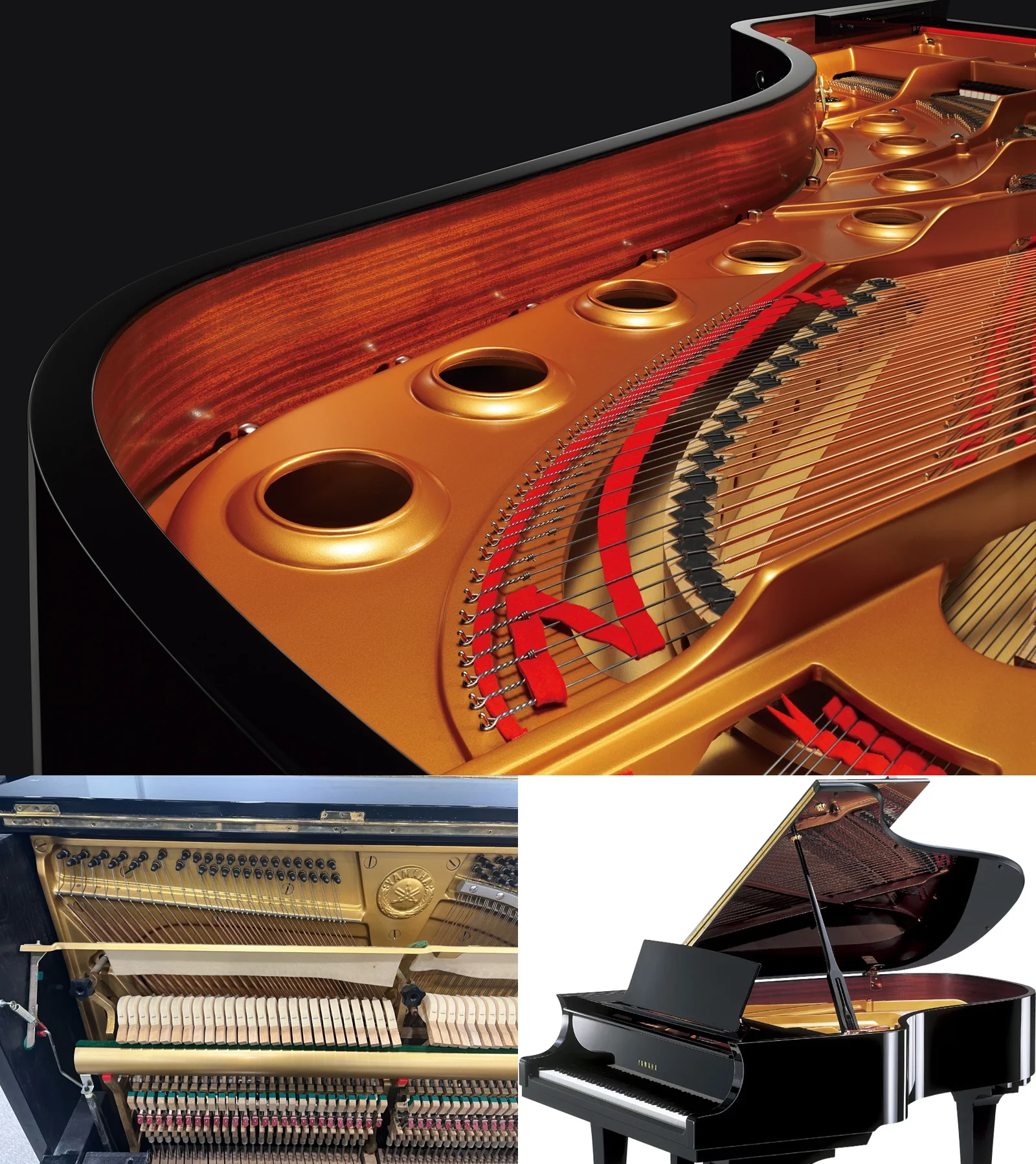
For the pianist seeking an instrument that marries renowned reliability with a distinct, clear tonal signature, Yamaha stands as a pillar of the global piano industry. From the aspirational first grand to the instrument chosen for the world’s most demanding concert stages, Yamaha’s hierarchy of grand pianos offers a model for every serious player. This guide, crafted for the UK market, will navigate the Yamaha grand piano range, helping you identify the instrument that aligns with your artistic ambitions, your space, and your budget.
Understanding the Yamaha Grand Piano Hierarchy
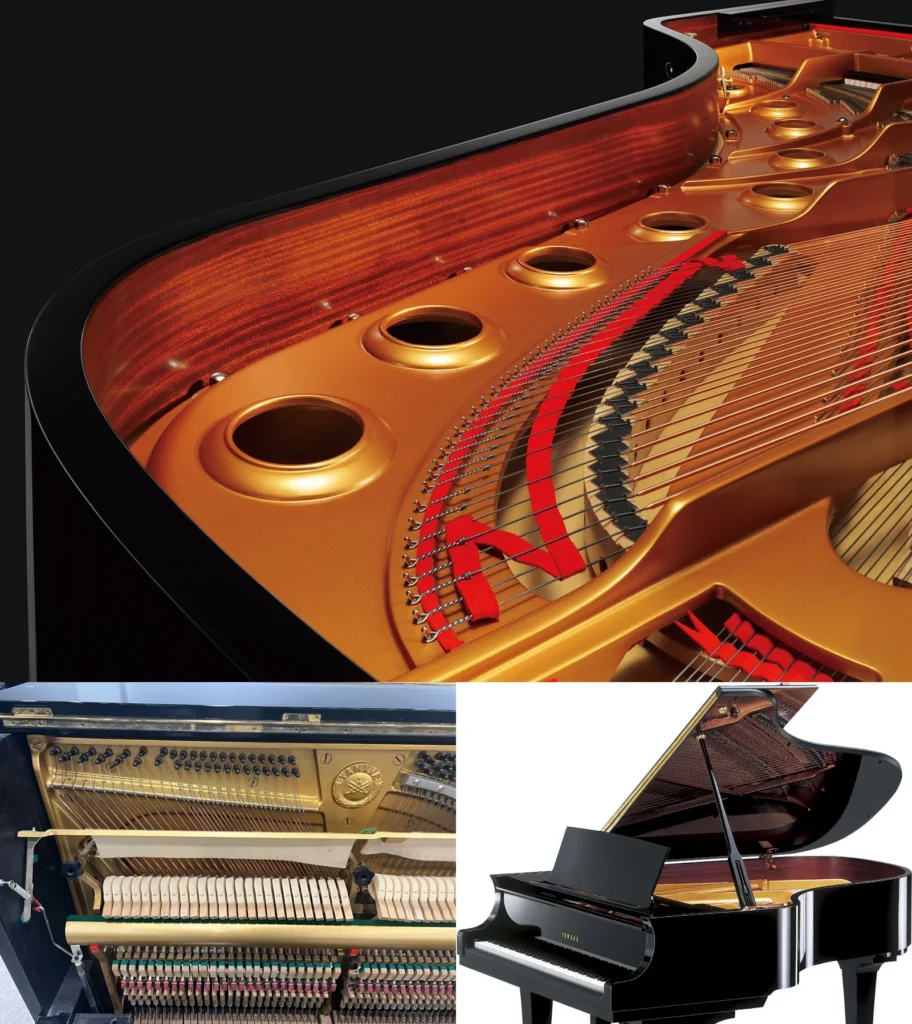
Yamaha’s grand piano range is built on a clear philosophy of incremental excellence, with each series representing a significant step in materials, craftsmanship, and sonic ambition.
- The CF Series & CFX: The Concert Legacy. Handcrafted by master piano builders in Japan, these are Yamaha’s flagship instruments. The CFX concert grand is a modern legend, known for its powerful, crystalline tone with remarkable colour and projection, favoured by major concert halls and competition winners.
- The S Series: The Shigeru Alternative. Positioned between the CX and CF series, the S Series represents a more handcrafted, European-inspired approach within Yamaha’s mainline production, offering a warmer, more complex tonal palette.
- The CX Series: The Professional Standard. The successor to the legendary C Series, the CX is the benchmark for conservatoires, professional studios, and serious pianists worldwide. It features premium materials like solid Sitka spruce soundboards and meticulously crafted actions for a responsive, dynamic, and richly nuanced performance.
- The C Series: The Established Classic. While superseded by the CX, the C Series (e.g., C3, C5, C7) remains a hugely popular and widely available model on the pre-owned market. It offers proven performance and exceptional durability.
- The GB1K & GN Series: The Entry Point. These compact models are designed to bring the grand piano experience into smaller homes. They provide the essential grand piano action and improved tonal response over an upright, serving as an excellent first grand or a space-conscious choice.
A Curated Selection of Yamaha Grand Pianos
Yamaha GB1K (161 cm)
The quintessential ‘baby grand’ and Yamaha’s most accessible entry into grand piano ownership.
- Tonal Character: Bright, clear, and focused. Its compact size delivers a surprisingly direct and articulate sound, ideal for classical and popular repertoire in a domestic setting.
- Action & Touch: Features a refined version of Yamaha’s standard grand action. It is responsive and even, providing a genuine grand piano touch that is excellent for developing technique.
- Build & Features: A compact design built with Yamaha’s industrial precision. It utilises a spruce soundboard and a stabilised hardwood rim for consistent performance.
- Ideal For: The discerning amateur, the family seeking a centrepiece instrument, or the pianist with limited space in a city flat or smaller room.
- Typical Price Range: £13,000 – £18,000 (new).
Yamaha C3X (186 cm)
Arguably the most famous model in Yamaha’s history, the C3X is the definitive ‘workhorse’ grand for the advanced student and professional.
- Tonal Character: Balanced, versatile, and powerfully expressive. It offers a rich bass, a singing tenor, and a brilliant but never brittle treble. Its tone has both clarity and warmth, suitable for everything from Baroque to contemporary jazz.
- Action & Touch: The NWX (Natural Wood X) action with synthetic ivory keytops provides exceptional control, repetition speed, and a tactile, authentic feel that withstands hours of daily practice.
- Build & Features: Solid Sitka spruce soundboard, vertically laminated maple bridges, and a single-cast iron frame. It represents the full suite of Yamaha’s technical innovations in a supremely reliable package.
- Ideal For: The conservatoire student, the professional pianist needing a reliable home or studio instrument, the serious amateur, and music departments.
- Typical Price Range: £45,000 – £55,000 (new).
Yamaha S3X (188 cm)
The S Series model offers a distinct, more handcrafted voice within Yamaha’s catalogue, designed for the pianist seeking greater tonal complexity.
- Tonal Character: Noticeably warmer, darker, and more colourful than the CX series. It emphasises fundamental tones and offers a more European-style sustain and resonance, with a remarkable ability to blend notes.
- Action & Touch: Features the premium Grand Touch S action, which is assembled with additional hand-finishing for a subtly more nuanced and controllable feel, aiding in the production of a wider dynamic palette.
- Build & Features: Incorporates Snöka spruce for the soundboard (selected for its elasticity and resonance), along with unique back design and rim materials to enhance acoustic vibration and tonal depth.
- Ideal For: The pianist who finds the classic Yamaha tone too direct and seeks an instrument with more inherent warmth and romantic colour for solo repertoire and intimate recording.
- Typical Price Range: £70,000 – £85,000 (new).
Yamaha CFX (274 cm)
Yamaha’s ultimate statement: a concert grand built to dominate the world’s great stages and recording studios.
- Tonal Character: Awe-inspiring power combined with exquisite clarity and an immense range of colour. The bass is profound and articulate, the treble rings with a laser-like purity that cuts through an orchestra, and the overall sustain is magnificent.
- Action & Touch: The CFX-specific action is engineered for ultimate power, speed, and durability. It allows for effortless projection at fortissimo and the most delicate control at pianissimo, responding to the most virtuosic demands.
- Build & Features: Represents the pinnacle of Yamaha’s craft. Every component, from the specially cured Sitka spruce soundboard to the hand-forged pins and bespoke hammers, is selected and assembled to achieve a specific tonal ideal.
- Ideal For: The concert pianist, the major symphony orchestra hall, the top-tier conservatoire auditorium, and the elite recording studio requiring a reference instrument.
- Typical Price Range: £150,000+ (new).
Yamaha Grand Piano Decision Checklist
Use this list when evaluating a Yamaha grand:
- [ ] Have I identified my primary use? (e.g., daily practice, performance, recording)
- [ ] Does the piano’s size suit my room acoustically and physically?
- [ ] Have I played the exact model (and the specific instrument) I am considering?
- [ ] Does the tonal character (bright CX vs. warm SX) match my repertoire preference?
- [ ] Is the action responsive and even across all dynamic levels?
- [ ] Have I budgeted for the instrument, delivery, and annual maintenance?
- [ ] Have I considered the warranty and after-sales support from the retailer?
Frequently Asked Questions (FAQ)
What is the main difference between the Yamaha C3X and the older C3?
The C3X is part of Yamaha’s updated CX series, which introduced significant design changes over the classic C3. Key improvements include a redesigned rim and beam structure for better energy transfer, a new back design, and vertically laminated bridges. Tonally, the C3X often has a richer, more complex sound with greater sustain and a more refined treble. When considering a pre-owned C3, it remains an excellent piano, but a side-by-side comparison with a C3X is highly recommended.
Is a Yamaha GB1K a « real » grand piano?
Yes, absolutely. While it is a compact, entry-level model, it features a true grand piano action (with a double escapement mechanism) and a horizontally strung soundboard, which are the defining characteristics that separate a grand from an upright piano. It offers superior touch responsiveness and tonal development compared to even the best uprights, making it a genuine step into grand piano ownership.
How does Yamaha’s tone compare to a German piano like a Steinway or Bechstein?
Yamaha grands, particularly the CX and CF series, are renowned for their clarity, precision, and consistency. The tone is often described as brilliant, clear, and very even across the register. Traditional German pianos (like Hamburg Steinway or Bechstein) often prioritise a warmer, more complex, and fundamentally richer tonal core with greater individual character from note to note. The choice is deeply personal; Yamaha’s reliability and clear projection are major assets, while some pianists prefer the more romantic, blended sound of the European instruments.
Are Yamaha grand pianos a good investment?
Yamaha grands hold their value exceptionally well on the secondary market due to their worldwide reputation for reliability and consistent quality. While they may not appreciate like certain limited-edition handcrafted European instruments, a well-maintained Yamaha, particularly a C3X or larger, will retain a significant portion of its value. Their durability also makes them a very sound long-term investment for your playing.
Where is the best place to buy a Yamaha grand piano in the UK?
Purchasing from an authorised Yamaha dealer ensures you receive a full manufacturer’s warranty, proper preparation (regulation and voicing), and expert aftercare. For a comprehensive selection and the convenience of Europe-wide service, retailers like Thomann UK are an excellent resource. As Europe’s largest music retailer, they offer a curated range of new Yamaha grands, provide secure financing options, and include specialist white-glove delivery across the UK, backed by a strong warranty.
Real-world scenarios: practical use cases
In a city flat
A Yamaha grand can work beautifully in a city dwelling with consideration. A GB1K or C1X (161-173cm) is ideal. Its focused tone projects well in 40-60 m² without becoming overwhelming. Consider neighbours; playing times may need managing, or opt for a model with Yamaha’s Silent Piano™ SH system for headphone practice. Ensure your building has suitable access for delivery—a professional piano mover is essential.
In a concert hall
Here, only a CFX (274cm) or possibly an S6X (212cm) will suffice. The primary requirements are immense projection to fill a large space without sounding forced, sheer power to balance with a full orchestra, and endurance to maintain stable tuning and regulation through demanding rehearsals and recitals. The piano must offer a vast palette of colours audible from the back row.
In a recording studio
Studios often favour the C3X or C5X (186-206cm) for their consistent, clear, and detailed tone that behaves predictably under microphones. The tuning stability is critical for long sessions, and the even response across all dynamics allows for clean isolation of parts. The S3X is also a prized choice for solo sessions where its warmer, more complex sustain is desirable.
In a conservatoire
Durability and versatility are key. The C3X is the global standard for practice room and smaller recital hall use. It must withstand intensive daily use from multiple players, offering a responsive action that develops technique and a tonal signature that is clear and honest, preparing students for any instrument they may encounter professionally.
Technical specifications: Yamaha C3X Grand Piano
| Specification | Value |
| :— | :— |
| Model | Yamaha C3X |
| Length | 186 cm |
| Width | 149 cm |
| Height | 101 cm |
| Weight | 330 kg |
| Action | Yamaha NWX (Natural Wood X) with Double Escapement |
| Keytops | Synthetic Ivory (White), Synthetic Ebony (Black) |
| Soundboard | Solid Sitka Spruce |
| Bridges | Vertically Laminated Hard Maple |
| Frame | Single-Cast Iron |
| Strings | Number 1-38: Pure Copper wound on Hexagon Steel Core |
| Number of Keys | 88 |
| Finishes Available | Polished Ebony, Polished White, Satin Walnut, Satin Mahogany |
Purchase guide
- New Price: £45,000 – £55,000 (Polished Ebony). Premium finishes cost more.
- Certified Pre-owned Price: £25,000 – £38,000 (depending on age, condition, and source).
- Where to Buy: Purchase from an authorised Yamaha dealer for full warranty support. For a seamless purchasing experience with a wide selection, consider Thomann UK. They offer free delivery across Europe on grands, a comprehensive 3-year warranty, and flexible financing plans, making a significant investment more accessible.
- Annual Maintenance Cost: In the UK, budget approximately £200-£300 for two professional tunings per year. A full regulation and voicing service every 3-5 years may cost £500-£800.
- What to Check Before Buying:
* Soundboard: Look for cracks (hairline cracks along the grain are often stable, but cross-grain cracks are serious). Tap it lightly; it should resonate.
Action Regulation: Play pianissimo* repetitions; the action should be responsive and even. Check for excessive key wobble.
* Pin Block Condition: Tuning pins should be tight. A technician can measure torque.
* String & Hammer Condition: Look for rust on strings and deep grooves on hammers.
* Case & Finish: Inspect for significant scratches or damage, though this is often cosmetic.
Related Articles
- Yamaha Grand Piano Price Guide for UK Buyers
- Yamaha Grand Pianos: GB, GC & CX Series Review
- Yamaha Baby Grand Piano Guide: Best Models for Home & Studio
- Yamaha vs Steinway Grand Piano Review: Our Verdict
- Best Piano Brands 2026 Review: Our Verdict on Top Makers
- Yamaha Grand vs Acoustic Piano: Our Verdict & Review
This page contains affiliate links. If you buy through them, we may earn a commission at no extra cost to you.
🎹 Essential accessories for pianists
This page contains affiliate links. If you buy through them, we may earn a commission at no extra cost to you.
- Thermo-hygrometer (humidity): TFA Digital Thermo-Hygrometer
- Caster cup (sold singly): Jahn IsoFloor
- Felt key cover: Jahn Keyboard Dust Cover
- Adjustable piano bench: Thomann KB-15BM