
Choosing a grand piano is a significant investment. Our expert guide for the UK market compares leading brands like Steinway, Bösendorfer & Fazioli, with selection criteria for every budget from £10,000 to £200,000+.
The Connoisseur’s Guide to Choosing a Grand Piano
Selecting the right grand piano is a profound decision that transcends mere purchase; it is the beginning of a partnership. It is the synthesis of art, acoustics, and precision engineering, requiring a harmonious match between the instrument’s inherent character—be it the commanding, projective power of a Hamburg Steinway or the lyrical, singing warmth of a Viennese Bösendorfer—and the pianist’s technique, the acoustic environment of its home, and the long-term vision for its use. This guide serves as your expert adviser, navigating the nuanced landscape of grand pianos to find the instrument that will resonate with your ambition, your space, and your soul.
The Grand Piano Landscape – A Hierarchy of Craftsmanship
The world of grand pianos is defined by distinct schools of building, each with a century-old philosophy that shapes the touch and tone of every instrument. Understanding this hierarchy is the first step in refining your search.
The Legendary Houses
These are the names that grace the world’s great concert stages and set the standard for excellence.
- Steinway & Sons: The ubiquitous benchmark. Hamburg Steinways are often described as having a clearer, more precise tone with a slightly brighter attack, favoured in European concert halls. New York instruments traditionally offer a warmer, more robust foundational sound. Both share the unparalleled Accelerated Action and the patented Diaphragmatic Soundboard for powerful projection.
- Bösendorfer: The sound of Vienna. Renowned for a uniquely warm, lyrical, and singing tone, with a remarkably responsive touch. Their Imperial 290 concert grand features nine extra bass keys, creating a sonorous depth unmatched by any other. The casework is an art form in itself.
- Fazioli: The modern pinnacle of precision. Handcrafted in Sacile, Italy, Fazioli pianos are celebrated for their explosive dynamic range, crystalline clarity in the treble, and incredibly fast, responsive action. They represent a more contemporary, laser-focused sound ideal for large, resonant spaces.
The German Heritage
A tradition of profound depth and complex tonal colour.
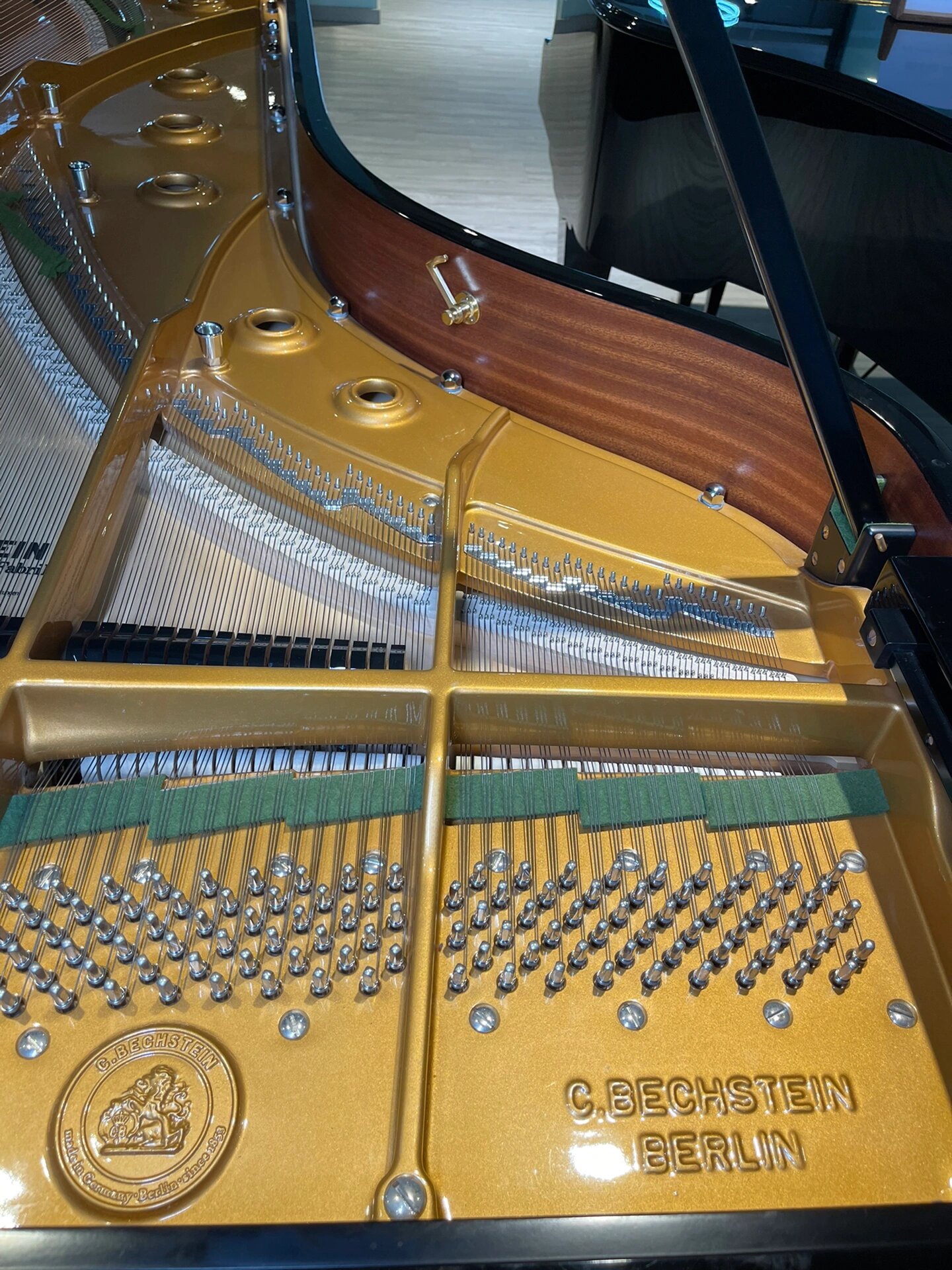
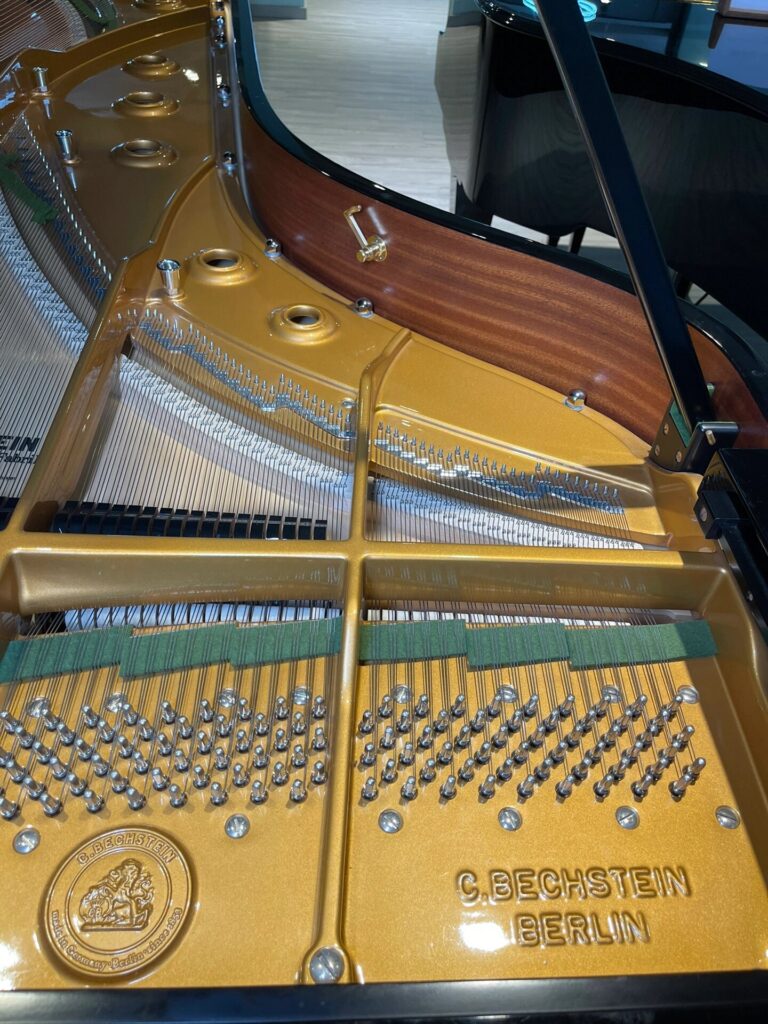
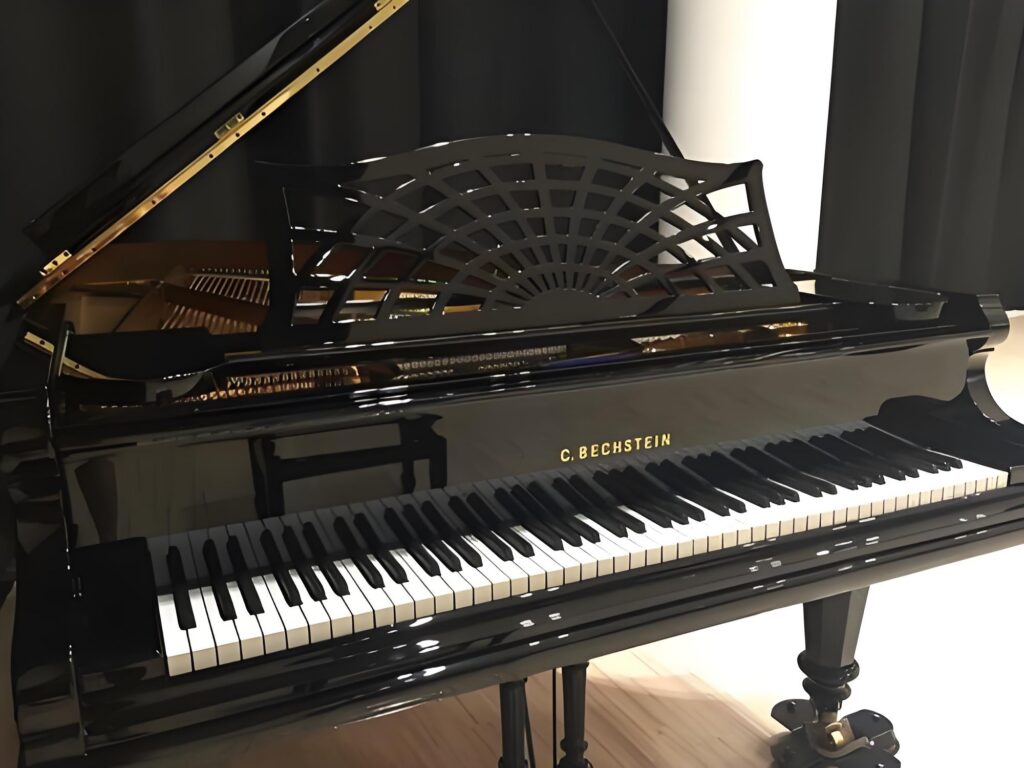
- C. Bechstein & Blüthner: Bechstein offers a powerful, colourful tone with a touch that balances control with expressiveness. Blüthner’s distinctive Aliquot stringing in the treble creates a characteristic shimmering, bell-like overtone, contributing to its « velvet » sound.
- Grotrian-Steinweg, Sauter, August Förster: These houses represent the pinnacle of artisan German building, often with a more intimate, nuanced tonal palette focused on harmonic richness and a delicate, responsive action.
Asian Precision Engineering
A philosophy built on relentless consistency, reliability, and clarity.
- Yamaha CFX/S Series & Shigeru Kawai: The concert-grade instruments from Japan. The Yamaha CFX is known for its brilliant, projective power and extremely stable action. Shigeru Kawai instruments, hand-finished by master artisans, offer a warmer, more European-inspired tone with the Millennium III Carbon Fibre Action for unparalleled repetition and stability in varying climates.
The Market Realities
Navigating purchase options is crucial. While a new piano from a manufacturer offers a full warranty and the joy of a pristine instrument, the certified pre-owned market presents exceptional value. Programmes like Steinway & Sons’ Certified Pre-Owned ensure instruments are meticulously refurbished to exacting standards. Understanding the depreciation curve—where premium brands hold value remarkably well—is key. Retailers like Thomann, as Europe’s largest music retailer, provide a valuable channel with access to a wide range of brands, comprehensive customer service, and benefits like free European delivery, which simplifies the complex logistics of acquiring a grand piano in the UK.
Your Objective Selection Criteria
Move beyond brand prestige and focus on these tangible, critical factors.
Size & Space: The Acoustic Reality
The length of a grand piano is the primary determinant of its soundboard area and string length, directly influencing its power and tonal richness.
- Baby/Parlour Grands (160-180cm): Suitable for smaller rooms (home drawing rooms, flats). Tone can be sweet but may lack ultimate bass authority.
- Medium/Living Room Grands (188-211cm): The ideal compromise for most serious pianists and larger homes. Offers a full, balanced scale with a credible bass register.
- Semi-Concert & Concert Grands (228cm+): Require significant space (a large room or hall) to realise their potential. Deliver unparalleled dynamic range, tonal colour, and sustaining power.
Tonal Signature: Identifying Your Palette
Listen for the character, not just the volume.
- American Clarity: (Steinway, Boston) – Focused, projective, with a clear melodic line.
- German Depth: (Bechstein, Blüthner, Grotrian) – Complex, rich in harmonics, with a rounded warmth.
- Viennese Warmth: (Bösendorfer) – Lyrical, singing, with a fundamental emphasis on beauty of tone.
- Japanese Precision: (Yamaha CFX, Shigeru Kawai) – Clear, analytical, with excellent note-to-note consistency across the entire keyboard.
Action & Touch: The Interface of Expression
The action is the piano’s mechanical heart. A premium Renner action (or equivalent like Kawai’s Millennium III) with a true double escapement allows for rapid repetition. Key weighting should be even and responsive, supporting technical development rather than hindering it. This is where personal preference is paramount; the touch must feel like an extension of your musical intent.
Budget & Value: The Total Cost of Ownership
The purchase price is just the beginning. Factor in:
- Professional Transport & Installation: £500 – £2,000+, depending on location and complexity (stairs, crane hire).
- Annual Maintenance: At least two tunings per year (£80-£150 per tuning), plus periodic regulation (adjusting the mechanical action) and voicing (adjusting the tone of the hammers). Budget £500-£1,000 annually for comprehensive care.
- Insurance: Specialist instrument insurance is essential.
Grand Pianos for Every Profile & Setting
The Discerning Amateur & City-Dweller
Needs: A compact grand (168-180cm) with a beautiful, controlled tone that inspires daily practice without overwhelming a shared living space. A silent system can be a prudent consideration. Focus on tonal sweetness and a responsive, enjoyable touch.
Typical Models: Yamaha C1X/GC1, Kawai GL-10/GX-1, Boston GP-156.
The Conservatoire Student or Professor
Needs: A robust, consistently responsive instrument (188-211cm) capable of handling advanced repertoire 6-8 hours daily. Durability, stable tuning, and a clear, articulate action are non-negotiable. It must be a reliable tool for technical refinement.
Typical Models: Yamaha C3X/C6X, Kawai GX-3/GX-6, C. Bechstein Academy A 192, Schimmel Konzert K 195.
The Concert Pianist & Recording Artist
Needs: A full concert grand (228cm+) that provides ultimate projection, a vast dynamic range (from a whisper to a roar), and an extensive palette of tonal colours. The action must be flawless for technical security under pressure.
Typical Models: Steinway Model D, Bösendorfer 225/280, Fazioli F228/F278, Yamaha CFX.
The Collector & Institutional Buyer
Needs: Focus on heritage, unique craftsmanship, and investment-grade instruments. This may include rare finishes, art case pianos, or historically significant models like the Bösendorfer Imperial. For institutions, durability, service network, and brand recognition for recruiting are key.
Typical Models: Bösendorfer Imperial 290, Fazioli F308, Steinway Limited Edition Art Case models.
Recommendation Grid: Curated Grand Pianos by Budget
The Entry-Point of Excellence (£10,000 – £30,000)
This tier is dominated by the premium pre-owned market and high-quality new uprights. However, discerning buyers can find exceptional value in smaller pre-owned grands from established lines. Look for well-maintained examples of:
- Yamaha C1/C2 Series (161-173cm): The benchmark for reliability and clear tone.
- Kawai RX-1/RX-2 (170-178cm): Known for a warmer, more mellow character than equivalent Yamahas.
- Boston GP-156 (156cm): Designed by Steinway, offering a taste of that tonal philosophy in a compact form.
The Heart of the Market (£30,000 – £70,000)
Here you access new high-quality baby grands and superb pre-owned professional models. This is the sweet spot for the serious amateur and advancing student.
- Yamaha C3X (186cm): A modern classic. Offers a powerful, clear, and balanced tone with exceptional build consistency. A standard in many teaching studios.
- Kawai GX-2 (178cm): Features the advanced Millennium III action for superb control. The tone is rich and singing, with a notably warm bass for its size.
- Schimmel Konzert Series K 175 (175cm): German craftsmanship at a relatively accessible point. Delivers a complex, European tonal colour with a beautifully light yet precise touch.
The Professional Tier (£70,000 – £150,000)
This is the realm of new semi-concert and concert-ready instruments from the world’s great houses. An investment for life.
- C. Bechstein Academy A 192 (192cm): A true German concert instrument in a manageable size. Powerful, colourful, with an action that offers both depth and lightning-fast repetition.
- Bösendorfer 170 (170cm): The entry into the Viennese sound. While compact, it possesses the signature singing, lyrical treble and warm bass that defines the brand.
- Steinway & Sons Model A (188cm): Often called « the perfect piano, » the Model A packs the full Steinway scale and tonal philosophy into a design ideal for larger homes and small halls.
The Pinnacle of Artistry (£150,000+)
Instruments at this level are built without compromise for the world’s most demanding stages and discerning private salons.
- Fazioli F278 (278cm): A masterpiece of precision. Breathtaking dynamic range, a piercingly clear treble, and arguably the fastest, most responsive action in production.
- Steinway & Sons Model D (274cm): The « gold standard » of the concert world. Unmatched projective power, a colossal tonal palette, and an action engineered for absolute control.
- Bösendorfer Imperial 290 (290cm): As much a work of art as an instrument. The nine extra bass notes provide a subterranean resonance, and its overall tone is uniquely lush, warm, and orchestral.
Frequently Asked Questions (FAQ)
What is the most important factor when choosing a grand piano?
The most critical factor is the synergy between the instrument’s touch and your personal technique, combined with its tonal character. A piano can be objectively superb, but if its action feels foreign or its tone doesn’t inspire you, it is the wrong instrument. Always play it extensively yourself.
Is a used grand piano a wise investment?
A well-chosen, professionally inspected used grand piano can be an excellent investment. Premium brands like Steinway, Bösendorfer, and Bechstein hold their value exceptionally well. The key is condition. A certified pre-owned programme from the manufacturer or a reputable dealer like Thomann (which offers a 3-year warranty on grands) mitigates risk and ensures the instrument has been properly assessed and serviced.
How much space do I really need for a grand piano?
As a rule, the room should be at least ten times the volume of the piano for the sound to develop properly. Practically, for a 180cm (5’11”) grand, a room of at least 25-30 square metres is advisable. Crucially, consider the logistics: doorways, corners, and the need for professional movers. A grand piano is not just furniture; it is an acoustic event.
What are the ongoing maintenance costs for a grand piano in the UK?
Budget for a minimum of two tunings per year (£160-£300 total). Every 2-5 years, expect to need regulation (action adjustment, £300-£600) and voicing (tone adjustment, £200-£400). A full service including all the above may cost £700-£1,200 annually. Humidity control (a room humidifier/dehumidifier system) is highly recommended to protect your investment and reduce tuning instability, especially with the UK’s variable climate.
Why are brands like Steinway and Bösendorfer so much more expensive?
The cost reflects centuries of continuous R&D, entirely handcrafted construction, the use of the finest materials (aged spruce, hard-rock maple, premium felt), and an immense amount of skilled labour. A Steinway grand requires over a year to build. This results in not just an instrument, but a unique, complex work of art with unparalleled resale value and a specific, celebrated musical character that has defined classical music for generations.
Real-world scenarios: practical use cases
In a city flat
- Tone & Volume: Prioritise a compact grand (168-180cm) with a sweet, controlled tone. A piano with a warmer, more fundamental sound (like a Kawai or a Bösendorfer 170) may integrate better than a very bright one.
- Neighbour Considerations: Discuss practice times. A high-quality silent system (where the hammers strike a rail instead of the strings and the sound is heard via headphones) is a superb solution for late-night practice.
- Transport Logistics: Measure everything twice—stairwells, lifts, doorframes. Professional piano movers are essential and will advise on feasibility.
- Climate Control: Flats can have dry, central-heated air. A piano humidity control system placed inside the instrument is a wise investment to protect the soundboard and tuning stability.
In a concert hall
- Projection & Power: A full concert grand (228cm+) is non-negotiable. It must fill the hall with clear, articulate sound even at pianissimo, without the tone « breaking up » at fortissimo.
- Endurance: The piano must hold its regulation and tuning perfectly throughout a demanding recital programme, despite changes in stage temperature and humidity from lighting.
- Tonal Palette: The instrument must offer the performer a vast range of colours—from a crisp, dry staccato to a lush, singing legato—to serve the widest possible repertoire.
- Action Reliability: The double escapement must allow for flawless repetition. The touch weight must be consistent across the entire keyboard for technical security under pressure.
In a recording studio
- Behaviour Under Microphones: The instrument must sound balanced and even across all registers when closely miked. Any quirks or unevenness in the scale will be exaggerated on the recording.
- Sustain & Clarity: A clean, un-muddied sustain is crucial, especially in the bass. The piano must allow for complex textures to be recorded with clarity.
- Tuning Stability: It must hold a perfect tuning for the duration of a long session, which may involve many retakes. Stable, high-quality pin blocks and a robust frame are essential.
- Dynamic Control: The action must allow for extreme subtlety of touch, enabling the artist to produce a wide dynamic range without harshness.
In a conservatoire
- Intensive Daily Use: The piano must withstand 8-12 hours of playing daily by different pianists with varying techniques. Incredible durability of the action parts, keys, and strings is required.
- Consistency: A fleet of practice room pianos must feel and sound relatively similar to the main stage instruments to aid student development.
- Versatility: The piano must be equally capable in Baroque, Classical, Romantic, and contemporary repertoire, offering a neutral yet responsive platform for learning.
- Serviceability: A strong local network of technicians and readily available spare parts (like Renner action components) is a major practical consideration for institutional buyers.
Technical specifications
| Specification | Description |
| :— | :— |
| Typical Length Range | 150cm (4’11 ») to 308cm (10’1″) |
| Typical Width | Approximately 148cm – 155cm |
| Weight Range | 250kg (small baby grand) to 550kg+ (concert grand) |
| Action Type | Double escapement, wooden or composite (e.g., Kawai Millennium III Carbon Fibre) |
| Soundboard Timber | Solid, vertically-grained Sitka or Alpine Spruce |
| Number of Keys | 88 (standard). Bösendorfer Imperial models have 92 or 97. |
| Frame | Single-cast iron plate (sometimes with decorative gold plating) |
| Strings | High-tensile steel; bass strings copper-wound. |
| Pin Block | Multi-laminated hard-rock maple or beech. |
| Standard Finishes | Polished Ebony, Polished White, Satin Mahogany, Walnut, and various veneers. |
| Notable Features | Duplex Scale (Steinway), Aliquot Stringing (Blüthner), Imperial Bass (Bösendorfer). |
Purchase guide
New price / Certified pre-owned price
- New: Prices start from around £15,000 for an entry-level baby grand (e.g., Yamaha GB1K) and can exceed £250,000 for a top-tier concert grand from a legendary maker.
- Certified Pre-Owned: This offers significant savings, typically 30-50% off the equivalent new price, while providing a professionally refurbished instrument with a manufacturer-backed warranty (e.g., Steinway Certified Pre-Owned).
Where to buy
- Authorised Brand Dealers: For new instruments and manufacturer-certified pre-owned programmes. They offer expert advice, after-sales service, and preparation.
- Major Specialised Retailers: Retailers like Thomann provide a wide selection of both new and carefully vetted used grands from multiple brands. Benefits often include free European delivery, a 3-year warranty on grand pianos, and flexible financing options, making them a convenient and reliable purchasing channel for UK buyers.
- Private Sale: Higher risk, but can yield the best price. Never buy without an independent inspection by a qualified piano technician.
Annual maintenance cost
Budget £500 – £1,200 per year for comprehensive care. This should cover:
- 2-3 tunings (£80-£150 each).
- Periodic action regulation and key levelling.
- Occasional voicing to maintain tonal quality.
- Consider an annual service contract with a trusted technician.
What to check before buying
1. Soundboard: Look for cracks, especially near the bridges. Minor hairline cracks are often stable, but major cracks affect tone and value.
2. Pin Block & Tuning Stability: Check the tuning pin torque. Loose pins mean the pin block is worn and the piano will not hold tune.
3. Action Regulation: Play every key, check for evenness of touch, repetition speed, and that no keys stick or are sluggish.
4. Hammers: Inspect for deep grooves or excessive hardening. Deep grooves require reshaping or replacement.
5. Strings & Bridges: Look for rust on strings and check that the bridge caps are not cracked and that strings are seated properly.
6. Case & Finish: Cosmetic condition affects value but not necessarily performance.
7. Proof of History: Always ask for service records. A well-documented history is a sign of a cared-for instrument.
Related Articles
This page contains affiliate links. If you buy through them, we may earn a commission at no extra cost to you.
🎹 Essential accessories for pianists
This page contains affiliate links. If you buy through them, we may earn a commission at no extra cost to you.
- Thermo-hygrometer (humidity): TFA Digital Thermo-Hygrometer
- Caster cup (sold singly): Jahn IsoFloor
- Felt key cover: Jahn Keyboard Dust Cover
- Adjustable piano bench: Thomann KB-15BM