
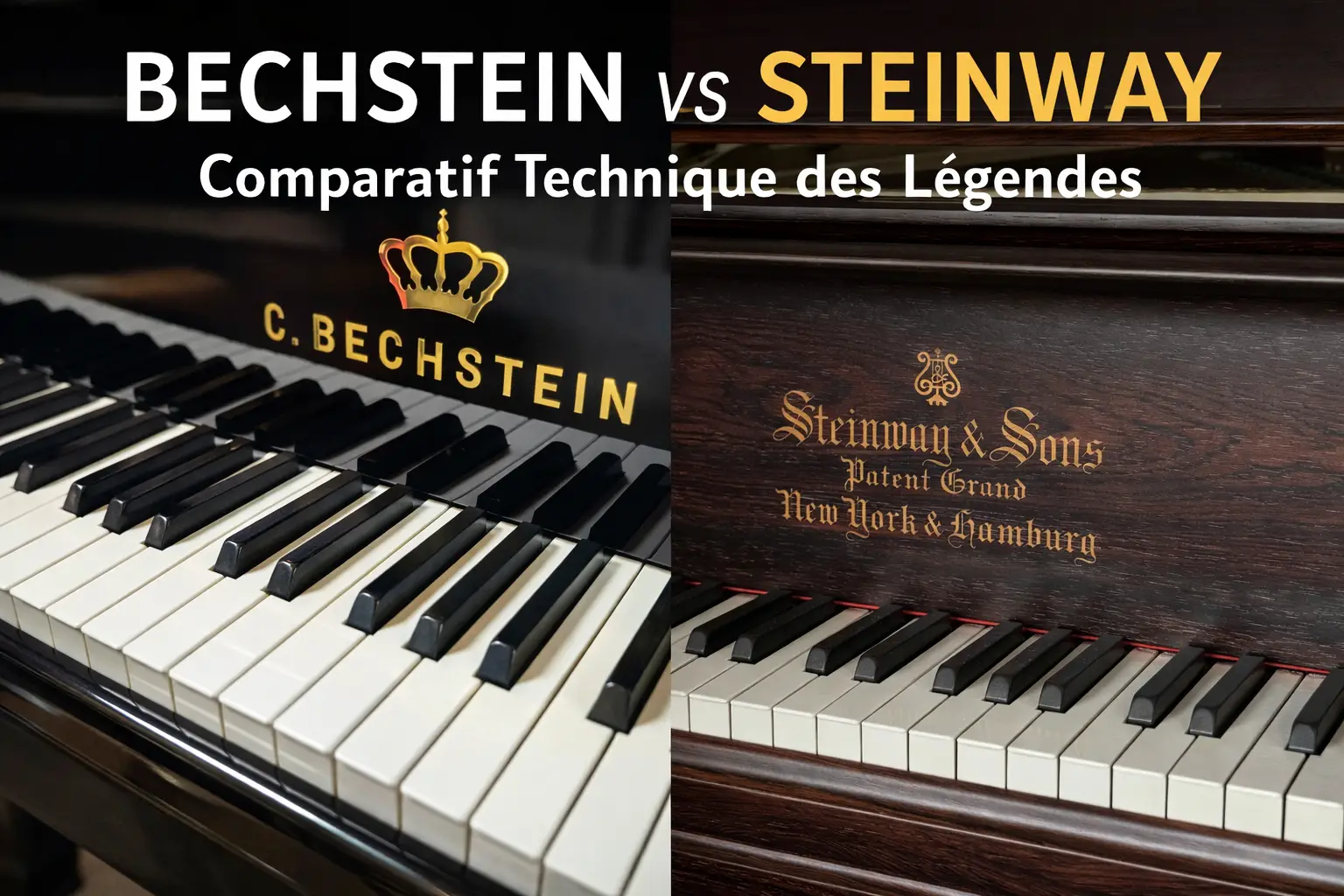
Choosing a grand piano is not merely a purchase; it is a profound investment in artistry, a commitment to a lifelong partner in musical expression. For the concert pianist, the conservatoire director, or the discerning amateur in the UK, the market can seem a labyrinth of legendary names and technical jargon. This guide cuts through the complexity. We move beyond brand hype to focus on the objective criteria that truly matter: the marriage of tonal character, responsive action, and physical presence with your space, your repertoire, and your aspirations. Here, we provide the framework to navigate this significant decision with confidence and clarity.
The Grand Piano Market: A Landscape of Legendary Craftsmanship
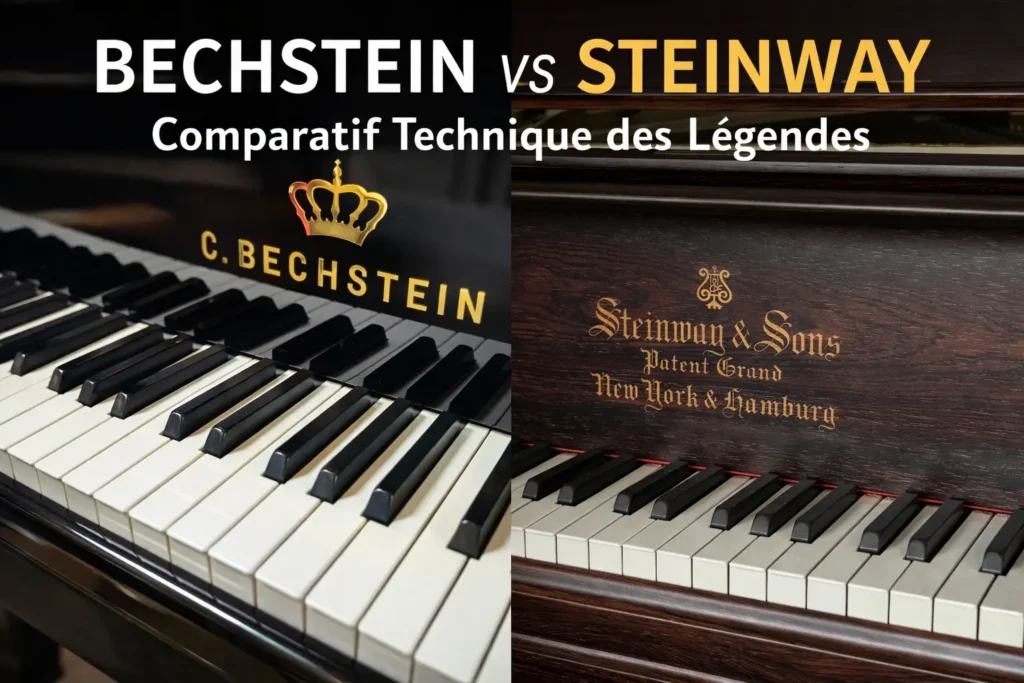
The world of grand pianos is stratified by centuries of tradition, distinct philosophical approaches to sound, and uncompromising craftsmanship. Understanding this landscape is the first step.
- The Concert Legends: These are the instruments upon which the great repertoire is built in the world’s premier halls. Steinway & Sons (with distinct characters from Hamburg and New York) is renowned for its powerful, projective tone and robust, reliable action. Bösendorfer of Vienna offers a uniquely warm, singing sustain and lyrical bass, famous for its imperial grands. Fazioli, the modern Italian master, delivers breathtaking clarity, a lightning-fast action, and phenomenal dynamic range.
- The German Heritage Houses: Germany’s piano-building tradition is deep and varied. C. Bechstein creates instruments of crystalline purity and profound depth. Blüthner employs its patented aliquot stringing for a uniquely colourful, romantic sound. Houses like Grotrian-Steinweg, Sauter, and August Förster each offer their own take on the classic European tone: complex, resonant, and richly nuanced.
- Asian Precision Engineering: From Japan, Yamaha (CFX and S Series) and Shigeru Kawai represent the pinnacle of precision manufacturing. They are celebrated for their exceptional consistency, clear, neutral tonal canvas, and incredibly responsive, agile actions. They have rightfully earned their place on the world’s stages.
Today, accessing these instruments is more straightforward than ever. Authorised retailers, including Europe’s largest music retailer Thomann, provide crucial access to these brands, often with the benefits of salon trials, secure Europe-wide delivery, and comprehensive warranties.
Your Objective Selection Criteria: Beyond the Brand Name
Falling for a name is easy; choosing the right instrument requires disciplined evaluation.
Size & Space: The Primary Acoustic Constraint
The length of a grand piano is the single greatest determinant of its sound. In a UK home, this is your first consideration.
- Baby Grand (~150cm): Suitable for smaller drawing rooms. Tone can be sweet but may lack ultimate bass authority and projection.
- Parlour Grand (~180cm): The classic domestic size. Models like the Steinway Model A or Yamaha C3X offer an excellent balance of power and proportion for a generous music room.
- Semi-Concert Grand (~210cm): Instruments like the Steinway Model B or Fazioli F212. These begin to approach concert-level power and tonal complexity, requiring a substantial, acoustically treated space.
- Concert Grand (274cm): The Steinway Model D, Yamaha CFX. Designed for large halls, their scale and volume are overwhelming in all but the largest private residences.
Tonal Character & Signature: Finding Your Voice
Each manufacturer has a sonic philosophy. Your repertoire can guide you.
- American Projection (Steinway): A bold, direct sound with a strong fundamental, ideal for the Romantic and modern concerto repertoire.
- Viennese Warmth (Bösendorfer): A singing, lyrical quality with enhanced harmonic colour, sublime for Mozart, Schubert, and jazz.
- German Depth (Bechstein, Blüthner): A complex, multi-faceted tone with great sustain, perfect for the colouristic demands of Debussy or Ravel.
- Japanese Clarity (Yamaha, Shigeru Kawai): A transparent, precise, and evenly balanced sound across all registers, offering a neutral palette for any style.
Action & Touch: The Interface of Expression
The action is the mechanism that translates your physical intention into sound. The feel is deeply personal.
- Look for a Renner action (or equivalent proprietary design like the Kawai Millennium III) with double escapement for precise repetition.
- Key weighting can vary. Some prefer a heavier, more substantive touch (often found in German and American pianos), while others favour the lightning agility of a Fazioli or Shigeru Kawai. The action must feel like a natural extension of your technique.
Budget & Value Realities (in GBP)
The purchase price is just the beginning. Consider:
- Total Cost of Ownership: Include annual maintenance (2-4 tunings at £80-£120 each, plus periodic voicing and regulation), specialist insured transport (especially for grands over 180cm), and potential climate control.
- Depreciation: Premium brands like Steinway, Bösendorfer, and Bechstein typically hold their value exceptionally well, especially in certified pre-owned programmes.
- The Pre-Owned Market: This is a critical avenue. A meticulously maintained, 20-year-old Steinway Model M or Yamaha C7 can represent extraordinary value compared to a new instrument.
Matching the Grand Piano to the Pianist: Usage Scenarios
The Discerning Amateur / Home Musician
Your priority is tonal beauty for personal enjoyment and the enhancement of your living space. Reliability and suitability for a domestic environment are key. A parlour grand (180-210cm) from a quality maker is often the sweet spot. Brands like Yamaha (CX Series), Kawai (GX Series), or a pre-owned Schimmel offer superb musicality without the concert-grade premium.
The Conservatoire Student or Professor
The instrument is a pedagogical tool. It requires a responsive, demanding action that builds technique and prepares the player for professional instruments. Durability for hours of daily practice is non-negotiable. The Yamaha S3X or Shigeru Kawai SK-2 are renowned in this setting for their consistency and clear, instructive tone. A robust pre-owned Steinway Model O or L can also be an excellent choice.
The Concert Pianist or Recording Artist
Requirements are uncompromising: ultimate dynamic range, projective power, a vast palette of tonal colours, and unflinching consistency. This is the realm of the semi-concert and concert grand. The choice becomes intensely personal—the Steinway Model B for its orchestral power, the Fazioli F212 for its crystalline detail, the Bösendorfer 214 for its lyrical warmth. Many artists rely on the concert hire fleets of major halls and festivals.
The Music Institution or Recording Studio
Institutions need workhorses: instruments that withstand intensive use from multiple players. Studios often seek a neutral, detailed acoustic that records well. A Yamaha CF Series or Steinway Model D is a common sight in both settings for their reliability and tonal predictability. A Bösendorfer might be chosen for its unique colour in a specialised film scoring studio.
Recommendation Grid: Grand Pianos by Budget
The Entry-Point of Excellence (£10,000 – £30,000)
This bracket is dominated by high-quality pre-owned instruments and new models from Asia’s premium lines. It’s about finding the best individual piano.
- New: Yamaha GB1K or Kawai GL-10 baby grands. Solid, reliable starters.
- Pre-Owned (carefully vetted): A well-maintained Yamaha C3 or Kawai RX-2 from the 1990s/2000s. Occasionally, a C. Bechstein or Schimmel from the 1970s/80s in need of some attention but with superb core materials.
The Heart of the Market (£30,000 – £80,000)
Here you access new instruments from the world’s premier makers. This is where most serious buyers find their lifelong instrument.
- Asian Excellence: The Shigeru Kawai SK-2 (188cm) is a masterpiece of hand-craftsmanship. The Yamaha S3X (186cm) offers stunning clarity and projection.
- European Heritage: The C. Bechstein Academy A-160 (160cm) or A-190 (190cm) deliver the legendary Bechstein tone. A pristine pre-owned Bösendorfer 170 or Steinway Model M becomes a very tangible possibility.
The Pinnacle of Possession (£80,000+)
This is the domain of the world’s most celebrated instruments, either new or in certified pre-owned condition.
- The Reference Parlour Grand: The Steinway & Sons Model B (211cm) is arguably the world’s benchmark.
- The European Masters: The Fazioli F183 (183cm) or F212 (212cm) for breathtaking clarity. The Bösendorfer 214VC (214cm) for Viennese concert grandeur. The C. Bechstein Concert 8 (208cm) for profound German depth.
Frequently Asked Questions (FAQ)
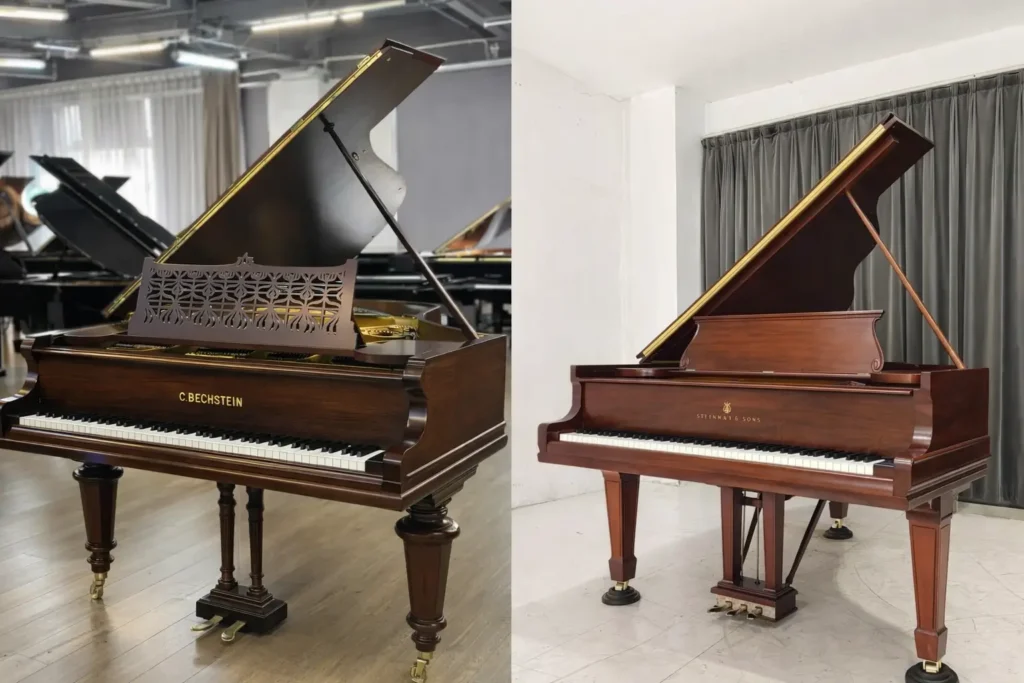
What is the minimum room size for a baby grand piano?
Consider both physical and acoustic space. A 150cm baby grand needs a room of at least 25-30 square metres to allow its sound to develop without becoming overwhelming. Hard floors and large windows will make it sound brighter; heavy curtains and carpets will absorb sound. Always allow for at least one metre of space around the piano for airflow and access.
Is a used Steinway better than a new Yamaha or Kawai?
There is no universal answer; it depends entirely on condition, provenance, and personal preference. A 40-year-old Steinway in poor regulation with a worn action will be inferior to a new Shigeru Kawai. Conversely, a meticulously maintained, recently reconditioned Steinway from the 1970s may offer a tonal complexity and character that some players prefer over the brilliant consistency of a new Japanese piano. Always play and compare individual instruments.
How much does annual maintenance cost for a grand piano in the UK?
Budget for a minimum of two tunings per year, ideally four for a new piano or one in a demanding environment. Costs are typically £80-£120 per tuning. A full regulation and voicing service every 3-5 years can cost £500-£1,500 depending on the instrument’s size and needs. Annual maintenance for a premium grand can reasonably cost between £300 and £800.
What are the advantages of buying from a major retailer like Thomann?
Major authorised retailers provide security and service. Thomann, as Europe’s largest music retailer, offers significant advantages: a comprehensive 3-year warranty on new instruments, free and insured delivery across Europe, transparent pricing, and often flexible financing options. Crucially, they provide access to a wide range of brands under one roof, allowing for direct comparison.
Should I prioritise the action or the tone when choosing?
Both are inextricably linked, but a simple rule applies: you cannot access a beautiful tone through an action that feels alien or unresponsive to you. The action is your point of contact. If it doesn’t inspire confidence and allow for precise control, you will never be happy, regardless of the piano’s sonic potential. Find an action that feels like home, then seek the most beautiful tone from within that selection.
Real-world scenarios: practical use cases
In a city flat
- Size & Tone: A baby grand (148-160cm) is the maximum. Look for a model with a warm, mellow character (e.g., a Kawai GL-10) to avoid excessive brightness in a small, reflective space.
- Neighbour Considerations: A built-in silent system (like Yamaha’s Silent Piano or Kawai’s Anytime) is a near-essential investment for late-night practice.
- Transport: Measure doorways, stairwells, and lifts meticulously. Professional piano movers are a must.
- Climate Control: Central heating is the enemy. Use a dedicated piano humidifier/dehumidifier system to maintain 42-55% relative humidity.
In a concert hall
- Projection & Power: The instrument must fill the hall without sounding forced. A concert grand (274cm) is standard, requiring a powerful bass, a singing midrange, and brilliant, clear treble that carries to the back row.
- Endurance: The piano must hold its regulation and tuning stability through rehearsals and multiple performances in potentially variable stage conditions.
- Consistency: The action must offer predictable response across its entire dynamic range, allowing the artist to focus on performance, not negotiation with the instrument.
In a recording studio
- Behaviour Under Microphones: The tone must be even across all registers, with no « wolf notes » or uneven harmonics. A neutral, detailed sound (like a Yamaha CFX or Steinway D) is often preferred as it provides a clean canvas for the recording engineer.
- Sustain & Control: The instrument must have a long, controllable sustain that allows for precise pedalling, which is critical for classical recording.
- Tuning Stability: It must hold perfect tuning for the duration of long recording sessions, often under hot studio lights.
In a conservatoire
- Intensive Daily Use: The action must be incredibly durable and maintain its regulation under 12-16 hours of daily playing from different, often forceful, students.
- Versatility: The piano should have a clear, articulate tone suitable for a wide range of repertoire, from Baroque to contemporary.
- Serviceability: The design should allow for easy, regular maintenance. Brands with a global network of technicians and readily available parts (like Yamaha, Kawai, Steinway) have a distinct advantage.
Technical specifications: Representative Model Comparison
| Specification | Steinway & Sons Model B (211 cm) | Yamaha CF6 (212 cm) | Shigeru Kawai SK-3 (188 cm) | C. Bechstein Academy A190 (190 cm) |
| :— | :— | :— | :— | :— |
| Length | 211 cm | 212 cm | 188 cm | 190 cm |
| Width | 148 cm | 152 cm | 149 cm | 147 cm |
| Weight | 345 kg | 390 kg | 330 kg | 325 kg |
| Action | Steinway Accelerated Action | Yamaha CF Action | Kawai Millennium III Carbon Action | Bechstein Silver Action |
| Soundboard | Solid Sitka Spruce | Solid Sitka Spruce | Solid Sitka Spruce | Solid Bavarian Spruce |
| Number of Keys | 88 | 88 | 88 | 88 |
| Finishes Available | Polished Ebony, Polished White, various Walnuts & Mahoganies | Polished Ebony, Polished White | Polished Ebony, Polished White, Satin Walnut | Polished Ebony, Polished White, Mahogany, Walnut |
Purchase guide
Price Guide
- New Price: For the models in our specification table, expect new prices in the UK to range from £85,000 to £150,000+ for a Steinway Model B, £75,000 to £95,000 for a Yamaha CF6, £55,000 to £70,000 for a Shigeru Kawai SK-3, and £65,000 to £85,000 for a C. Bechstein A190.
- Certified Pre-Owned Price: Significantly less. A 10-20 year old Steinway Model B in excellent condition may range from £55,000 to £80,000. Pre-owned Yamaha and Kawai concert-grade models often offer exceptional value.
Where to Buy
- Authorised Dealers: Essential for new instruments to guarantee warranty and provenance. They offer expert advice, preparation, and after-sales service.
- Major Retailers: Companies like Thomann provide a trusted, convenient option with benefits like free European delivery, a 3-year warranty, and often competitive financing plans.
- Specialist Piano Auctions & Private Sales: Can offer opportunities but require expert independent inspection. High risk without due diligence.
Annual Maintenance Cost
As outlined in the FAQ, budget £300 – £800 per year for a premium grand piano, covering tunings and a share of periodic regulation/voicing costs.
What to Check Before Buying
1. Soundboard: Look for cracks, especially near the bridges. Minor hairline cracks in the crown are often not critical, but major cracks are a serious concern.
2. Action Regulation: Test every key for even weighting, repetition speed, and let-off. Listen for clicks or squeaks.
3. Pin Block & Tuning Stability: A technician should check the torque of the tuning pins. Loose pins mean the piano will not hold tune.
4. String & Hammer Condition: Check for rust on strings and deep grooves on hammers. Significant wear indicates heavy use and the need for costly replacement.
5. Case & Finish: While cosmetic, major damage can affect value and indicate poor care.
6. Always Hire a Qualified Independent Piano Technician for a full pre-purchase inspection on any instrument, new or used. It is the single most important step you can take.
Related Articles
This page contains affiliate links. If you buy through them, we may earn a commission at no extra cost to you.
🎹 Essential accessories for pianists
This page contains affiliate links. If you buy through them, we may earn a commission at no extra cost to you.
- Thermo-hygrometer (humidity): TFA Digital Thermo-Hygrometer
- Caster cup (sold singly): Jahn IsoFloor
- Felt key cover: Jahn Keyboard Dust Cover
- Adjustable piano bench: Thomann KB-15BM