
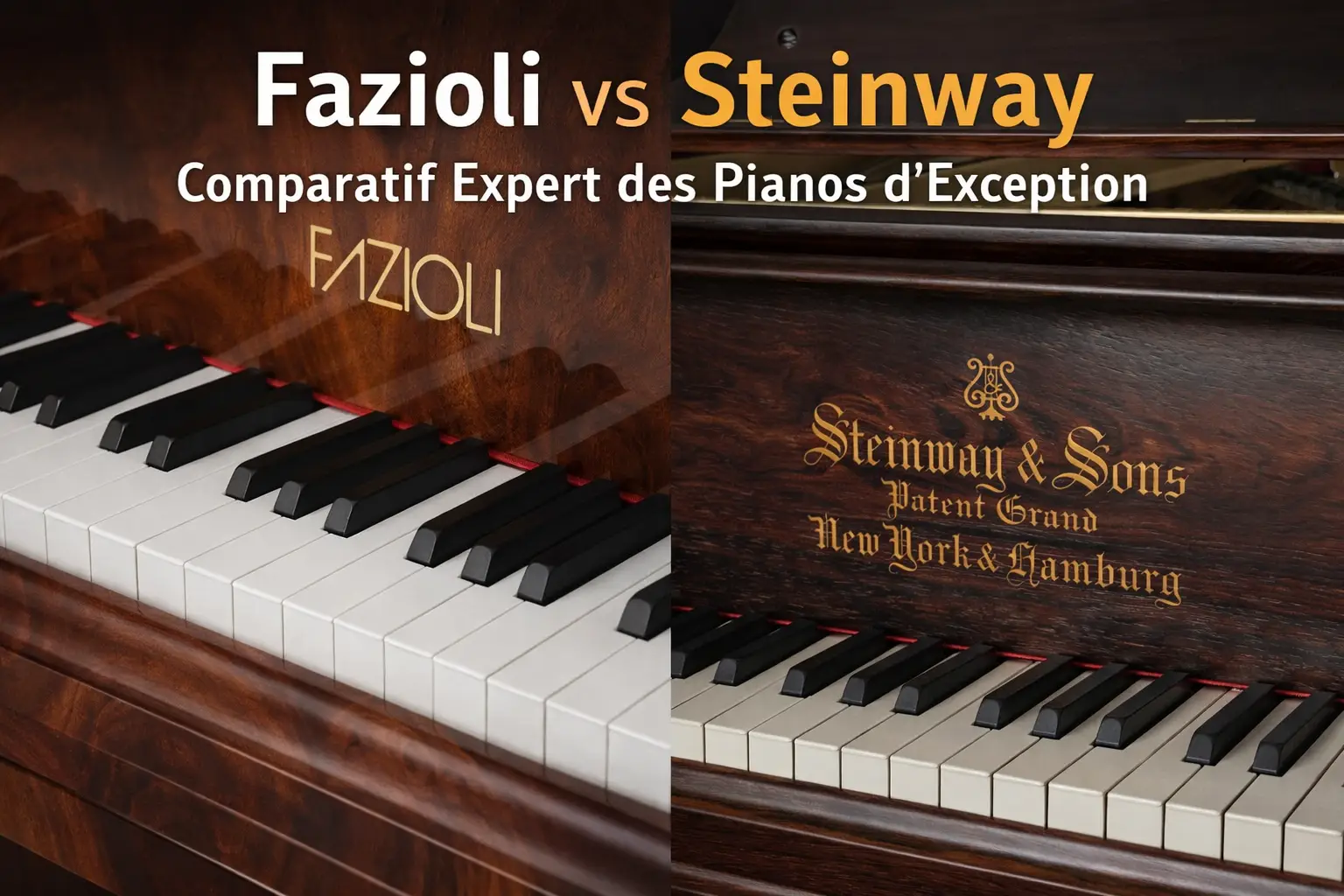
Selecting a grand piano is one of the most significant and rewarding investments a musician or institution can make. It is not merely a piece of furniture, but the acquisition of a precision acoustic instrument that will become a central part of your musical life for decades. This guide is designed to provide UK buyers with the objective, expert-led criteria needed to navigate this important decision, balancing the practicalities of space and budget with the artistry of touch and tone.
The Grand Piano Market: A Landscape of Legendary Makers
The world of grand pianos is rich with history and distinct schools of craftsmanship. Understanding the heritage and philosophy behind each major manufacturer is the first step in defining your preference.
- The Concert Legends: These are the instruments you hear in the world’s great halls. Steinway & Sons (with distinct lineages from Hamburg and New York) sets the global standard for powerful projection and dynamic range. Bösendorfer of Vienna is revered for its unique, warm, singing tone and the extra bass keys of its Imperial model. Fazioli, the modern Italian master, is celebrated for its breathtaking clarity, sustain, and lightning-fast action.
- The German Heritage Houses: Germany’s piano-building tradition offers profound depth and colour. Brands like C. Bechstein (Berlin), Blüthner (Leipzig with its patented Aliquot stringing), Grotrian-Steinweg, Sauter, and Schimmel represent the pinnacle of European artisanal craft, each with a unique tonal signature of remarkable complexity.
- Asian Precision Engineering: Representing a blend of technological innovation and refined craftsmanship, Yamaha (CFX and S Series) and Shigeru Kawai produce instruments of exceptional consistency, reliability, and analytical clarity that compete at the highest professional levels.
The market also offers a Certified Pre-Owned pathway, such as the official Steinway & Sons programme, where meticulously restored instruments from renowned makers provide access to legendary tone at a different price point.
Your Objective Selection Criteria: The Four Pillars
Choosing the right instrument requires evaluating four fundamental pillars.
Pillar 1: Size & Space (The Most Critical Practical Factor)
A piano must suit its acoustic environment. Grands are categorised by length:
- Petit Grand (150-180cm): Ideal for domestic settings. A 161cm model can be perfect for a London drawing room.
- Medium Grand (180-210cm): The heart of the home and academy market. A 186cm piano offers a full, balanced tone for serious practice and smaller performance spaces.
- Concert Grand (210cm+): Designed for large halls. A 9ft concert grand in a standard flat will overwhelm the space, causing sound to become loud and indistinct.
Pillar 2: Tonal Character & Signature
Each manufacturer has a sonic fingerprint:
- American (Steinway): Clear, projective, with a robust bass and singing treble.
- German (Bechstein, Blüthner): Rich, colourful, with a velvety depth and complex harmonics.
- Viennese (Bösendorfer): Warm, lyrical, and fundamentally orchestral in character.
- Japanese (Yamaha, Kawai): Precise, clear, and evenly balanced across the entire register.
This character is born from materials: carefully seasoned Val di Fiemme or Bavarian spruce for the soundboard, solid maple for the bridges, and the specific design of the single-cast iron frame.
Pillar 3: Touch & Action
The action is the mechanical interface between pianist and string. Look for renowned actions like Renner or proprietary equivalents, featuring double escapement for rapid repetition. Consistent regulation is non-negotiable for executing advanced repertoire, ensuring every key responds with identical sensitivity and depth.
Pillar 4: Budget & Lifetime Costs
The purchase price is the first step. Factor in lifetime costs: annual tuning (£80-£120), periodic voicing and regulation (£200-£600+), climate control, and specialist piano transport (£300+). A well-maintained piano is an appreciating asset.
Grand Pianos by User Profile & Scenario
The Discerning Amateur & City-Dweller
- Focus: Compact grands (160-180cm) that deliver musical satisfaction in domestic acoustics without dominating the space.
- Key Considerations: Tone quality at lower volumes, aesthetic fit, and optionally, a silent system for late-night practice.
- Brands & Models: Yamaha GB1K, Kawai GL-10, Schimmel Classic series.
The Music Student & Conservatoire
- Focus: Durable, consistent, and responsive instruments that can withstand intensive daily practice and provide a reliable tool for technical development.
- Key Considerations: Exceptional action regulation, tonal evenness, and robust construction.
- Brands & Models: Yamaha C3X, Kawai GX-2, Boston by Steinway.
The Concert Pianist & Prestigious Institution
- Focus: Instruments with the power, dynamic range, and tonal palette to fill a large hall and meet the demands of the professional repertoire.
- Key Considerations: Ultimate projection, stamina during long recitals, and a distinctive voice suitable for recording.
- Brands & Models: Steinway Model D, Bösendorfer Imperial 290, Fazioli F278.
The Collector & Connoisseur
- Focus: Heritage, unique timbres, and investment potential. Often involves a search for a specific, characterful voice.
- Key Considerations: Provenance, restoration quality, and the personal emotional connection to a piano’s singular sound.
- Brands & Models: Blüthner Model 1, C. Bechstein Concert 8, expertly restored vintage instruments.
Recommendation Grid: Grand Pianos by Budget
| Budget Tier | Typical Length | Ideal For | Example Models (Price Guide) |
| :— | :— | :— | :— |
| Entry-Investment (£10,000 – £30,000) | 150-170cm | First serious grand, compact homes | Yamaha GB1K (161cm), Kawai GL-10 (153cm) |
| Mid-Range (£30,000 – £70,000) | 170-210cm | Serious amateurs, music academies, home centrepiece | Yamaha C3X (186cm), Kawai GX-2 (178cm), Boston GP-178 (178cm) |
| High-End (£70,000 – £150,000) | 190-220cm | Professional musicians, luxury homes, university faculties | Steinway Model B (211cm), Bösendorfer Model 200 (200cm) |
| Concert & Collector (£150,000+) | 225cm+ | Concert halls, top-tier studios, discerning collectors | Steinway Model D (274cm), Fazioli F278 (278cm) |
The Purchasing Process & Trusted Retailers
You must play before you buy. Visit authorised dealers to experience different brands side-by-side. Consider the certified pre-owned market from reputable dealers for exceptional value.
For new instruments from certain brands, Europe’s largest music retailer, Thomann, offers a viable purchasing channel. They provide a wide selection, free delivery to the UK, a 3-year warranty, and financing options. We recommend using their service in conjunction with personal play-testing where possible, to ensure the instrument’s touch and tone meet your exacting standards.
Frequently Asked Questions (FAQ)
What is the minimum room size for a baby grand piano?
Focus on cubic volume, not just floor space. A 160-170cm grand generally requires a room of at least 30-40 square metres with good ceiling height to allow its sound to develop properly. In a smaller room, the sound can become overly loud and lack clarity, frustrating both player and neighbour.
Is a used Steinway & Sons piano better than a new Yamaha?
This is not a matter of absolute hierarchy but of condition, provenance, and intended use. A well-maintained, professionally restored Steinway from a reputable dealer can offer a sublime, complex tone. A new Yamaha C3X or CX Series grand offers exceptional consistency, modern reliability, and a clear, precise voice. The choice depends on the specific instruments compared and the tonal character you seek.
How much does it cost to maintain a grand piano annually in the UK?
Budget for at least two tunings per year (£80-£120 each). Every 2-5 years, expect to need regulation (adjusting the mechanical action, £300-£600+) and voicing (shaping the tone with needle felts, £200-£400). Annual total can range from £160 for basic care to £1,000+ for comprehensive professional maintenance.
What’s the difference between Hamburg and New York Steinway pianos?
Historically, they have reflected different philosophical approaches. Hamburg Steinways are often described as having a slightly clearer, more European tone with a lighter touch. New York Steinways traditionally favour a darker, more robust sound with a heavier action. In recent decades, the differences have narrowed, but perceptible distinctions in character and touch often remain.
Can I finance a grand piano?
Yes. Most specialist piano dealers and major retailers offer finance schemes. For example, Thomann and other retailers provide flexible payment plans, making a significant investment more accessible by spreading the cost over time.
Real-world Scenarios: Practical Use Cases
In a City Flat
- Tone in 40–60 m²: A compact grand (160-180cm) with a warm, fundamental-rich tone (like a Bösendorfer or a European model) often integrates better than an overly bright one, which can sound harsh at close quarters.
- Neighbours: Consider a high-quality built-in silent system (e.g., Yamaha Silent Piano or third-party retrofit) for unrestricted practice times.
- Transport: Ensure staircases, lifts, and access routes are surveyed by professional piano movers before purchase.
- Climate: Stable humidity (40-60%) is critical. Invest in a dedicated piano humidifier/dehumidifier system.
In a Concert Hall
- Projection: The instrument must project a clear, defined tone to the back of the hall without the pianist feeling they are forcing the sound. Concert grands (220cm+) are designed for this.
- Power & Dynamic Range: It must deliver a thunderous fortissimo without distortion and a whispering pianissimo that remains audible and colourful.
- Endurance: The action and tuning must remain stable and consistent throughout a demanding two-hour recital under stage lighting.
In a Recording Studio
- Behaviour Under Microphones: The piano must sound balanced and cohesive from the first note, with no unpleasant surprises or « wolf tones » that are difficult to mix.
- Sustain: A long, clean, and musical decay is essential, allowing notes to blend beautifully in complex harmonies.
- Tuning Stability: It must hold perfect tuning for the duration of a recording session, often under bright lights.
In a Conservatoire
- Intensive Daily Use: The instrument must withstand 8-12 hours of playing daily from different pianists. Robust construction (back posts, frame, action) is paramount.
- Durability & Serviceability: Actions must be designed for easy, frequent regulation. Parts should be readily available.
- Versatility: It should provide a neutral, responsive, and reliable platform for students to learn a wide variety of repertoire, from Baroque to contemporary.
Technical Specifications
| Specification | Detail |
| :— | :— |
| Typical Length Range | 150cm (4’11 ») to 290cm (9’6″) |
| Typical Width | Approx. 148cm – 155cm |
| Weight (Medium Grand) | Approx. 320kg – 400kg |
| Action Type | Double escapement, fully weighted (e.g., Renner, Kawai Millennium III) |
| Soundboard Timber | Spruce (often from Alps, Val di Fiemme, or North America) |
| Number of Keys | 88 (Standard). 92 or 97 on Bösendorfer Imperial/Model 290. |
| Standard Finishes | Polished Ebony, Polished White, Satin Walnut, Mahogany. Various exotic veneers available. |
Purchase Guide
- New Price / Certified Pre-Owned Price: As a guide, a new mid-range grand (e.g., Yamaha C3X) starts from approximately £45,000. A certified pre-owned Steinway Model M (170cm) might be found from £40,000-£60,000, depending on age and restoration level.
- Where to Buy: Purchase from authorised dealers for new instruments, or highly reputable specialist dealers for pre-owned. As noted, retailers like Thomann offer a broad catalogue of new models with benefits like free European delivery and a 3-year warranty, which can be a compelling option for certain brands.
- Annual Maintenance Cost: Budget £300-£1,000 as outlined in the FAQ.
- What to Check Before Buying:
* Soundboard: Look for cracks (small, stable cracks are often not critical), and listen for a vibrant, resonant tone.
Action Regulation: Test every key for even touch weight and repetition speed. Play pianissimo* passages.
* Pin Block & Tuning Stability: Have a technician check the torque of the tuning pins. A loose pin block means the piano will not hold tune.
* Strings & Hammers: Check for rust, grooves in hammers, and overall cleanliness.
Related Articles
This page contains affiliate links. If you buy through them, we may earn a commission at no extra cost to you.
🎹 Essential accessories for pianists
This page contains affiliate links. If you buy through them, we may earn a commission at no extra cost to you.
- Thermo-hygrometer (humidity): TFA Digital Thermo-Hygrometer
- Caster cup (sold singly): Jahn IsoFloor
- Felt key cover: Jahn Keyboard Dust Cover
- Adjustable piano bench: Thomann KB-15BM
1 thought on “Steinway Piano Price Analysis: Real UK Cost Ranges Explained”
Comments are closed.