
Introduction: The Pinnacle of Domestic Piano Craft
The quest for the perfect grand piano often leads to a single, iconic model: the Steinway & Sons Model B. Revered by professionals and connoisseurs alike, the Model B is not merely an instrument; it is a benchmark. Measuring 211 cm (6’ 11”), it occupies a unique position in the piano world, offering the tonal complexity and power of a concert instrument in a size suited to the sophisticated home, the intimate recital hall, and the exacting recording studio. This review provides an in-depth analysis of why the Hamburg or New York-built Model B is frequently described as the ideal compromise without compromise.
Design & Craftsmanship: The Anatomy of a Legend
The Model B’s reputation is built upon a foundation of meticulous, time-honoured construction. Each component is selected and assembled to contribute to its legendary voice.
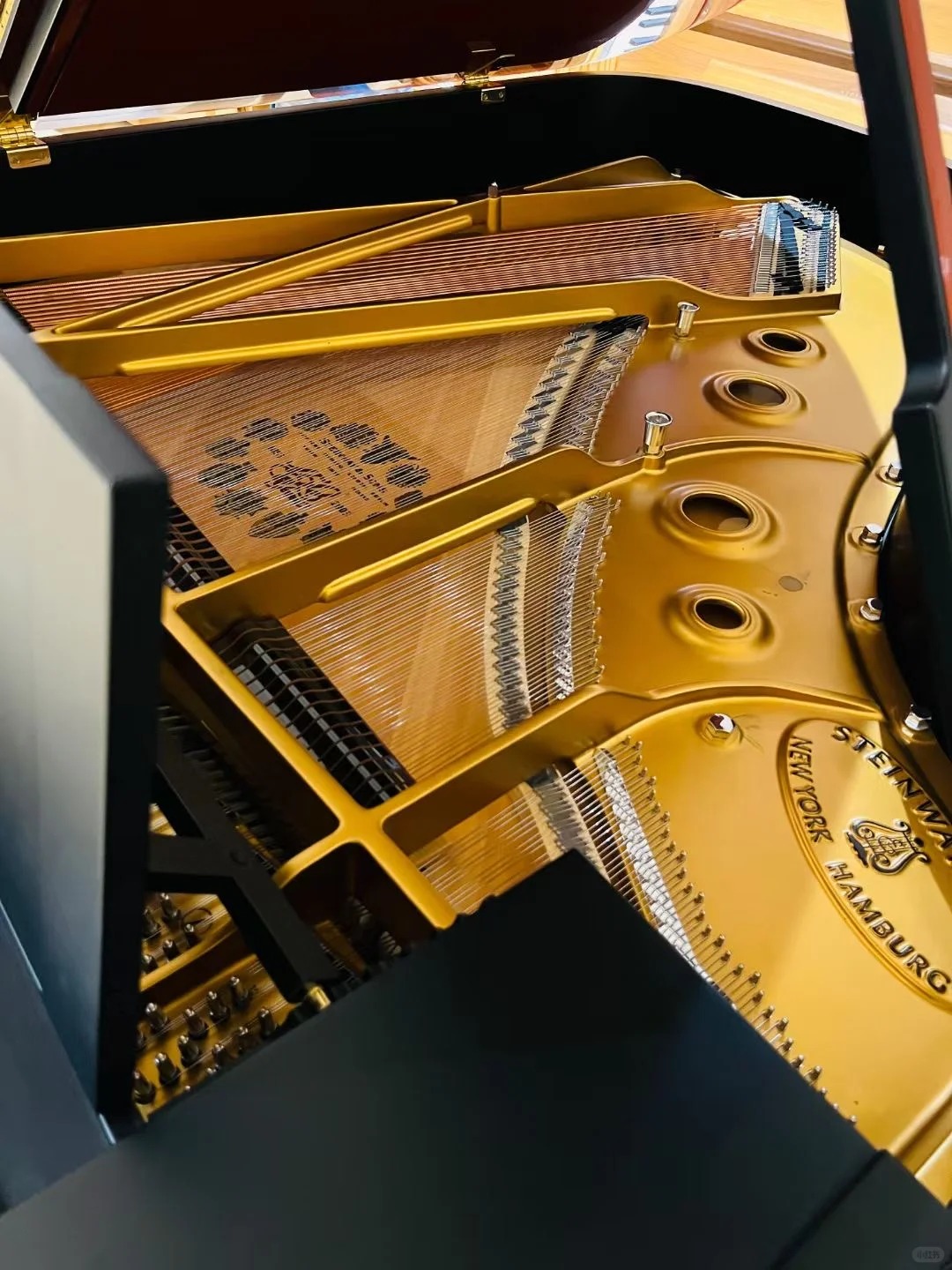
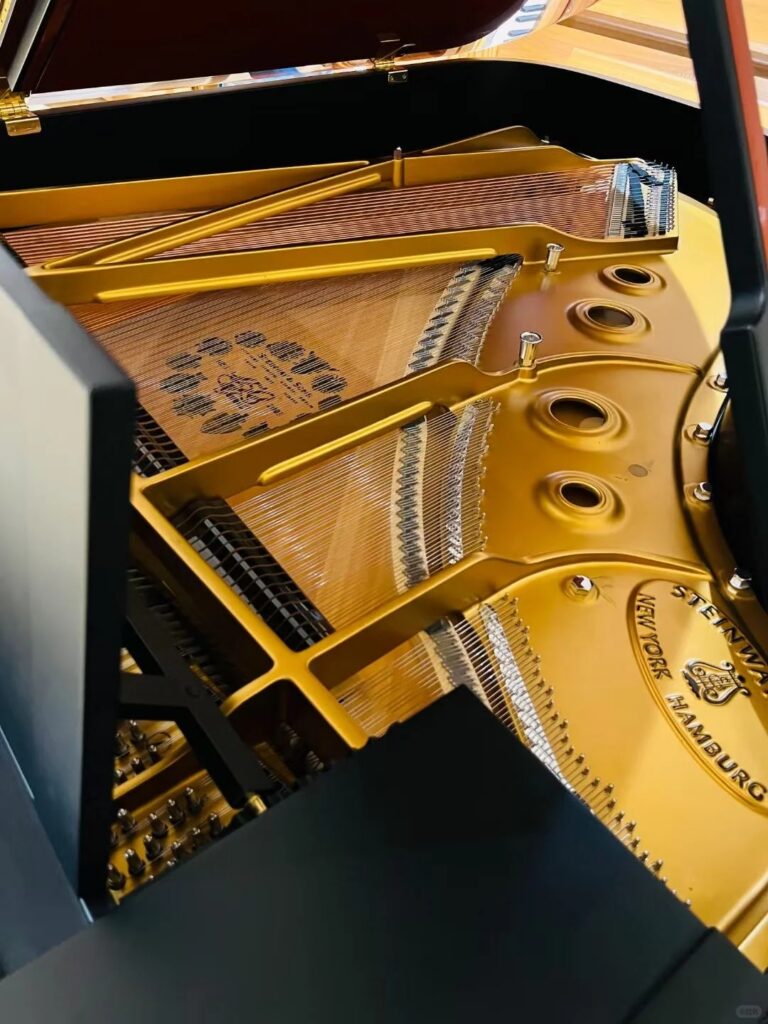
- Scale Design & Iron Frame: The Model B features a proprietary Steinway scale design with a single-cast, full-perimeter iron frame. This provides immense structural integrity, allowing the strings to be tuned to extremely high tension. The result is exceptional tuning stability, power, and a rich harmonic spectrum.
- The Soundboard: The heart of the piano is its solid, quarter-sawn Sitka spruce soundboard, crowned for optimal resonance. In Hamburg models, the use of Bavarian spruce is often noted for its particular responsiveness. This carefully tapered board is responsible for translating string vibrations into the piano’s characteristic warm, singing tone with remarkable projection.
- Action & Touch: The Model B is fitted with Steinway’s patented Accelerated Action. This is a double escapement action, renowned for its speed, precision, and depth of control. Whether from Hamburg or New York, the action is regulated to a standard that allows for the most delicate pianissimo and the most powerful fortissimo, responding perfectly to the artist’s touch. The hammers are made of premium, dense wool felt, meticulously voiced by hand to shape the instrument’s tonal personality.
- The Duplex Scale: This Steinway innovation features aliquot string sections that resonate sympathetically, enriching the treble’s colour and sustain without adding percussive attack. It is a key contributor to the Model B’s complex, shimmering upper register.
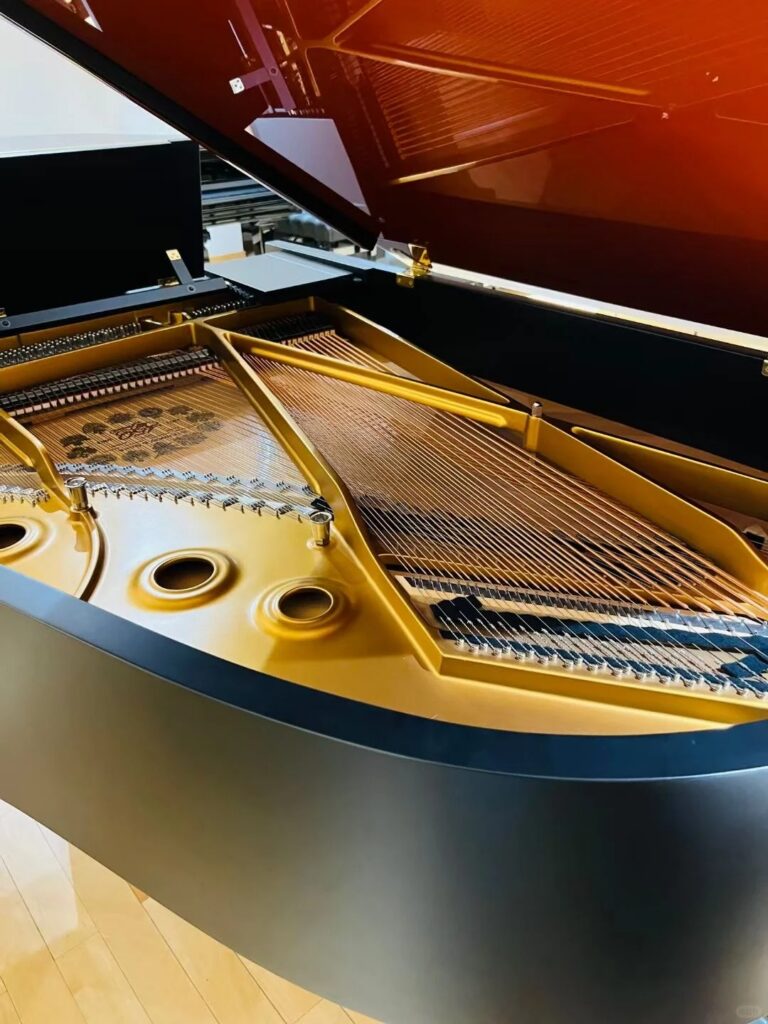
- Build & Finishes: Available in a range of exquisite finishes from polished ebony and mahogany to satin walnut, the cabinet is a piece of fine furniture. The attention to detail—from the flawless lacquer to the elegant, tapered legs—confirms its status as a lifetime investment.
Tonal Character & Performance: The Sound of Excellence
The Steinway Model B is celebrated for its balanced, orchestral voice. It possesses a complete and unified tonal palette across all registers.
- Bass Register: Powerful, clear, and defined. Unlike smaller grands where the bass can be muddy, the Model B’s longer strings and larger soundboard produce a foundational bass that is resonant and musical, not merely loud.
- Tenor & Alto Registers: This is where the Model B truly sings. The mid-range is exceptionally warm, lyrical, and expressive. It has a vocal quality that is ideal for the core repertoire of Chopin, Schubert, and Brahms, allowing melodic lines to soar with colour and emotion.
- Treble Register: Brilliant, crystalline, and sustained. The treble benefits immensely from the duplex scale, producing a clear, bell-like tone that cuts through without becoming brittle. It retains its character and volume even in the highest octaves.
- Dynamic Range & Control: Its most profound attribute is its vast dynamic range. A skilled pianist can explore endless shades of colour, from a whisper that seems to hang in the air to a thunderous climax that feels utterly controlled and never harsh. This responsiveness makes it a supremely versatile instrument.
Who is the Steinway Model B For?
This instrument is a serious investment, both financially and artistically. It is ideally suited for:
- The Advanced Amateur & Home Enthusiast: For the pianist with a dedicated music room in a country house or a spacious London townhouse, the Model B represents the ultimate domestic instrument. It offers a truly professional playing experience.
- The Professional Pianist & Recording Artist: Many professionals choose the Model B as their home or studio piano. Its consistency, tonal palette, and reliability under microphones make it a favourite for recordings and rehearsal.
- Prestigious Smaller Venues & Institutions: It is the premier choice for high-end hotels, boutique concert halls, and university faculty studios where a full concert grand (Model D) is impractical, but uncompromising quality is demanded.
- The Discerning Collector: As a centrepiece of artistic and design sensibility, the Model B holds its value exceptionally well and is a statement of cultural appreciation.
Decision Checklist: Is the Model B Right For You?
Before committing, consider these points:
- Do you have adequate space? The Model B requires a room of at least 40-50 m² with good acoustics to realise its full potential without overwhelming the space.
- Have you played both Hamburg and New York versions? While sharing the same design principles, they have discernible character differences. Hamburg models are often described as slightly brighter and more articulate; New York models as richer and more powerful in the bass. Your personal preference is paramount.
- Is your budget comprehensive? Beyond the purchase price, factor in the cost of a specialist piano mover, a humidity control system, and ongoing maintenance by a Steinway-trained technician.
- Have you compared it to its peers? Play a Bösendorfer 214VC for a more lyrical, Viennese warmth or a Fazioli F183 for unparalleled clarity and precision. The Model B is a brilliant all-rounder, but understanding the alternatives clarifies your choice.
- Have you considered certified pre-owned? The Steinway & Sons Certified Pre-Owned programme offers meticulously refurbished instruments with a new piano warranty, representing significant value.
FAQ: Your Steinway Model B Questions Answered
What is the main difference between a Hamburg and a New York Steinway Model B?
While both adhere to Steinway’s legendary standards, they are built in different factories with distinct materials and traditions. The Hamburg Model B typically uses Renner actions and hammers, resulting in a touch often described as lighter and a tone that is clearer, with a more pronounced fundamental note. The New York Model B uses Steinway’s own action parts and felt, leading to a touch with slightly more resistance and a tone that is often characterised as warmer, with a more complex harmonic overtone series. The choice is profoundly personal.
How much does a new Steinway Model B cost in the UK?
As a handcrafted instrument, the price is subject to specification and finish. For a new Steinway & Sons Model B in polished ebony, you should expect a starting price in the region of £120,000 to £150,000. Exotic woods and custom finishes will increase this figure. A Certified Pre-Owned Model B can range from £70,000 to £100,000, depending on age, condition, and provenance.
Can the Model B fit in a typical British home?
Its 211 cm length and significant presence require careful planning. It is best suited to a dedicated music room, a large living room in a period property, or a spacious modern home. For smaller spaces, Steinway’s Model A (188 cm) or Model M (170 cm) may be more appropriate, though they lack the complete tonal authority of the Model B.
What is the annual maintenance cost for a Model B in the UK?
To keep it in optimal condition, you should budget for at least two tunings per year (£120-£180 per visit) and a full regulation and voicing service every 3-5 years (£500-£1,000+). Investing in a dedicated room humidifier system (£300-£600) is highly recommended to protect your investment from the UK’s variable climate.
Why is the Model B considered better than a smaller concert grand from another brand?
“Better” is subjective, but the Model B’s acclaim stems from its perfect balance of size and capability. It is large enough to incorporate the critical scaling and string length needed for a truly authoritative bass and singing treble—features often compromised in smaller grands. It delivers over 90% of the performance of the full 274 cm Model D concert grand in a far more domestically feasible package.
Real-World Scenarios: Practical Use Cases
In a City Flat
In a 40–60 m² London flat, the Model B is a statement. Its tone will fill the space richly, so careful attention to room acoustics (rugs, curtains, bookshelves) is essential to prevent overwhelming brightness. Consideration for neighbours is paramount; while its dynamic control allows for quiet practice, the installation of a Steinway Spirio | r silent system may be a wise investment for late-night playing, allowing for headphone use without compromising the acoustic action.
In a Concert Hall
For a 200-500 seat recital hall, the Model B is a premier choice. Its power and projection are more than sufficient to fill the space without strain. Its balanced scale ensures clarity in complex polyphonic works, and its endurance during a demanding recital programme is exemplary. For a pianist, it provides the responsive partner needed for public performance.
In a Recording Studio
The Model B is a studio classic. Its tuning stability is excellent, reducing downtime between takes. Its tone records beautifully, offering engineers a wide palette of colours from close-miked intimacy to a broader, ambient sound. The evenness of scale means fewer compromises are needed in microphone placement, and its clear articulation ensures every note speaks in dense chords.
In a Conservatoire
As a faculty studio piano or for use in masterclasses, the Model B is an exceptional tool. It can withstand intensive daily use from advanced students and provides a consistent, professional standard for teaching. Its action prepares students perfectly for the concert stage, and its tonal versatility covers the entire repertoire from Baroque to contemporary.
Technical Specifications
| Specification | Value |
| :— | :— |
| Model | Steinway & Sons Model B |
| Type | Parlour Grand Piano |
| Length | 211 cm (6′ 11″) |
| Width | 148 cm |
| Weight | Approx. 345 kg |
| Action | Steinway Accelerated Action with Double Escapement |
| Keys | 88 (Ivory or Ebony tops on historic models, premium synthetic on new) |
| Pedals | 3 (Una Corda, Sostenuto, Sustain) |
| Soundboard | Solid, quarter-sawn Sitka Spruce (Bavarian spruce on Hamburg) |
| Frame | Single-cast, full-perimeter iron plate |
| Strings | Roslau steel (Germany), bass strings copper-wound |
| Pin Block | Steinway’s patented, multi-laminated hardrock maple |
| Finishes | Polished Ebony, Polished White, Mahogany, Walnut, and other exotic woods. |
Purchase Guide
- New Price: From approximately £120,000 (Polished Ebony).
- Certified Pre-Owned Price: Typically between £70,000 and £100,000, depending on age, condition, and finish.
- Where to Buy: Purchase should be made through an authorised Steinway & Sons dealer or a highly reputable premium piano specialist. For buyers in the UK considering a range of premium instruments, Thomann in Germany offers a secure, alternative channel. As Europe’s largest music retailer, they provide access to a selection of new and premium used grands, with the advantage of free delivery across Europe, comprehensive financing options, and a reassuring 3-year warranty.
- Annual Maintenance Cost: Budget £300-£500 for routine tuning and minor adjustments. Set aside a further £1,500-£2,500 every 5-8 years for a more comprehensive regulation and voicing session.
- What to Check Before Buying:
* Condition of Soundboard: Look for cracks or separations from the ribs. A few hairline cracks may not affect tone, but significant damage is a concern.
* Action Regulation: Test the evenness of touch and repetition speed across all keys. Feel for excessive looseness or noise in the keys.
* Pin Block Condition: Check tuning stability. A technician will assess the torque of the tuning pins; low torque indicates a worn block.
* String & Hammer Condition: Look for rust on strings and deep grooves in the hammer felt. New hammers and strings are a major refurbishment cost.
* Independent Inspection: Always hire an independent, qualified piano technician (not affiliated with the seller) to conduct a full inspection before purchasing any pre-owned instrument.
Related Articles
Looking for a more accessible option?
A premium acoustic grand isn’t the only path — your space and budget may point elsewhere:
- The grand feel for less: compare Hybrid vs Acoustic Grand and the Yamaha Silent piano.
- Considering digital? Read Electric vs Acoustic Grand.
- Smaller & more affordable: our Baby Grand buying guide and the Grand vs Upright comparison.
Field feedback: Steinway Model B: owner and technician feedback.
→ See all our Diapason ratings
🎹 Essential accessories for pianists
Where to buy : Steinway Model B-211
| Retailer | Why | |
|---|---|---|
| Thomann | Reference price, specialist dealer, warranty | See prices on Thomann → |
| Amazon | Fast shipping, used and renewed units | See on Amazon → |
Affiliate links: the price is the same for you, the commission funds our tests. As an Amazon Associate we earn from qualifying purchases.
This page contains affiliate links. If you buy through them, we may earn a commission at no extra cost to you.
- Adjustable piano bench: Thomann KB-15BM
- Adjustable keyboard bench: K&M 14066
- Thermo-hygrometer (humidity): TFA Digital Thermo-Hygrometer
- Caster cup (sold singly): Jahn IsoFloor
- Felt key cover: Jahn Keyboard Dust Cover