
Introduction: The Art of the Choice
Choosing a grand piano is not merely a purchase; it is a deeply personal investment in your artistry and a commitment to a lifelong musical partner. It is the confluence of engineering, craftsmanship, and soul. For the pianist, it becomes an extension of their voice, responding to every nuance of touch and emotion. This guide is designed to navigate you, the UK-based musician, collector, or institution, through the critical considerations—from the practicalities of size and budget to the profound questions of tonal philosophy and touch. Our aim is to equip you with the knowledge to find the instrument that doesn’t just fill a room, but fulfils your musical aspirations.
The Grand Piano Landscape – A Brief Overview of Legendary Houses
The world of grand pianos is defined by distinct national traditions and philosophical approaches to sound. Understanding these lineages is the first step in identifying your tonal affinity.
- The German Tradition: Renowned for depth, structural integrity, and a touch often described as velvety yet precise. The focus is on a complex, richly layered tone with a powerful fundamental. Esteemed houses include Steinway & Sons Hamburg, C. Bechstein, Blüthner (with its unique aliquot stringing for added shimmer), and Grotrian-Steinweg.
- The Viennese Romantic: Bösendorfer of Vienna stands alone, crafting instruments with a uniquely singing, warm Stimmführung (voicing). Their pianos are celebrated for a lyrical, orchestral bass and a bell-like treble, ideal for the classical and romantic repertoire.
- American Power & Projection: Steinway & Sons New York models are engineered for clarity, robustness, and immense projective power, a characteristic that has defined the American concert stage. The tone is often described as direct, bright, and commanding.
- Japanese Precision & Reliability: Brands like Yamaha (CFX/S Series) and Shigeru Kawai represent the pinnacle of modern manufacturing. They offer exceptional consistency, analytical clarity, and remarkable durability, with actions that are both responsive and reliable under intense use.
- The Italian Specialist: Fazioli is the boutique master of crystalline clarity and supreme dynamic range. Using unique materials and scaling, Fazioli pianos are known for their breathtaking purity in the treble, immense resonant power, and lightning-fast action response.
Your Objective Selection Criteria
Beyond brand prestige, objective criteria will determine how a piano fits your life and space.
- Size & Space: This is the primary practical constraint. Grand pianos are measured by length from keyboard to tail.
* Baby Grand (c. 150–180cm): Suitable for a larger living room or dedicated music room. The shorter strings and soundboard limit ultimate tonal complexity and sustain but offer a charming, compact solution.
* Medium Grand (c. 180–220cm): The ideal domestic size for the serious player. Models like the Steinway Model A or Bösendorfer 200 offer a near-concert experience with balanced projection and rich tone.
* Concert Grand (c. 220cm+): Instruments like the Steinway Model D (274cm) or Fazioli F278 are designed for large halls. They require significant space (a room of at least 50m² is a minimum for a Model D) and have substantial floor-loading requirements.
- Tonal Character & Soundboard: The heart of the piano is its solid spruce soundboard, often sourced from legendary forests like Val di Fiemme or the Alps. Its job is to amplify and colour the string vibrations. Listen for:
* Warm/Romantic: A rounded, singing tone with complex harmonics (Bösendorfer, Blüthner).
* Clear/Projective: A direct, articulate sound with a strong fundamental that cuts through an orchestra (Steinway New York, Yamaha CFX).
* Precise/Analytical: Exceptional clarity, separation between notes, and a wide dynamic palette (Fazioli, Shigeru Kawai).
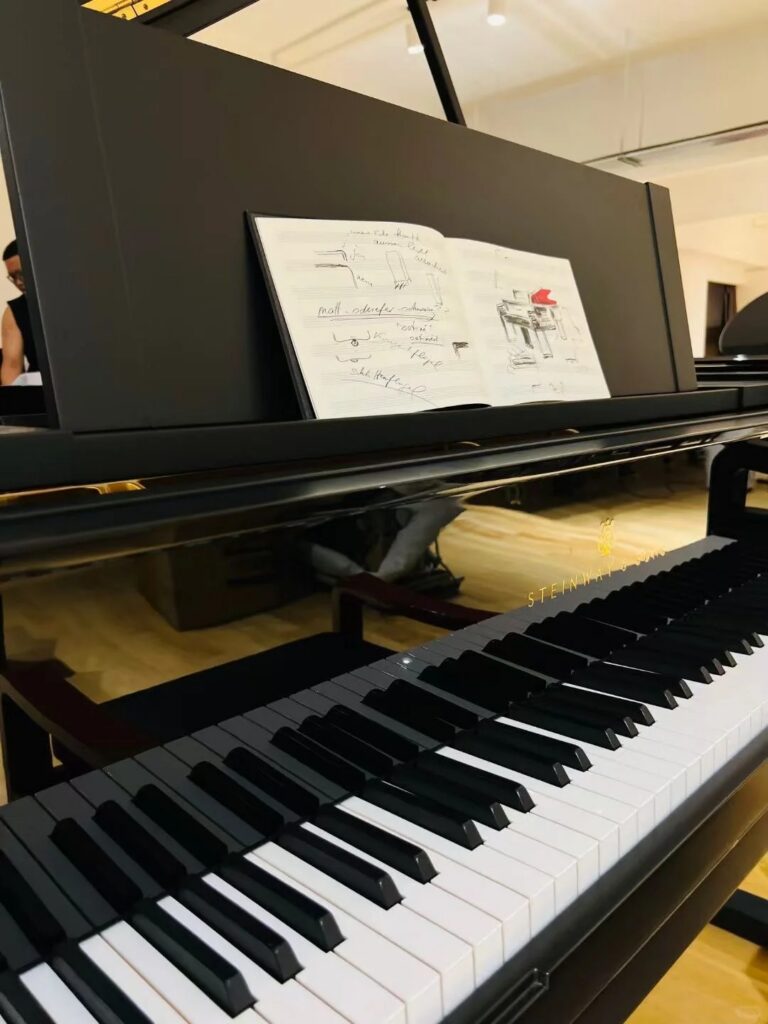
- The Action & Touch: The action is the mechanical interface between your fingers and the hammers. Look for a double escapement mechanism (allowing rapid note repetition) from renowned makers like Renner or proprietary designs from Steinway, Kawai (Millennium III), or Yamaha. The key surface—whether modern high-quality composites or, on some premium models, ethically sourced artificial ivory—affects grip and tactile feedback.
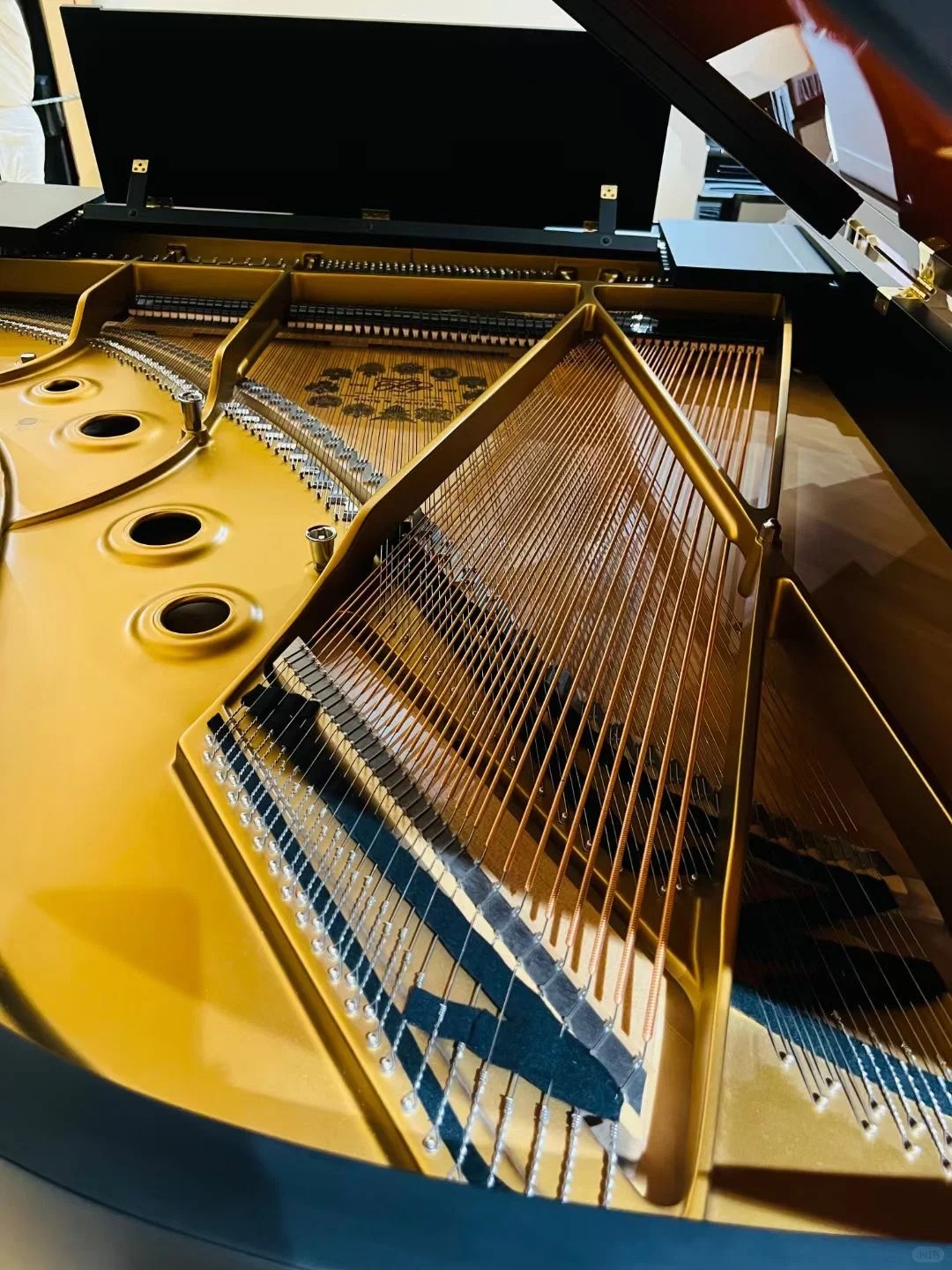
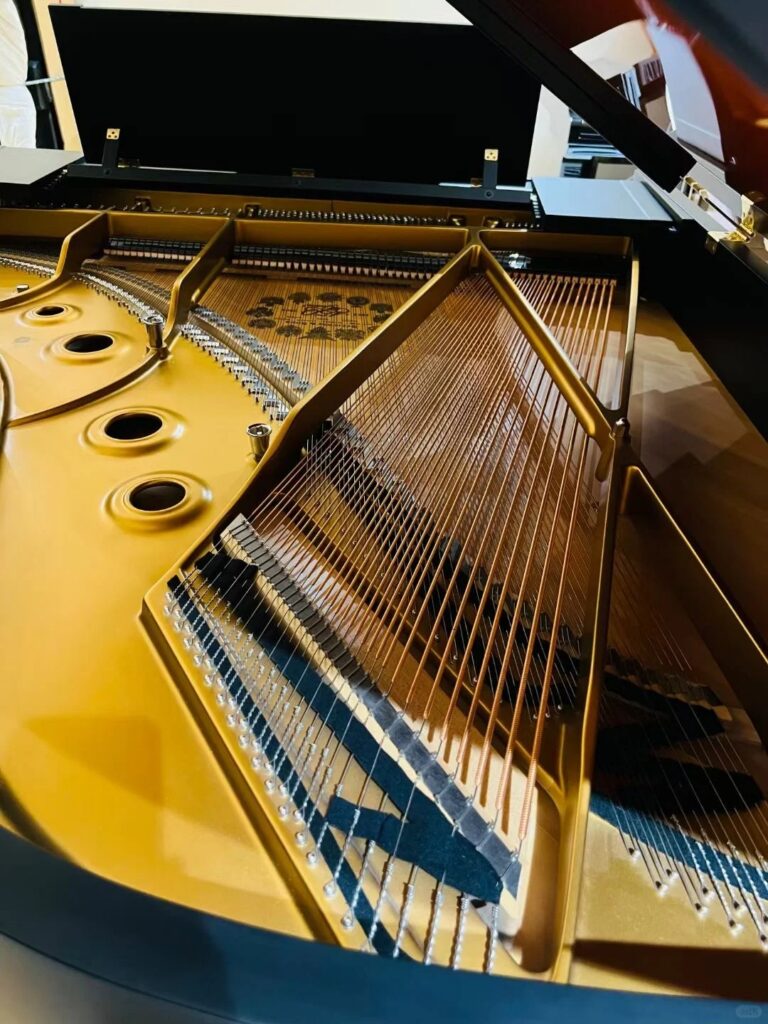
- Craftsmanship & Materials: Key indicators of quality include a single-cast iron frame for stability, solid maple bridges for optimal energy transfer, a multi-layered beech pin block to hold tuning, and features like a duplex scale (allowing sympathetic vibration of string segments beyond the speaking length) which enriches the treble.
- Budget Realities (in GBP): Be clear-eyed. A new premium baby grand starts around £50,000. A medium grand from a top-tier German maker is typically £80,000–£120,000. A new concert grand exceeds £150,000. The certified pre-owned market offers significant value, bringing exceptional instruments within a broader range.
Grand Pianos by User Profile & Scenario
Matching the instrument to the musician’s life is crucial.
- The Discerning Amateur & City-Dweller: Priority is size, neighbour-friendly projection (consider a built-in silent system), and aesthetic harmony. A baby grand or small medium grand (180cm) from Yamaha’s CX Series, Kawai’s GX Series, or a pre-owned Steinway Model M is ideal.
- The Conservatoire Student & Advancing Pianist: The instrument must be a rigorous teacher. A responsive, consistent action (like Renner or Kawai’s Millennium III) is non-negotiable for developing technique. Tone should be even across registers. This is where the best value in certified pre-owned Steinways, Bechsteins, or new Japanese premium models is found.
- The Concert Pianist & Recording Artist: Requirements are uncompromising: immense dynamic range (from a whisper to a roar), colouristic variety for different repertoire, and the power to fill a 2,000-seat hall without straining. This is the exclusive realm of the concert grand.
- The Music Institution & Academy: Durability under 8–12 hours of daily use is paramount, alongside consistent performance and the prestige necessary to attract top students and faculty. Instruments like the Yamaha CF Series or Steinway’s institutional models are engineered for this environment.
Recommendation Grid: Models by Budget Tier
(A narrative guide to the market landscape)
- Entry to Mid-Level (£10,000 – £40,000): This tier is dominated by high-quality pre-owned instruments and smaller new models from Asian makers. You might find a well-maintained 20-year-old Yamaha C3 or Kawai RX-2, or a new Yamaha GB1K baby grand. With careful searching, a pre-owned Steinway Model M from the 1970s/80s may be within reach, though a thorough technical inspection is critical.
- Serious Investment (£40,000 – £100,000): The core market for new European grands and exceptional pre-owned instruments. Here you enter the world of new C. Bechstein Academy A192, a pristine pre-owned Steinway Model A, a new Bösendorfer 170, or the exquisite handcrafted Shigeru Kawai SK-2. This price bracket offers a lifetime instrument for the serious pianist.
- The Concert & Collector Tier (£100,000+): This is the pinnacle: new Steinway Model B & D, the majestic Bösendorfer Imperial 290 (with its extra bass notes), the laser-precise Fazioli F278, or a new C. Bechstein Concert 8. These are instruments for the world’s great stages, top-tier recording studios, and the most passionate private collectors.
The Purchasing & Ownership Journey
- New vs. Certified Pre-Owned: Buying new offers a warranty and the latest specifications. Programmes like Steinway & Sons’ Certified Pre-Owned provide expertly refurbished instruments with a warranty, often representing exceptional value. A reputable retailer is key for both.
- The Personal Audition: You must play the exact instrument you intend to buy. Play scales, chords, and repertoire you know intimately. Test the pianissimo and fortissimo extremes. Listen for an even scale and a tone that moves you.
- Aftercare: A grand piano is a living thing. Budget for at least two tunings per year (£80-£120 per tuning), plus periodic voicing (adjusting hammer felt to refine tone) and regulation (mechanical adjustment) every few years. Specialist piano transport in the UK is essential for moves and costs several hundred pounds.
- Where to Buy: Beyond traditional showrooms, Thomann, as Europe’s largest music retailer, has become a significant channel. They offer a wide selection of new models from brands like Yamaha and Kawai, with the advantage of free delivery to the UK, a 3-year warranty, and flexible financing options. Their service is particularly noted for efficiency and customer support, making them a viable option for well-specified, mass-produced premium instruments.
Frequently Asked Questions (FAQ)
What is the minimum room size for a baby grand piano?
A baby grand (around 150cm) needs a room of at least 25-30 square metres to sound its best without being acoustically overwhelming. Crucially, the room should contain soft furnishings (rugs, curtains, sofas) to absorb excess sound and prevent a harsh, booming acoustic. Always consider the piano’s placement away from direct sunlight and radiators.
Is a used Steinway piano a better investment than a new Yamaha or Kawai?
It depends on your definition of « investment. » A Steinway, particularly from Hamburg, often holds its monetary value exceptionally well due to brand prestige. However, a used piano’s condition is everything; a neglected Steinway can be a money pit. A new Yamaha CF or Shigeru Kawai offers guaranteed performance, modern reliability, and often superior consistency. The « investment » in the latter is in a flawless, ready-to-inspire instrument.
How much does it cost to maintain a grand piano annually in the UK?
Annual maintenance typically costs between £200 and £500. This covers two tunings (£80-£120 each) and potentially a minor service. You should also budget for a full regulation and voicing every 3-5 years, which can cost from £500 to over £1,000 depending on the technician and the instrument’s needs.
What is the difference between a Hamburg and a New York Steinway?
Historically, they were separate factories with different parts and scales. Today, both are superb. Generally, Hamburg Steinways are often described as having a slightly more refined, European tone—clear yet complex with a lighter touch. New York Steinways are known for a more robust, direct, and powerful sound with a heavier action. The choice is a matter of personal tonal preference.
Can I trial a grand piano before purchasing online from a retailer like Thomann?
While you cannot physically trial an instrument before delivery when buying online, retailers like Thomann have comprehensive return policies. They also provide extensive sound samples and detailed specifications. Their customer service can advise based on your needs. The key is to understand the return window and conditions, which allows for a home trial of sorts, albeit with the logistical planning of a potential return.
Real-world scenarios: practical use cases
In a city flat
- Tone & Volume: A piano under 180cm is advisable. Its tone will be sweeter and more contained. Consider a built-in silent system (like Yamaha’s Silent Piano or Kawai’s Anytime) with headphones for unrestricted practice.
- Neighbours: Discuss practice times. Placing the piano on an insulating caster cup mat can reduce structural vibration transmission.
- Transport: Access is critical. Measure doorways, stairwells, and lifts. Specialist piano movers are essential for navigating tight urban spaces.
- Climate: Flats can have dry air from central heating. A piano humidity control system is a wise investment to protect the soundboard and action.
In a concert hall
- Projection: The concert grand’s long strings and large soundboard are designed to project a clear, unforced tone to the back of a large hall without the pianist having to overplay.
- Power & Endurance: The action must be perfectly regulated to withstand the physical demands of a concerto or demanding solo programme without faltering.
- Tonal Palette: The instrument must offer a vast range of colours, from a gossamer pianissimo in a Mozart slow movement to a thunderous, complex roar in a Prokofiev toccata.
- Technician Support: A concert grand in a hall is always accompanied by a resident or travelling technician who will tune, voice, and regulate it before and sometimes during a performance series.
In a recording studio
- Behaviour Under Microphones: The tone must be exceptionally even across all registers, with no « wolf tones » or dead spots. A clear, articulate bass is vital for clean recordings.
- Sustain & Control: The instrument must have a long, singing sustain that can be controlled precisely, allowing for pristine note separation in complex passages.
- Tuning Stability: It must hold a rock-solid tuning over long recording sessions, often under bright studio lights which can affect the piano’s climate.
- Dynamic Nuance: The ability to capture the most subtle dynamic shifts is paramount. The action must allow for extreme control at low volumes.
In a conservatoire
- Intensive Daily Use: The piano may be played for 12+ hours a day by different pianists. The action must be incredibly durable and maintain its regulation.
- Durability: The cabinet, finish, and hardware must withstand constant use. Institutional models often have reinforced parts.
- Versatility: It must serve a student learning Bach one hour and Ligeti the next. A neutral, responsive, and reliable tone is often preferred over an overly idiosyncratic character.
- Serviceability: The design should allow technicians easy access for frequent maintenance and repairs.
Technical specifications
| Specification | Typical Value Range & Details |
| :— | :— |
| Length | 148 cm (baby grand) to 308 cm (Bösendorfer Imperial) |
| Width | Standard keyboard width: ~148 cm |
| Height | (Case) ~100 cm |
| Weight | 250 kg (small baby grand) to 550 kg+ (concert grand) |
| Action Type | Double escapement action (e.g., Renner, Steinway Accelerated, Kawai Millennium III, Yamaha) |
| Soundboard Timber | Solid, vertically grained spruce (often from Alpine regions or Val di Fiemme) |
| Number of Keys | 88 standard (92/97 on Bösendorfer Imperial/Model 225) |
| Finishes Available | High-gloss polyester (black, white, ebony), Polished mahogany, walnut, satin finishes, exotic veneers. |
Purchase guide
- New Price / Certified Pre-Owned Price:
* New: A premium baby grand (e.g., Yamaha C2X) starts around £45,000. A German medium grand (e.g., Bechstein A192) is £80,000+. A concert grand is £150,000+.
* Certified Pre-Owned: A 20-year-old Steinway Model M might be £35,000-£50,000. A 10-year-old Model B could be £70,000-£90,000, depending on condition and provenance.
- Where to Buy:
* Authorised brand dealers for new instruments and certified programmes.
* Specialist pre-owned piano retailers with expert technicians.
* Thomann: A major online retailer offering brands like Yamaha and Kawai. Benefits include free delivery across Europe (including the UK), a comprehensive 3-year warranty, and transparent financing options. Ideal for buyers confident in model specifications seeking a streamlined purchasing process.
- Annual Maintenance Cost: Budget £200 – £500 for routine tuning and minor servicing. Set aside a further £500 – £1,500 every 3-5 years for regulation and voicing.
- What to Check Before Buying:
1. Soundboard: Look for cracks (small, stable cracks along the grain are often not catastrophic, but radial cracks can be serious). It should have a healthy crown.
2. Action Regulation: Test repetition speed. Notes should repeat rapidly without failure. Check for evenness of touch across the keyboard.
3. Pin Block & Tuning Stability: The tuning pins should be tight. Ask when it was last tuned and if it holds tune well.
4. Strings & Hammers: Strings should be clean, not rusted. Hammers should have deep, clean grooves, not be overly worn or hardened.
5. Case & Finish: Check for structural damage or major finish flaws, though cosmetic issues are less critical than mechanical ones.
Related Articles
This page contains affiliate links. If you buy through them, we may earn a commission at no extra cost to you.
🎹 Essential accessories for pianists
This page contains affiliate links. If you buy through them, we may earn a commission at no extra cost to you.
- Thermo-hygrometer (humidity): TFA Digital Thermo-Hygrometer
- Caster cup (sold singly): Jahn IsoFloor
- Felt key cover: Jahn Keyboard Dust Cover
- Adjustable piano bench: Thomann KB-15BM