
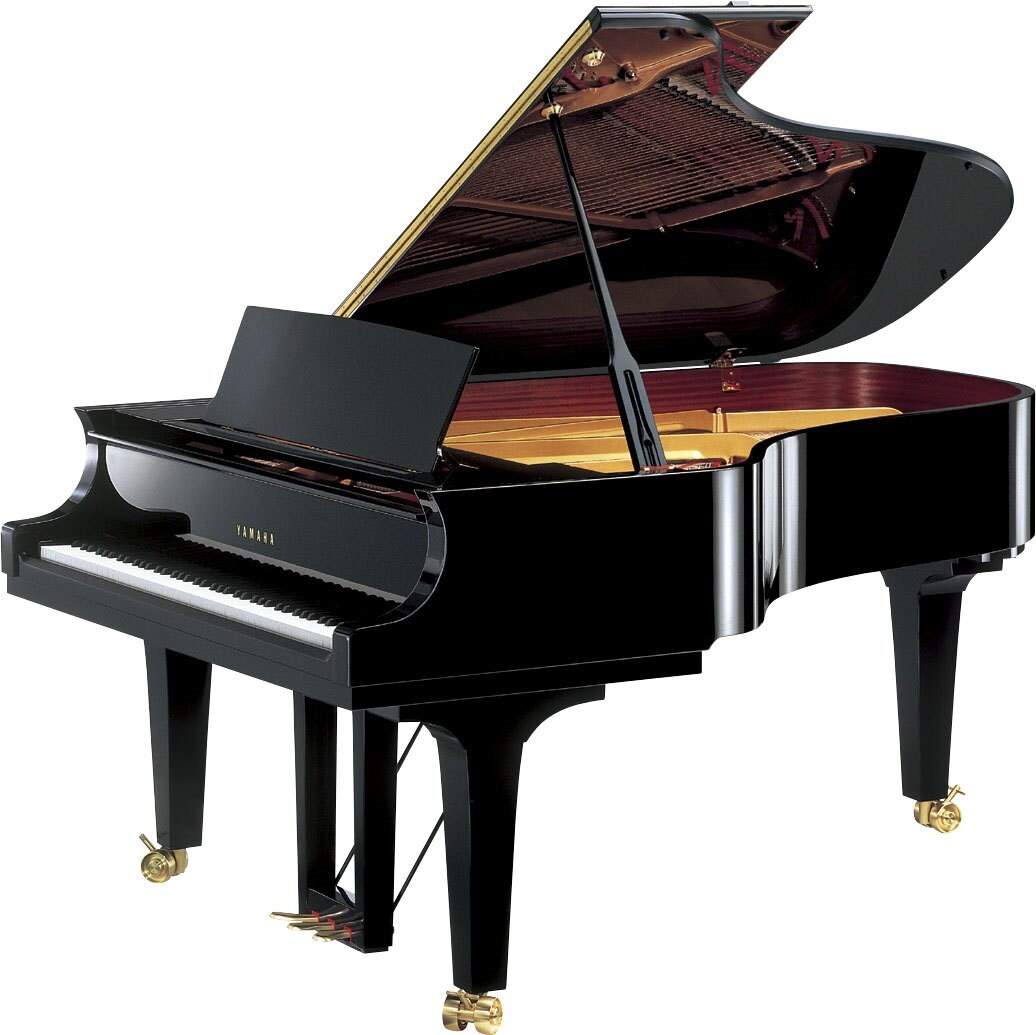
The Yamaha b1 is the brand’s most affordable acoustic upright — a genuine strings-and-hammers sound with no digital compromise. At 109 cm it is compact, ideal for a flat and for beginners.
Who is it for?
For a student or a family wanting a first acoustic upright at a sensible price. The tone is more modest than the U series, but the action that teaches good touch remains solid.
The tone
At 109 cm the b1 is a compact upright, and its voice is honest about that: it will not fill a hall the way a taller U-series instrument does, and the bass is inevitably shorter than on a full-size upright. What it does offer is a genuine acoustic sound — real strings struck by real hammers — with none of the sampled compromise of a digital. For a living room, a bedroom or a small teaching studio, that authenticity is exactly the point, and it responds to touch in a way that teaches a beginner to listen.
The action
The b1 carries a conventional Yamaha upright action, unremarkable on paper but consistent and dependable in practice. It gives enough resistance and gradation to build correct finger technique from the first lessons, which matters far more at this level than tonal sophistication. A student who learns on a properly regulated b1 will transfer comfortably to larger instruments later, without the bad habits a stiff or uneven keyboard can instil.
A compact acoustic for real rooms
The b1’s strongest argument is what it makes possible: a true acoustic piano in a flat where a grand or a tall upright simply would not fit. It sits against a wall, takes up little floor space and weighs less than its bigger siblings. For families who want their child to start on strings and hammers rather than a keyboard, it is often the most realistic entry point on the market.
Living with it
Being acoustic, the b1 needs the usual care: tuning once or twice a year, a stable spot away from radiators and windows, and attention to room humidity to protect the soundboard and the tuning. These are not drawbacks so much as the normal responsibilities of owning an acoustic instrument, and they are modest on a piano of this size.
Where it sits in the range
The b1 is the foot of Yamaha’s acoustic ladder. Buyers with more budget and a bigger room will find richer tone and longer bass by stepping up to the U series, but they will also pay considerably more. As a first acoustic upright at a sensible price, the b1 fills its brief without pretending to be more than it is.
Frequently asked questions
Is the b1 a good first acoustic piano? Yes: it offers a genuine strings-and-hammers sound and a reliable action at an accessible price, ideal for beginners and small rooms.
Does it need tuning like any acoustic? Yes, once or twice a year, plus a stable position and controlled humidity to protect it.
New or used at the entry level
At this price point the choice between a new b1 and a good used upright is worth weighing. A new b1 brings a warranty, a known state and dealer preparation; a well-kept used instrument of similar size can offer more piano for the money, provided it has been checked by a technician for the condition of the soundboard, pins and action. The b1’s virtue is predictability — you know exactly what you are getting — which reassures a first-time buyer who cannot yet judge a second-hand instrument. Whichever route you take, insist the piano is tuned and regulated before you commit, and listen to it in a normal room rather than a bright showroom, where any upright flatters itself.
Will a beginner outgrow the b1 quickly? Not in the early years: it teaches touch and listening well. A committed student may later want a taller upright for more bass and projection.
Our upright piano reviews
Compare our acoustic upright reviews rated with the Diapason method:
→ See all our Diapason ratings
🎹 Essential accessories for pianists
Where to buy : Yamaha b1
| Retailer | Why | |
|---|---|---|
| Thomann | Reference price, specialist dealer, warranty | See prices on Thomann → |
| Amazon | Fast shipping, used and renewed units | See on Amazon → |
Affiliate links: the price is the same for you, the commission funds our tests. As an Amazon Associate we earn from qualifying purchases.
This page contains affiliate links. If you buy through them, we may earn a commission at no extra cost to you.
- Adjustable piano bench: Thomann KB-15BM
- LED piano lamp: Thomann PLL24 LED
- Felt key cover: Jahn Keyboard Dust Cover
- Thermo-hygrometer (humidity): TFA Digital Thermo-Hygrometer
3 thoughts on “Yamaha b1 Upright Piano Review & Diapason Rating”
Comments are closed.