Introduction: The Apex of the Pianist’s Art
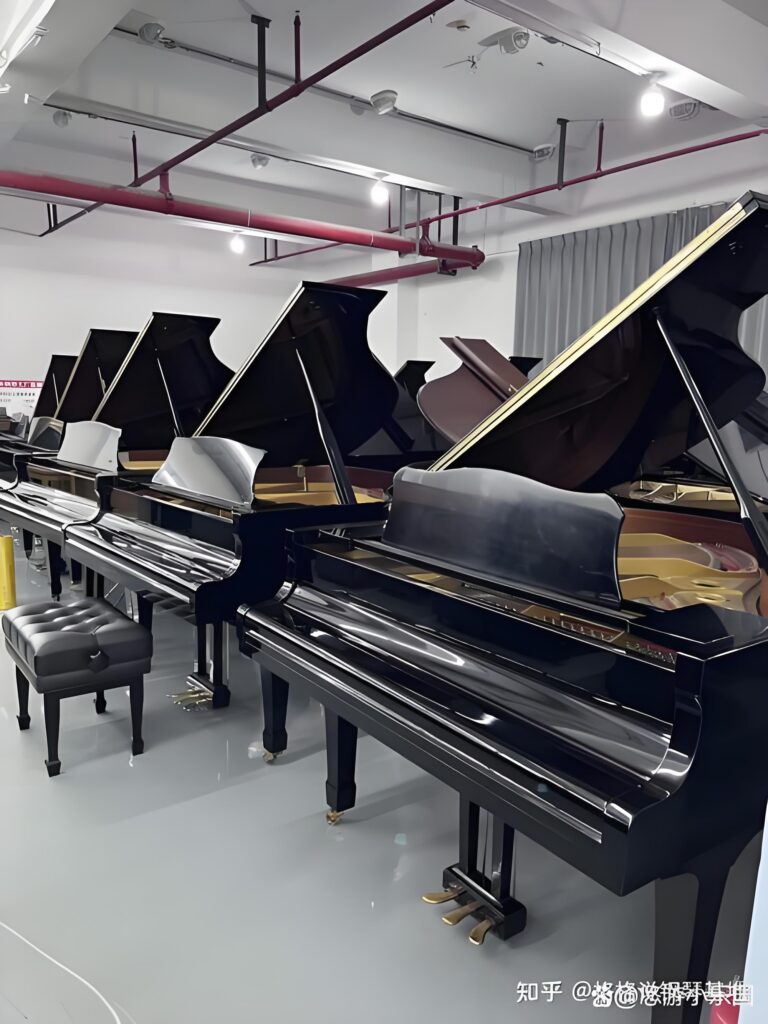
A grand piano is the definitive acoustic piano. Its defining characteristic—horizontal stringing over a cast-iron frame, coupled with a large, openable lid—is not merely an aesthetic choice but an acoustic necessity. This configuration allows for longer strings, a larger soundboard, and a more responsive, direct action mechanism than any upright piano can offer. The result is an instrument with vastly superior tonal projection, a broader dynamic range from the most delicate pianissimo to a thunderous fortissimo, and an action that offers unparalleled control and repetition speed. For the serious pianist, institution, or collector, selecting a grand piano is a significant investment in artistry. This guide will navigate you through the landscape of legendary craftsmanship, objective selection criteria, and practical considerations for the UK market.
The Grand Piano Market – A Landscape of Legendary Craftsmanship
The world of grand pianos is shaped by distinct schools of construction, each with a century-old philosophy that informs the instrument’s character. Understanding these traditions is the first step in finding a piano whose voice resonates with you.
- The German Tradition: Synonymous with depth, tonal complexity, and a velvet-smooth touch. The focus is on a rich, singing tone with multiple layers of colour, achieved through meticulous scaling, carefully selected solid spruce soundboards, and renowned actions from manufacturers like Renner. Think of the profound, orchestral depth of a Steinway & Sons Hamburg, the crystalline clarity and power of a C. Bechstein, or the unique Aliquot stringing of a Blüthner that adds a celestial shimmer to the treble.
- The Austrian Voice: Bösendorfer of Vienna stands alone, crafting instruments of lyrical warmth and unique structural integrity. Their pianos are known for a mellower, more forgiving tone, with a distinctive, resonant bass that never becomes harsh. The iconic Model 214VC and the majestic Imperial Grand (290cm) with its extra bass notes are instruments of unparalleled colour and romantic character.
- The American Power: Steinway & Sons New York pianos are engineered for projection and clarity in large spaces. They often present a more direct, immediate sound with a powerful bass and a brilliant, clear treble, making them a favourite in many concert halls and for modern repertoire. The legendary Model D Concert Grand is the benchmark here.
- The Italian Specialist: Fazioli represents the pinnacle of modern, handcrafted precision. Using unique materials like red spruce from the Val di Fiemme and employing aerospace-grade tolerances, Fazioli pianos are celebrated for their breathtaking dynamic range, laser-like clarity across all registers, and an almost limitless palette of tonal colours. They are instruments of extreme sensitivity and power.
- The Japanese Precision: Brands like Yamaha (CFX, SX Series) and Shigeru Kawai have mastered consistency, reliability, and analytical clarity. Their instruments offer exceptional touch uniformity, remarkable tuning stability, and a transparent tone that reveals every detail of the performance. They are the workhorses of conservatoires and professional studios worldwide.
- The Value Proposition: Several European heritage brands offer exceptional quality at slightly more accessible points. Schimmel, Sauter, and Seiler produce pianos with outstanding German-scale designs and craftsmanship. The W. Hoffmann series, built in the Czech Republic under the supervision of C. Bechstein, delivers authentic European tone at a compelling price.
Objective Criteria for Selecting Your Grand Piano
Beyond brand heritage, your choice must be guided by measurable, practical factors.
- Size & Space: This is the primary physical constraint. Length directly influences string length and soundboard area, which in turn affects tonal richness and volume.
* Baby Grand (150-180cm): Suitable for domestic settings. A model around 180cm (like a Yamaha C1X or Kawai GX-2) offers a significant acoustic advantage over a smaller 160cm model, providing a more developed bass and balanced tone.
* Living Room Grand (180-210cm): The ideal category for the serious amateur or professional home studio. Instruments like the Steinway Model A (188cm) or Bösendorfer 200 are designed to deliver a full, satisfying performance in a generous room.
* Semi-Concert & Concert Grand (211cm+): For large homes, institutional auditoriums, and concert stages. The Steinway Model B (211cm) and Model D (274cm), Fazioli F212 and F278, and Yamaha CFX (274cm) define this category, offering immense power, sustain, and tonal resources.
- Tonal Character & Voicing: You must play the piano yourself. Do you prefer a warm, rounded sound (Bösendorfer), a complex, fundamental-rich tone (German tradition), or a clear, precise, and brilliant voice (Yamaha, Fazioli)? The voicing—the adjustment of the hammers’ density and shape—can be tailored, but the inherent character of the piano is fixed.
- Action & Touch: The mechanism translating finger motion into sound is critical. Look for a true double escapement action (like Renner or Kawai’s Millennium III) for fast repetition. Key weighting should be even and responsive, not simply heavy. The action should feel like a direct extension of your musical intent.
- Budget & Value: Grand pianos range from around £10,000 for a compact, high-quality entry model to over £200,000 for a hand-built concert instrument. Always factor in lifetime costs: professional delivery and installation (£500-£2000), bi-annual tuning (£100-£150 per session), and regulation/voicing every few years (£500+). A certified pre-owned instrument from a reputable dealer or manufacturer programme (e.g., Steinway & Sons Certified Pre-Owned) can offer extraordinary value, providing access to legendary models at a reduced cost.
Grand Pianos by Profile & Scenario
- The Discerning Amateur & City-Dweller: Your focus is on maximising musical satisfaction within spatial limits. A baby grand or living room grand (160-190cm) from a quality brand is key. Prioritise instruments with a controllable, beautiful tone that won’t overwhelm your space. Consider a silent system (like Yamaha’s Silent Piano or a retrofit Genio system) for late-night practice. Room acoustics are crucial—soft furnishings, rugs, and curtains will temper excessive brightness.
- The Music Student & Conservatoire: The requirement is for a robust, consistent, and reliable action that can withstand hours of daily practice. Tonal evenness and accurate response are more critical than extreme character. The Yamaha C/CX Series or Kawai GX Series are quintessential choices for this scenario, offering professional-grade performance with legendary durability. Institutions may also consider the Boston piano series, designed by Steinway and built by Kawai.
- The Professional Concert Pianist & Recording Artist: The instrument must be an extension of the artist’s will, capable of projecting the subtlest nuance in a 2000-seat hall or behaving impeccably under the microscope of studio microphones. Concert preparation typically happens on a semi-concert grand (211cm). Consistency of touch, immense dynamic range, and a rich palette of colours are non-negotiable. This is the realm of Steinway Model B & D, Fazioli, Bösendorfer 214/225, and Yamaha CFX.
- The Institution & Serious Collector: The decision balances acoustic performance, durability, maintenance logistics, and asset value. A concert grand for the main stage is essential. For teaching and practice rooms, a fleet of identical, reliable models simplifies maintenance. Investing in a legacy instrument from a top-tier brand also means investing in an asset that historically holds its value exceptionally well.
Recommendation Grid: Grand Pianos for Every Budget
- Entry to Mid-Level (£10,000 – £40,000):
* Yamaha GB1K Baby Grand (161cm): The quintessential entry-point grand. Offers Yamaha’s renowned reliability, a clear, bright tone, and a compact footprint perfect for a domestic setting.
* Kawai GL-10 Baby Grand (153cm): Features Kawai’s premium Millennium III Ultra-Responsive action in their most compact grand, delivering exceptional touch quality at this price.
* W. Hoffmann Vision V 180 Grand (180cm): Built in the Czech Republic under C. Bechstein’s supervision. Delivers a warm, European tonal character and solid construction that belies its price point. Retailers like Thomann often stock these models, offering the convenience of free delivery across Europe and a comprehensive 3-year warranty.
- Intermediate to Advanced (£40,000 – £100,000):
* Schimmel Konzert K 189 Grand (189cm): A full-expression German instrument from a revered family-owned manufacturer. Traditional craftsmanship meets a powerful, colourful tone.
* Yamaha CX Series Grand (e.g., C3X 186cm): The step-up professional series. Offers a richer, more complex tone than the C Series, with a superb action, making it ideal for advanced students, teaching studios, and smaller performance spaces.
* C. Bechstein Academy A 190 (190cm): An instrument of authentic Bechstein scale design and tonal philosophy, built to exacting standards. Provides access to the legendary Bechstein sound—clear, poetic, and powerful.
- Professional & Investment Grade (£100,000+):
* Steinway & Sons Model B (211cm): Often described as the perfect piano. Sufficient power for a large hall, yet capable of the most intimate expression. Its scale design and tonal balance are considered a benchmark.
Bösendorfer 214VC (214cm): The Vienna Concert model incorporates Bösendorfer’s unique Capacitor* system and extra colour strings in the treble for even greater resonance and a uniquely lush, romantic soundscape.
* Fazioli F183 (183cm): Proof that immense capability isn’t solely about size. This handcrafted Italian masterpiece offers staggering dynamic range, crystalline clarity, and a touch of sublime responsiveness in a relatively compact form.
Frequently Asked Questions (FAQ)
What is the minimum room size for a baby grand piano?
While a 160cm grand can physically fit in a modest space, to truly appreciate its sound without it being overpowering, aim for a living room or music room of at least 25-30 square metres. The room should have a mix of hard and soft surfaces (wooden floor with a large rug, curtains, upholstered furniture) to control reverberation and prevent the sound from becoming overly bright or « boomy ».
How often does a grand piano need tuning and servicing?
In the stable environment of a UK home with central heating, a grand piano should be tuned at least twice a year, typically after the major seasonal changes in autumn and spring. A regulation (adjusting the mechanical parts of the action for evenness and responsiveness) is needed every 1-3 years depending on use. Voicing (softening or brightening the tone by needling the hammers) is done as required, often every few years, to maintain the desired tonal character.
Is a used grand piano a good investment?
A professionally inspected and, ideally, professionally refurbished or certified pre-owned grand piano can be an excellent investment. It allows you to acquire a higher-tier instrument (e.g., a 20-year-old Steinway Model M) for the price of a new mid-range piano. Always insist on an independent inspection by a qualified piano technician before purchase. Programmes like Steinway’s Certified Pre-Owned offer rebuilt instruments with new warranties.
What are the main differences between German and Japanese grand pianos?
German pianos (Steinway Hamburg, Bechstein, Bösendorfer) typically prioritise tonal complexity and depth, often with a more fundamental-rich, « singing » quality. They can have more variation between individual instruments, each with its own character. Japanese pianos (Yamaha, Kawai) excel in precision, consistency, and reliability. Their tone is often described as clear, precise, and analytically pure, with incredibly uniform touch and exceptional tuning stability across the entire range.
Why are some grand pianos significantly more expensive?
The cost reflects materials (solid, slow-grown Val di Fiemme or Alpine spruce for the soundboard), hundreds of hours of entirely hand-crafted labour (hammer voicing, action regulation by master technicians), the use of proprietary scale designs and manufacturing techniques, and the intangible value of a brand’s heritage and reputation. A concert grand is not just a larger piano; it is an entirely different instrument in its acoustic engineering and resource allocation.
Real-world scenarios: practical use cases
In a city flat
- Tone & Volume: A grand piano up to 180cm can work beautifully in a 40-60 m² open-plan space. The key is control; choose a piano with a warm, fundamental tone (like a Bösendorfer or a European-scale piano) that won’t become strident at lower volumes.
- Neighbour Considerations: A thick rug under the piano and felt between the floor and castors can reduce vibration transmission. Discuss practice times with neighbours. A built-in silent system is a highly effective solution for unrestricted practice.
- Transport: Access is critical. Measure doorways, stairwells, and lifts meticulously. Professional piano movers are essential and will advise on feasibility.
- Climate Control: Central heating is the enemy of piano stability. Consider a dedicated room humidifier/dehumidifier system or an internal piano humidity control system like Dampp-Chaser.
In a concert hall
- Projection: The piano must fill the hall with a clear, defined tone without the bass becoming muddy or the treble disappearing. Concert grands (274cm+) are designed for this, with scaling that ensures even projection across all registers.
- Power & Dynamic Range: The instrument must have immense power in reserve for climatic moments (Rachmaninoff, Prokofiev) but also deliver a true, carrying pianissimo that reaches the back row.
- Endurance: During a demanding recital or concerto, the action must remain consistent and responsive, and the tuning must hold solid under significant dynamic and thermal stress.
- Touch: The action is often set slightly heavier for a large hall to give the pianist greater control over projection and power.
In a recording studio
- Behaviour Under Microphones: The piano must sound balanced and detailed from the player’s position and from multiple microphone positions. Some pianos that sound glorious in a room can have uneven registers or problematic overtones when closely mic’d. Fazioli and Yamaha CFX are renowned for their studio-friendly clarity.
- Sustain & Tonal Decay: A clean, musical decay is vital. The sound should fade away evenly without strange resonances or « dead » spots, allowing the recording engineer to capture a pure tone.
- Tuning Stability: Sessions are long and expensive. The piano must hold its tuning perfectly over hours of playing, often under bright studio lights. The exceptional pin blocks and precision of top-tier Japanese pianos shine here.
- Dynamic Sensitivity: The instrument must respond flawlessly to the subtlest touch changes, as microphones will capture every nuance.
In a conservatoire
- Intensive Daily Use: Practice room pianos may be played for 8-12 hours a day. Durability and mechanical robustness are paramount. Actions must withstand this punishment and be easily and cost-effectively regulated.
- Consistency: Students must learn on instruments with predictable, even responses. A fleet of similar models (e.g., Yamaha C3X) helps standardise the tactile experience.
- Versatility: The piano must perform well across a wide repertoire, from Baroque to contemporary. A neutral, clear, and responsive tone is often preferred over an overly characterised one.
- Maintenance Schedule: Institutions run on strict, proactive maintenance schedules—frequent tuning, cyclical regulation, and periodic re-voicing—to keep a large inventory in optimal condition.
Technical specifications (Example: Steinway & Sons Model B)
| Specification | Value |
| :— | :— |
| Model | Steinway & Sons Model B |
| Category | Semi-Concert Grand |
| Length | 211 cm (6′ 11″) |
| Width | 148 cm |
| Weight | Approx. 345 kg |
| Action | Steinway Accelerated Action with Double Escapement |
| Soundboard | Solid, quarter-sawn Sitka Spruce |
| Strings | Roslau (Germany) piano wire; Bass strings wound in pure copper |
| Pin Block | Steinway’s patented Diaphragmatic Soundboard |
| Frame | Single-cast, full-perimeter cast-iron plate |
| Number of Keys | 88 (52 white, 36 black) |
| Finishes | High-gloss Polished Ebony, Polished White, various Satin and Polished Woods (Mahogany, Walnut, etc.) |
Purchase guide
- New Price / Certified Pre-Owned Price:
* New: A new Steinway & Sons Model B in polished ebony has a UK retail price starting from approximately £120,000. Prices for other brands in this category (Bösendorfer 214VC, Fazioli F212) are comparable.
* Certified Pre-Owned: A Steinway Certified Pre-Owned Model B, typically 10-30 years old and fully reconditioned by Steinway technicians, can range from £70,000 to £100,000, depending on age, condition, and finish.
* Authorised Dealers: Purchase from the official UK dealer for your chosen brand for full manufacturer warranty, after-sales support, and often, part-exchange options.
* Specialist Piano Retailers: Reputable independents offer a curated selection of new and pre-owned instruments from multiple brands, with expert advice.
* Major Retailers: For certain brands and entry-to-mid-level models, Europe’s largest music retailer, Thomann, offers an online purchasing channel with detailed specifications, free delivery across Europe, a 3-year warranty, and financing options. This can be a convenient route for well-researched buyers.
- Annual Maintenance Cost:
* Tuning (2x per year): £200 – £300
* Annual Contingency for Regulation/Voicing: £200 – £400 (though this is not an annual service, setting aside a budget for it is prudent).
* Climate Control System (optional but recommended): Initial installation £500-£800, with minimal ongoing cost.
- What to Check Before Buying:
* Condition of Soundboard: Look for visible cracks (small, hairline cracks along the grain are often not critical; cracks across the grain are serious). Tap it lightly—it should resonate, not sound dead.
Action Regulation: Play every key, from ppp to fff*, and check for evenness of touch, repetition speed, and that no keys stick or fail to sound.
* Pin Block Condition: The tuning pins should be tight. A technician will check this with a torque wrench. Loose pins indicate a worn pin block, a major repair.
* String & Hammer Condition: Look for rust on strings and deep grooves in the hammer felts. While hammers can be reshaped, deeply grooved ones may need replacement.
* Independent Inspection: For any pre-owned piano, especially above £20,000, an inspection by a qualified piano technician (not affiliated with the seller) is non-negotiable. This £150-£300 investment can save you from a costly mistake.
Related Articles
- Review: How to Choose a Reliable Second-Hand Piano Dealer
- Our Verdict: When a Second-Hand Piano is Superior
- Our Verdict: Which Used Piano Brands Hold Value Best?
- Grand Piano Cost Explained: Our Verdict on New, Used & More
- Second-Hand Yamaha Piano Review: The Safest Used Buy?
- Acoustic Piano for Sale: Our Verdict on Grand vs Upright
Laisser un commentaire