Choosing a grand piano is a profound decision, blending technical necessity with artistic aspiration. It is the acquisition of a voice, a piece of furniture, and a legacy instrument. For the serious pianist, educator, or institution in the United Kingdom, navigating this nuanced market requires a connoisseur’s eye and a pragmatist’s mind. This guide serves as your authoritative reference, demystifying the journey from the first consideration to the final note in your home, studio, or hall.
Introduction: The Apex of the Pianist’s Art
A grand piano represents the ultimate evolution of the acoustic keyboard. Its horizontal frame and stringing allow for longer strings, a larger, more responsive soundboard, and a superior action mechanism compared to its vertical counterpart. This results in an instrument capable of unparalleled dynamic range, tonal colour, and expressive nuance. Selecting one, however, is not merely about choosing a brand. It is a careful calibration of space, tonal preference, touch sensitivity, and budget. This guide will illuminate that path, offering expert advice tailored to the discerning UK musician.
—
Chapter 1: The Grand Piano Market – A Landscape of Legends
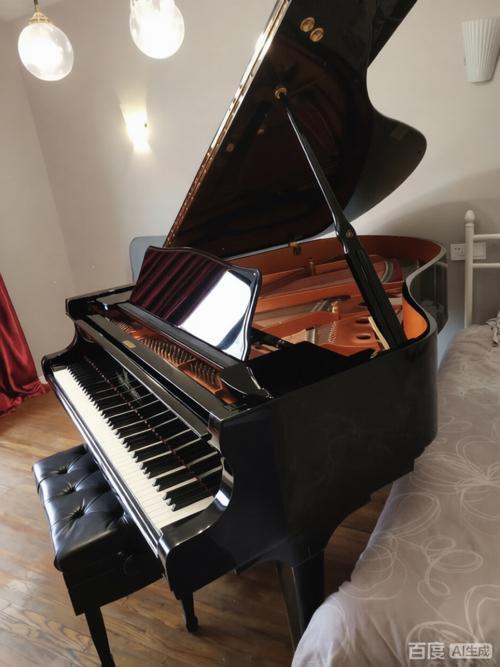
The grand piano world is stratified by history, philosophy, and craftsmanship. Understanding this hierarchy is the first step in identifying where your aspirations align.
- The Concert Legends: These are the instruments that define the world’s great stages and recordings. They are built without compromise for ultimate performance.
* Steinway & Sons (Hamburg/New York): The ubiquitous benchmark. Hamburg models are often noted for a clearer, more European tone, while New York pianos traditionally offer a warmer, more powerful bass. The Model D (274 cm) is the concert hall standard.
* Bösendorfer (Vienna): Renowned for a uniquely singing, warm, and complex tone, with added resonance from their patented duplex scale and, in larger models, extra bass keys. The 214VC or the majestic 280VC are instruments of profound character.
* Fazioli (Sacile, Italy): The modern challenger, famous for breathtaking clarity, explosive power, and a sustain of remarkable length. Their F278 concert grand is a favourite of pianists seeking crystalline precision and immense dynamic headroom.
- The German Heritage Houses: Centuries of tradition inform these brands, each with a distinct sonic signature.
* C. Bechstein (Berlin): Offers both the sublime Bechstein Academy series and the handcrafted Concert series. Tones range from poetic and nuanced to powerfully orchestral.
* Blüthner (Leipzig): Known for its patented Aliquot stringing in the treble, which adds a bell-like, shimmering overtone, creating a uniquely romantic and colourful sound.
* Grotrian-Steinweg, Sauter, August Förster, Schimmel Konzert: Each represents the pinnacle of German engineering, with a focus on precise action, a rich, balanced tone, and impeccable build quality.
- Asian Precision Engineering: These manufacturers have achieved excellence through technological innovation and relentless consistency.
* Yamaha CFX & SX Series: The CFX (274 cm) is a dominant force in competitions and studios worldwide, known for its brilliant, clear, and incredibly reliable tone. The SX Series brings this concert-hall DNA into smaller footprints.
* Shigeru Kawai: The hand-finished flagship line from Kawai, featuring their ultra-responsive Millennium III action with carbon fibre components. The tone is warm, singing, and exceptionally controllable.
- The Value Proposition: This tier includes exceptional workhorse instruments and the important market for certified pre-owned pianos. Brands like Yamaha’s CX Series, Kawai’s GX Series, and Boston (designed by Steinway) offer remarkable performance at accessible price points. A well-maintained pre-owned instrument from a reputable dealer can represent the most astute purchase.
—
Chapter 2: Objective Criteria for Selection – Beyond the Name
Move beyond the marque and evaluate the instrument on these fundamental pillars.
- Size & Space: This is the primary practical constraint. Measure your room meticulously, allowing for at least 1 metre of clearance behind the piano and 50-75 cm at the keyboard for the pianist.
* Baby Grands (under 180 cm): Suitable for smaller drawing rooms. Tone can be compromised in the bass; prioritise models with superior scale design.
* Living Room Grands (180-210 cm): The ideal domestic size, offering a balanced scale and credible bass response. The Steinway Model A (188 cm) or Bösendorfer 200 are classic examples.
* Professional & Concert Grands (212 cm+): Require significant space. The Steinway Model B (211 cm) is considered the perfect home concert instrument, while the Model D (274 cm) needs a large music room or hall to breathe.
- Tonal Character & Voicing: This is the instrument’s soul. Listen for:
* American Projection (Steinway NY): Powerful, direct, with a foundational bass.
* European Clarity (Steinway Hamburg, Bechstein): Articulate, colourful, with a singing treble.
* Viennese Warmth (Bösendorfer): Complex, orchestral, with a fundamental richness.
* Japanese Precision (Yamaha, Shigeru Kawai): Clear, consistent, and brilliantly responsive.
- Action & Touch: The mechanism must feel like an extension of your intent. Key criteria include:
* Responsiveness: How quickly can it repeat a note?
Dynamic Control: Can you easily play pianissimo as well as fortissimo*?
* Weight & Balance: Is it heavy, light, or perfectly balanced? Premium actions from Renner or proprietary designs like Kawai’s Millennium III are benchmarks.
- Construction & Materials: Quality here dictates longevity and tone.
* Soundboard: Solid, vertically-grained Sitka or Alpine spruce is essential for resonance.
* Frame: A single-cast, iron plate provides the strength to hold over 20 tonnes of string tension.
* Bridges: Solid maple bridges with precise capo d’astro bars ensure clean energy transfer from string to soundboard.
* Pin Block: A stable, multi-laminated beech or maple block holds tuning pins securely.
- Budget Realities (in GBP): Set realistic expectations.
* New Premium Baby Grand: From £40,000 (Yamaha C2X) to £90,000+ (German heritage brands).
* New Living Room Grand (Model B equivalent): £90,000 – £180,000.
* New Concert Grand: £150,000 – £250,000+.
* Certified Pre-Owned: Offers savings of 30-50% on equivalent new models, with the security of manufacturer refurbishment and warranty.
—
Chapter 3: The Right Grand Piano for Your Profile
The Discerning Amateur & City-Dweller
Your instrument must be a domestic companion. Focus on compact grands (160-190 cm) from brands like Yamaha (CX Series), Kawai (GX Series), or a pre-owned Bechstein Academy. Tonally versatile for classical and jazz, with a manageable presence. Consider a silent system if neighbours are a concern. The priority is a beautiful tone that inspires daily practice without overwhelming a London townhouse or country cottage music room.
The Music Student & Conservatoire
Durability and consistent, responsive action are paramount for technical development. Instruments must withstand hours of daily use. The Yamaha C3X/C6X or Kawai GX-3/GX-6 are industry standards in education for their reliability. A well-prepared Boston grand (designed by Steinway) also offers excellent value. The tone should be clear and even across all registers to faithfully reproduce the repertoire.
The Professional Concert Pianist & Recording Artist
This is a tool of the highest specification. Demands include absolute projection, a vast tonal colour palette, and flawless reliability. The choice is deeply personal: the power of a Steinway D, the lyrical warmth of a Bösendorfer 280VC, or the laser clarity of a Fazioli F278. For the home, a Model B or Bösendorfer 214 provides a concert instrument in a domestic scale. The action must allow for the most demanding passagework with total control.
The Collector & Institutional Buyer
Investment, historical significance, and legacy come to the fore. This may mean a fully restored vintage Steinway from the 1920s, a limited edition Fazioli in a rare wood, or a new Bechstein Concert 8 for a university auditorium. Bespoke finishes, detailed provenance, and impeccable technical preparation are non-negotiable. The instrument becomes part of an institution’s or individual’s lasting cultural contribution.
—
Chapter 4: Recommendation Grid: Grand Pianos by Budget
Entry to Mid-Level (£15,000 – £45,000)
Focus: Reliable workhorses, quality pre-owned, and compact models for the dedicated enthusiast.
- Yamaha GB1K Baby Grand (151 cm): A compact, reliable entry point with a surprisingly musical tone. Ideal for a small space where an upright is insufficient. (New: from £25,000).
- Kawai GL-10 Baby Grand (153 cm): A direct competitor, featuring Kawai’s quality action in a small footprint. Excellent for student use. (New: from £24,000).
- Schimmel Classic C 169 (169 cm): A significant step up, offering genuine German engineering and a more mature, balanced tone in a baby grand scale. (New: from £40,000).
- Pre-Owned Yamaha C3 / Kawai RX-3 (186-188 cm): The quintessential « workhorse » grands from the 1990s/2000s. If well-maintained, they offer tremendous value and professional-grade performance.
Serious Amateur to Semi-Professional (£45,000 – £90,000)
The heart of the market, where heritage and high performance converge.
- C. Bechstein Academy A 190 (190 cm): A piano of profound musicality. The Bechstein touch and singing European tone at a relatively accessible point. (New: from £85,000).
- Shigeru Kawai SK-2 (187 cm): Hand-finished by master artisans. The Millennium III action is sublime, and the tone is warm, complex, and incredibly responsive. (New: from £75,000).
- Yamaha S3X (188 cm) / Kawai GX-3 (187 cm): The modern benchmarks for consistency and performance. Brilliant, powerful, and built to last decades of rigorous use.
- Certified Pre-Owned Steinway Model A (188 cm): The route to Steinway ownership for many. A properly rebuilt or certified Model A from the 1960s-90s can be a magnificent, lifetime instrument.
Professional & Institutional Tier (£90,000+)
Instruments that define excellence in concert halls, elite studios, and the homes of the most discerning musicians.
- Steinway & Sons Model B (211 cm): The undisputed reference. A perfect balance of power, colour, and scale for the large home or small hall. (New: from £140,000).
- Bösendorfer 214VC (214 cm): The « Vienna Concert » model. Offers the legendary Bösendorfer warmth and singing sustain with added power and projection for modern repertoire. (New: from £180,000).
- Fazioli F183 (183 cm) / F212 (212 cm): The epitome of Italian precision and clarity. An explosive dynamic range and breathtaking sustain in a surprisingly compact cabinet (F183). (New: F183 from £150,000).
- Yamaha CF4 (212 cm): The smaller concert instrument from Yamaha’s flagship range. Possesses the brilliant, clear, and powerful CFX DNA in a more domestic-friendly size.
—
Chapter 5: The Purchase & Ownership Journey
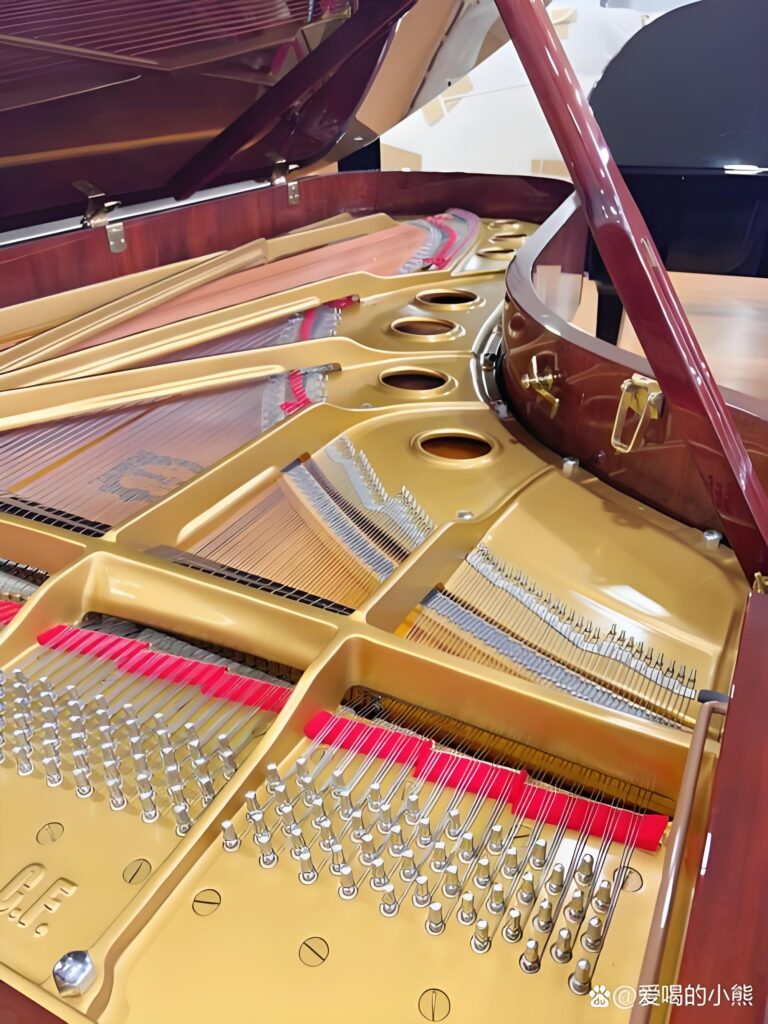
- New vs. Pre-Owned: A new piano offers the latest design, a full manufacturer’s warranty, and your choice of specification. A certified pre-owned instrument (from schemes like Steinway Certified Pre-Owned or Yamaha’s Premium Piano range) offers significant value and the character of a matured instrument. Private sales carry risk and require an independent technician’s inspection.
- The Role of the Retailer: The preparation of the piano is as important as its build. A reputable dealer will provide expert voicing (tone shaping) and regulation (action adjustment) to suit your environment and touch. Major retailers like Thomann, Europe’s largest music retailer, provide a curated selection of new and premium used grands, with the advantages of free delivery across Europe, transparent pricing, financing options, and a comprehensive warranty.
- Ongoing Stewardship: A grand piano is a living thing. Budget for at least two tunings per year in the UK climate, with a full regulation and voicing every 1-3 years depending on use. Engage a qualified concert technician for this work.
—
Frequently Asked Questions (FAQ)
What is the minimum room size for a baby grand piano?
A room of at least 25-30 square metres (e.g., 5m x 6m) is advisable for a baby grand (around 170 cm). This allows the sound to develop without becoming overwhelming. Crucially, the room should have soft furnishings (rugs, curtains, sofas) to absorb excess brightness. Always remember to factor in space for the pianist, bench, and page-turner.
What is the main difference between a Hamburg and a New York Steinway?
While both are exceptional, traditional distinctions exist. Hamburg Steinways are often described as having a clearer, more articulate, and slightly brighter « European » tone, with a potentially lighter touch. New York Steinways are traditionally associated with a warmer, more powerful, and foundational bass, with a richer mid-range. These differences have narrowed in recent decades, and individual preparation by the technician plays a huge role. The final choice is always subjective and should be based on playing individual instruments.
How often does a grand piano need tuning and servicing in the UK climate?
The UK’s variable humidity is a piano’s main challenge. Twice-yearly tuning (spring and autumn) is the absolute minimum to maintain stability. A piano in a professional setting or with central heating may need three or four tunings. A full action regulation should be performed every 1-3 years, and voicing (needling the hammers) as needed to maintain the desired tone. Investing in a humidity control system (like a Dampp-Chaser) is highly recommended to minimise seasonal swings.
Is a pre-owned grand piano a good investment?
A premium grand piano from a top-tier manufacturer, when well-maintained, can hold its value remarkably well. It is a depreciating asset that plateaus, unlike a car which declines steadily. A 20-30 year old Steinway Model B in excellent condition may sell for close to its original purchase price in today’s market. The key is condition, provenance, and professional preparation. A certified pre-owned instrument from a reputable dealer is the lowest-risk entry into this market.
Can you finance a high-value grand piano?
Yes, financing is commonly available. Specialist piano retailers, including major outlets like Thomann, often offer flexible finance plans. These can range from interest-bearing loans to 0% finance options over set periods. For very high-value instruments, private banking or asset financing may also be routes to explore. Always read the terms carefully and ensure the payments fit comfortably within your long-term financial planning.
—
Real-world scenarios: practical use cases
In a city flat
- Size & Tone: Prioritise a compact grand (160-180cm). Look for a model with a warm, fundamental tone (like a Bösendorfer or a well-voiced Bechstein) that won’t sound overly bright or piercing in a 40-60 m² living space with modern acoustics.
- Neighbour Considerations: A high-quality silent system (optical sensors and headphones) is a wise investment. Placing the piano on an insulating caster cup and using a thick rug underneath can also reduce sound transmission.
- Transport Logistics: Ensure your building has suitable lift access or that stairwells are wide enough. Professional piano movers are essential and will survey the route in advance.
In a concert hall
- Projection & Power: The instrument must fill the space without sounding forced. A concert grand (274cm+) like a Steinway D, Fazioli F278, or Bösendorfer 280VC is designed for this. The scale design ensures the bass fundamentals carry to the back row.
- Endurance & Reliability: The action must remain perfectly regulated for the duration of a demanding recital or concerto, with consistent repetition and no sticking keys. The tuning must be rock-solid under intense dynamic and thermal changes from stage lighting.
- Tonal Palette: The pianist requires an immense range of colours, from the most delicate pianissimo to a roaring fortissimo, all of which must be clearly audible and distinct across the auditorium.
In a recording studio
- Behaviour Under Microphones: The instrument must sound balanced and integrated from the first note, with no unpleasant metallic harmonics or « wolf tones. » The sustain should be clean and even. Fazioli and Yamaha CFX pianos are renowned for their recording-friendly clarity.
- Tuning Stability: It must hold a perfect tuning for the duration of a long session, often under hot lights. A recently regulated and perfectly tuned piano is non-negotiable.
- Dynamic Control: The action must allow for extreme subtlety, as microphones will pick up nuances that might be lost in a hall. The ability to play a true, clean ppp is critical.
In a conservatoire
- Intensive Daily Use: The piano must withstand 8-12 hours of playing per day, by different pianists with varying techniques. Durability of the action parts (hammers, wippens) and robustness of the cabinet are paramount.
- Consistency & Versatility: A fleet of pianos should have a similar touch and tonal character to allow students to move between practice rooms seamlessly. The tone should be clear and neutral enough to serve a wide repertoire from Baroque to contemporary.
- Ease of Maintenance: The design should allow technicians easy access for frequent regulation and voicing. Brands like Yamaha and Kawai are staples in education for their reliability and standardised parts.
—
Technical specifications
| Specification | Description & Common Values |
| :— | :— |
| Typical Length Range | Baby Grand: 147 cm – 180 cm / Living Room Grand: 180 cm – 212 cm / Concert Grand: 212 cm – 308 cm |
| Typical Width | Approximately 148 cm – 156 cm (tail to keyboard). |
| Typical Weight | 250 kg (baby grand) to 550 kg (concert grand). |
| Action Type | Double escapement action with repetition lever. Premium examples: Renner Action, Steinway Accelerated Action, Kawai Millennium III Action. |
| Soundboard Timber | Solid, vertically-grained Sitka Spruce or Alpine (European) Spruce. |
| Number of Keys | 88 (standard). Some Bösendorfer models have 92 or 97 keys (extra bass notes). |
| Finishes Available | High-gloss Polished Ebony (most common), Satin Ebony, Polished White, and various premium wood veneers (Mahogany, Walnut, Macassar Ebony). |
—
Purchase guide
- New Price / Certified Pre-Owned Price:
* New: As a rule, expect to pay from £25,000 for a premium-brand baby grand to over £250,000 for a top-tier concert grand. Always get a detailed, itemised quotation.
* Certified Pre-Owned: Typically 30-50% less than the equivalent new model. A certified pre-owned Steinway Model B might range from £70,000 to £110,000 depending on age and restoration level.
* Authorised Brand Dealers: For new instruments, full warranty, and expert preparation.
* Specialist Pre-Owned & Restoration Houses: For vintage instruments and certified programmes.
* Major Retailers: Companies like Thomann offer a compelling alternative, with a wide curated selection of both new and premium used grands. Benefits can include free delivery across Europe, a clear 3-year warranty, and accessible financing options, all from a single, reputable source.
- Annual Maintenance Cost:
* Tuning (2x per year): £100 – £200 per tuning.
* Annual Service (basic regulation & check): £300 – £500.
* Full Regulation & Voicing (every 1-3 years): £800 – £1,500+.
* Humidity Control System: £500 – £1,000 installed.
- What to Check Before Buying:
1. Soundboard: Look for cracks (small, non-viable cracks are common in old pianos; long, open cracks are a red flag). Tap it – it should sound resonant, not dead.
2. Action Regulation: Test repetition by trilling a note rapidly. Check for evenness of touch across the keyboard. No keys should stick or feel sluggish.
3. Pin Block & Tuning Stability: Ask when it was last tuned. A good piano should still be relatively in tune. Check if the tuning pins are tight.
4. Strings & Hammers: Look for rust on strings. Check hammers for deep grooves, which indicate heavy use and will require reshaping or replacement.
5. Case & Finish: Check for veneer chips, cracks in the polyester finish, or structural damage to the legs and rim.
Always hire an independent, qualified piano technician (not affiliated with the seller) to conduct a full inspection before purchasing any used instrument.
Laisser un commentaire