
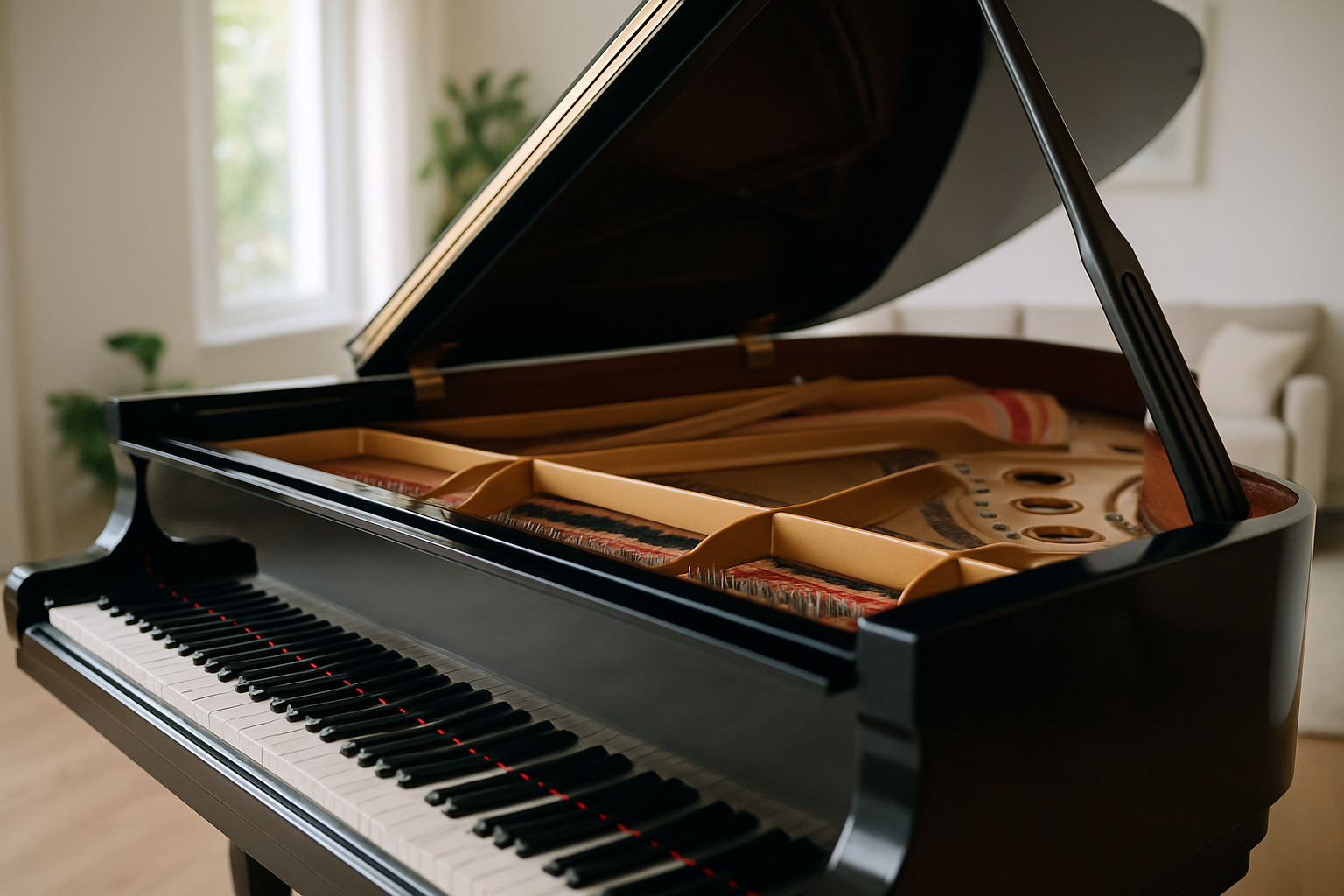
The C3X is one of the world’s best-selling grands in its class — and one of the most discussed on specialist forums. The recurring question: is the gap with the old C3, and the CX series’ premium positioning, justified? We went through the PianoWorld threads; here is what owners actually report, alongside our GB/GC/CX series guide.
A real step up from the C3 — the consensus
Members who compared both generations converge: the CX line sounds “warmer”, with “more character” than the plain C models. A Yamaha artist describes an instrument that “sings more”, with a noticeably smoother, more responsive touch. A dealer details the concrete changes: redesigned bracing, new music wire for colour and nuance, upgraded hammer felts borrowing processes from the concert range. The editor of a leading piano buying guide goes as far as calling the character change “fundamental” — capable of winning over previous Yamaha sceptics.
The reservations: residual brightness and pricing
Not everything is unanimous. One member recalls hearing units “loud enough to shatter glass” — Yamaha projection remains a family trait, even softened on the CX (see our companion piece on the “too bright” debate). On price, the criticism is franker: a dealer concedes the increases partly reflect a marketing repositioning from “value” to “luxury”; another member bristles at the surcharge for wood finishes — “just a veneer” — over black polyester.
The recurring owner advice
The thread ends on advice we endorse: at this level of investment, audition several units. Individual examples vary, and showroom preparation weighs as much as the spec sheet. To place the C3X against its direct rivals, see Yamaha vs Steinway and our budget-by-budget buying guide.
The C3X within the CX line
The C3X holds a strategic position in the CX series: big enough (around 186 cm) to give a firm bass and real depth of tone, yet more manageable than a C5X or C6X in a home or studio. It is often the balance point between projection and footprint, which is exactly why it is so debated — it is the model buyers genuinely cross-shop, not a range extreme. Its qualities are best read in that light, as a considered compromise rather than an absolute peak.
What to check when you try one
The gathered feedback suggests some useful checks. Listen to the top octave at full volume: that is where Yamaha’s brightness shows, and where good voicing makes the difference. Try fast repeats and half-dynamics to judge the action’s regulation. Ask whether the instrument was prepared after delivery by the distributor, since the same unit can change markedly after a few hours of a good technician’s work. And, as owners keep repeating, audition more than one example where you can.
C3X or a used C3
Faced with the CX series’ list price, many buyers wonder whether a well-kept earlier C3 might make more sense. The answer, consistent with the feedback gathered, depends on priorities: the CX line offers a warmer character and updated construction, but a used C3 in good condition and properly prepared remains a valuable instrument at a lower price. The deciding factor, once again, is less the badge than the state of the individual example and the quality of its preparation. Those after the latest tonal evolution will choose the CX; those weighing value for money will seriously consider a recent used instrument.
A note on method
This article synthesises public exchanges between pianists, owners and technicians on specialist forums (PianoWorld in particular), consulted in June 2026. Comments are paraphrased — never reproduced verbatim — and remain the opinions of their authors. We cross-check them against our own evaluation grid without conflating the two: our rating method documents our criteria.
Threads consulted:
This page contains affiliate links. If you buy through them, we may earn a commission at no extra cost to you.
🎹 Essential accessories for pianists
This page contains affiliate links. If you buy through them, we may earn a commission at no extra cost to you.
- Thermo-hygrometer (humidity): TFA Digital Thermo-Hygrometer
- Caster cup (sold singly): Jahn IsoFloor
- Felt key cover: Jahn Keyboard Dust Cover
- Adjustable piano bench: Thomann KB-15BM